Beyond Footprints: How Regenerative Tourism is Redefining the Global Travel Industry

For decades, the prevailing narrative of sustainable travel has been rooted in the philosophy of minimization—encouraging tourists to tread lightly, curb their carbon emissions, curtail single-use plastics, and show passive respect to local cultures. However, as the compounding pressures of global climate change and mass tourism converge on fragile ecosystems worldwide, industry leaders, environmental scientists, and policymakers are realizing that simply doing less harm is no longer enough.
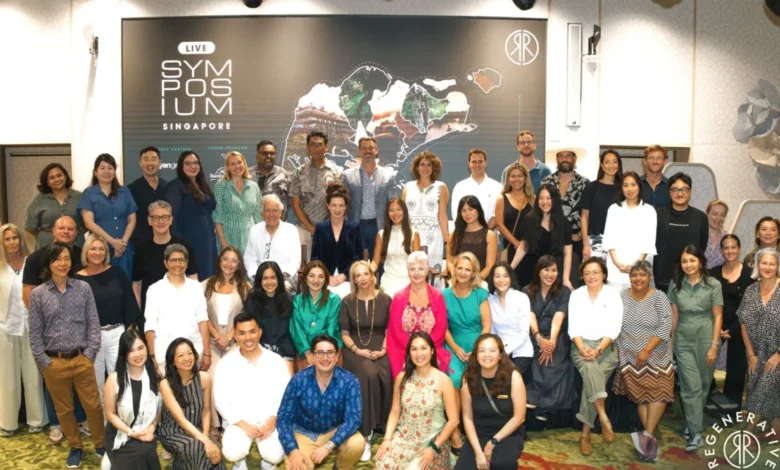
This paradigm shift was the focal point of the recent Regenerative Travel Asia Symposium held in Singapore, where international delegates gathered to debate and construct a more ambitious future for the sector. Rather than asking how visitors can merely sustain a destination, the symposium’s central thesis explored a radical alternative: what if the travel and tourism industry could actively restore ecosystems, fortify vulnerable communities, and fundamentally rebuild humanity’s fractured relationship with the natural world?
The Evolution of Tourism: From Consumption to Connection
To understand the urgency of this transition, industry analysts point to the historical model of tourism, which has predominantly operated on a ledger of consumption. For generations, travelers have viewed destinations as static backdrops or commodities to be consumed, photographed, and left behind. Regeneration, by contrast, challenges this extractive framework.
Opening the symposium, Amanda Ho, co-founder and CEO of Regenerative Travel, framed the movement as a profound philosophical transformation. She urged attendees to move from a mindset of head to heart, scarcity to abundance, and individual gratification to collective responsibility. According to Ho, tourism must no longer be categorized merely as a commercial industry, but rather as an active, living relationship between people, places, and nature.
This sentiment was further amplified by keynote speaker Juliet Kinsman, who reminded the audience of a fundamental biological truth often overlooked in modern itineraries: humanity is not separate from biodiversity, but rather an intrinsic strand of a larger, interconnected living system. In an era increasingly dominated by algorithmic curation, artificial intelligence, and digital detachment, Kinsman emphasized the imperative of “regenerating humanity” by fostering tangible, deep-rooted connections with the planet and host communities.
The Traveler’s Dilemma: Intention Versus Impact
Consumer sentiment is rapidly evolving in alignment with these ethical imperatives. Research presented at the symposium by Jeremy Tran of Sustainable Travel Asia—citing comprehensive data from Booking.com—revealed that 85% of global travelers now desire more sustainable travel options, while 69% express a clear objective to leave destinations better than they found them.
Yet, this surge in environmental consciousness exposes a profound operational gap: wanting to travel responsibly and knowing how to execute responsible travel are two entirely different challenges.
Tran highlighted the pervasive role of social media in distorting travel patterns, where algorithmic trends can transform remote, fragile locations into viral hotspots overnight. This modern phenomenon forces a critical reckoning for consumers. Are individuals choosing their destinations with intentionality, or are they simply yielding to digital herd mentality? Moving beyond transient travel trends requires tourists to interrogate their underlying motivations and evaluate how they engage with local environments upon arrival. Industry experts suggest that conscientious travelers must transition from passive consumers to active contributors by prioritizing transparency, supporting localized economies, and selecting operators that reinvest directly into the destination.
The Wellness Intersection: Beyond Personal Restoration
Another prominent theme at the Singapore symposium was the intersection of wellness tourism and ecological regeneration. Historically, the multi-billion-dollar wellness travel sector has focused inward, promising mental and physical restoration for the individual—frequently leveraging local healing traditions, indigenous knowledge systems, and natural resources.
Regenerative travel, however, expands this scope outward. It posits that true wellness cannot exist in a vacuum; the restoration of the individual traveler must be inextricably linked to the simultaneous restoration of the host communities and surrounding ecosystems that facilitate those healing experiences. Because regeneration is fundamentally relational rather than merely transactional, wellness retreats and eco-resorts are increasingly being challenged to ensure their operational footprints enrich, rather than deplete, the surrounding social and natural fabric.
Overdevelopment and Community Participation in Bali
For tourism to be genuinely regenerative, host communities cannot be reduced to passive service providers or background actors in a visitor’s holiday narrative. They must be empowered as central decision-makers regarding their ancestral lands, cultural heritage, and economic futures.
This tension between rapid tourism expansion and local welfare was starkly illustrated by Maitri Fischer of Eco-Mantra, an authority in environmentally sustainable design. Drawing on the cautionary tale of Bali, Fischer underscored the severe structural pressures induced by unchecked overdevelopment. From acute municipal waste management crises to the alarming depletion of local water tables and infrastructure strains, Bali serves as a global case study for the hidden costs of extractive tourism models. Fischer argued that sustainable growth is a mathematical and logistical impossibility without direct community governance and rigorous environmental impact assessments.
Case Studies in Action: Industry Pioneers
While systemic reform remains an ongoing challenge, several hospitality groups and regional operators are already operationalizing regenerative principles with measurable success. Throughout the symposium, leaders from the Banyan Group, The Datai Langkawi, and Potato Head Bali presented operational blueprints demonstrating that commercial viability and ecological restoration can coexist.
A standout case study highlighted during the discussions was Cambodia’s Song Saa Private Island. Constructed on a previously degraded marine and terrestrial landscape, the resort was founded with an explicit mandate to restore the local ecosystem. Through the establishment of the Song Saa Foundation, the initiative successfully lobbied for and helped create Cambodia’s first officially recognized Marine Protected Area. Furthermore, the enterprise maintains a localized hiring policy, employing approximately 75% of its workforce from surrounding villages. On-site infrastructure includes advanced waste management systems, comprehensive food waste reduction protocols, and rainwater harvesting networks. By inviting guests to participate directly in coral reef monitoring, mangrove planting, and community outreach programs, Song Saa successfully transforms temporary visitors into committed environmental stewards.
The Threat of Greenwashing and the Need for Accountability
Despite the momentum surrounding the regenerative movement, industry veterans issued sharp warnings regarding the perils of corporate co-optation. As consumer demand for ethical travel climbs, there is an escalating commercial incentive for hospitality brands to weaponize buzzwords, transforming "regeneration" into little more than a superficial marketing label or a sophisticated iteration of greenwashing.
Analysts emphasize that true regeneration must be substantiated by radical transparency, verifiable community participation, and long-term, measurable ecological impacts. Without stringent auditing frameworks and accountability metrics, the movement risks losing its foundational integrity. Both corporate operators and everyday travelers bear the responsibility of demanding proof over promises, ensuring that regeneration remains a rigorous operational commitment rather than a transient public relations strategy.
Making Conservation Personal: Insights from Marine Biology
As the global climate crisis accelerates alongside rebounding post-pandemic international travel volumes, the urgency for industry-wide transformation has reached a critical juncture. Nick Hardman, a marine biologist and Head of Sustainability at the Banyan Group, captured the emotional core of the symposium during his address.
“Tourism has a huge power to be part of the healing process,” Hardman noted, stressing that systemic change ultimately relies on emotional resonance. “You have to make it personal.”
Whether through participating in hands-on coral reef restoration dives, supporting local biodiversity initiatives, or engaging in authentic cultural exchanges with Indigenous populations, psychological research supports Hardman’s assertion: individuals are vastly more motivated to protect environments and cultures with which they share a direct, empathetic connection.
Democratizing Regenerative Travel
A critical socio-economic question raised during the proceedings centered on accessibility. If regenerative tourism is to achieve global efficacy, it cannot remain the exclusive domain of high-net-worth travelers frequenting ultra-luxury eco-resorts.
For the movement to effect widespread systemic change, regenerative principles must be integrated across all tiers of the tourism economy—from budget accommodations and public transport networks to independent regional tour operators. Ensuring that affordability and sustainability are not mutually exclusive is vital for engaging the broader demographic of everyday travelers.
Charting a Path Forward
Ultimately, the Regenerative Travel Asia Symposium concluded with a clear roadmap for the future of global mobility. The transition toward regenerative tourism is not predicated on achieving absolute operational perfection, but rather on deliberate, intentional choices.
By demanding industry-wide transparency, championing community-led initiatives, supporting businesses that reinvest locally, and critically evaluating personal travel motivations, global citizens can help steer the tourism sector toward a sustainable equilibrium. In its optimal manifestation, travel transcends the boundaries of a temporary leisure activity; it evolves into a reciprocal exchange capable of simultaneously transforming the traveler and strengthening the resilient communities and ecosystems that welcome them.