Walking the Line: How Romania’s Via Transilvanica is Transforming Rural Communities and Combating Deforestation

The crisp scent of pine needles and birdsong filled the dense mountain air as Iulian Gabor paused on an uphill climb, catching his breath. "It’s important for people to hike a lot," he remarked, wiping sweat from his forehead, "so that the authorities can see there are alternatives to logging." Every step along the verdant path served as a living reminder that walking among living trees is infinitely superior to tearing them down for commercial timber.
Spanning roughly 30% of Romania’s total land area, woodland is a foundational ecological and cultural pillar of the country. Yet, these vast forests face an acute, relentless threat: rampant deforestation. While a portion of this timber harvesting operates legally, a significant amount is driven by the so-called "wood mafia"—an entrenched, organized crime network operating on a massive scale to facilitate illegal logging and timber trafficking.
In response to this ecological crisis and the economic stagnation of remote rural settlements, a grassroots coalition decided to reclaim the landscape. This determination gave birth to the Via Transilvanica, Romania’s first and longest long-distance hiking trail, which has rapidly evolved into a symbol of grassroots resistance, environmental conservation, and sustainable rural development.
The Genesis and Engineering of a Mega-Trail
The conceptualization and physical realization of the Via Transilvanica required a monumental, multi-year collaborative effort. Developed painstakingly over a four-year period, the path was officially completed in 2022. It now snakes across the country over a staggering 1,400 kilometers (870 miles), beginning in the northern frontier town of Putna and winding its way down to Drobeta-Turnu Severin in the southwest. A subsequent 200-kilometer (124-mile) extension added a route to Brașov, deeply integrating the Carpathian-ringed central Transylvania region into the network.
Rather than carving entirely new scars into the wilderness, the trail’s architects utilized a strategy of unification. They linked, cleared, and upgraded existing historical paths, removing dense overgrowth and clearing a cumulative 50 tonnes of rubbish left behind by decades of neglect. To ensure safe navigation, standardized markers were installed across the route, accompanied by dedicated digital maps and mobile applications for modern hikers.
However, the architects behind the initiative maintain that the project transcends mere tourism. "It was never a tourist project," asserts Alin Useriu, the tall, authoritative founder of Tășuleasa Social, the prominent NGO and Intrepid Foundation partner that spearheaded the trail’s development. Speaking from the organization’s headquarters in the rural Bucovina region of northern Romania, Useriu emphasizes that the Via Transilvanica is fundamentally a community-building exercise. In alignment with Tășuleasa’s core philosophy of collective action, the trail aims to inject sustainable economic life back into small, depopulated villages by offering residents a slow-tourism model in which they can directly participate. "Via Transilvanica brings back life to these small villages," Useriu explains.
Grassroots Stewardship and Local Economic Integration
The operational framework of the Via Transilvanica relies heavily on decentralization and civic engagement. Approximately 700 local residents act as volunteer "foster parents," taking personal responsibility for the maintenance, cleanliness, and protection of specific sections of the trail. Meanwhile, other villagers have found alternative livelihoods by opening their homes to travelers, offering hot, traditional meals and modest accommodations.

At the Tășuleasa headquarters, Iulian Gabor—a bearded 36-year-old rarely seen without his signature cap—demonstrated a prototype accommodation pod designed to scale up this hospitality model. Equipped with six bunks and a modern bathroom, the modular pods are intended to be replicated along the entire span of the Via Transilvanica, empowering more local families to host travelers affordably without requiring massive personal capital investments.
This community-centric approach directly challenges the economic hegemony of the timber industry. By demonstrating that preserved forests can generate continuous, sustainable revenue through outdoor recreation and hospitality, the trail incentivizes local populations to protect their natural surroundings rather than selling timber rights to industrial operators or illegal syndicates.
Navigating the Wilderness of Bucovina
Traveling along a newly launched segment of the trail in Bucovina, small groups of hikers are led by experienced local guides such as Raluca Kocsis. Before embarking into the dense wilderness, Kocsis offers a reassuring briefing regarding the local fauna. Although Romania maintains the largest populations of brown bears, wolves, and lynx in Europe outside of Russia, hikers rarely encounter them. These apex predators possess acute senses and typically hear human groups approaching from a distance, choosing to retreat deep into the forest cover.
Instead, hikers are treated to a vibrant micro-ecosystem. Colorful butterflies drift across dusty paths, tiny lizards and slender, worm-sized snakes dart rapidly into the undergrowth, and the distinct hoofprints of roe deer mark the damp soil. Overhead, the melancholic, resonant calls of cuckoos echo through the canopy.
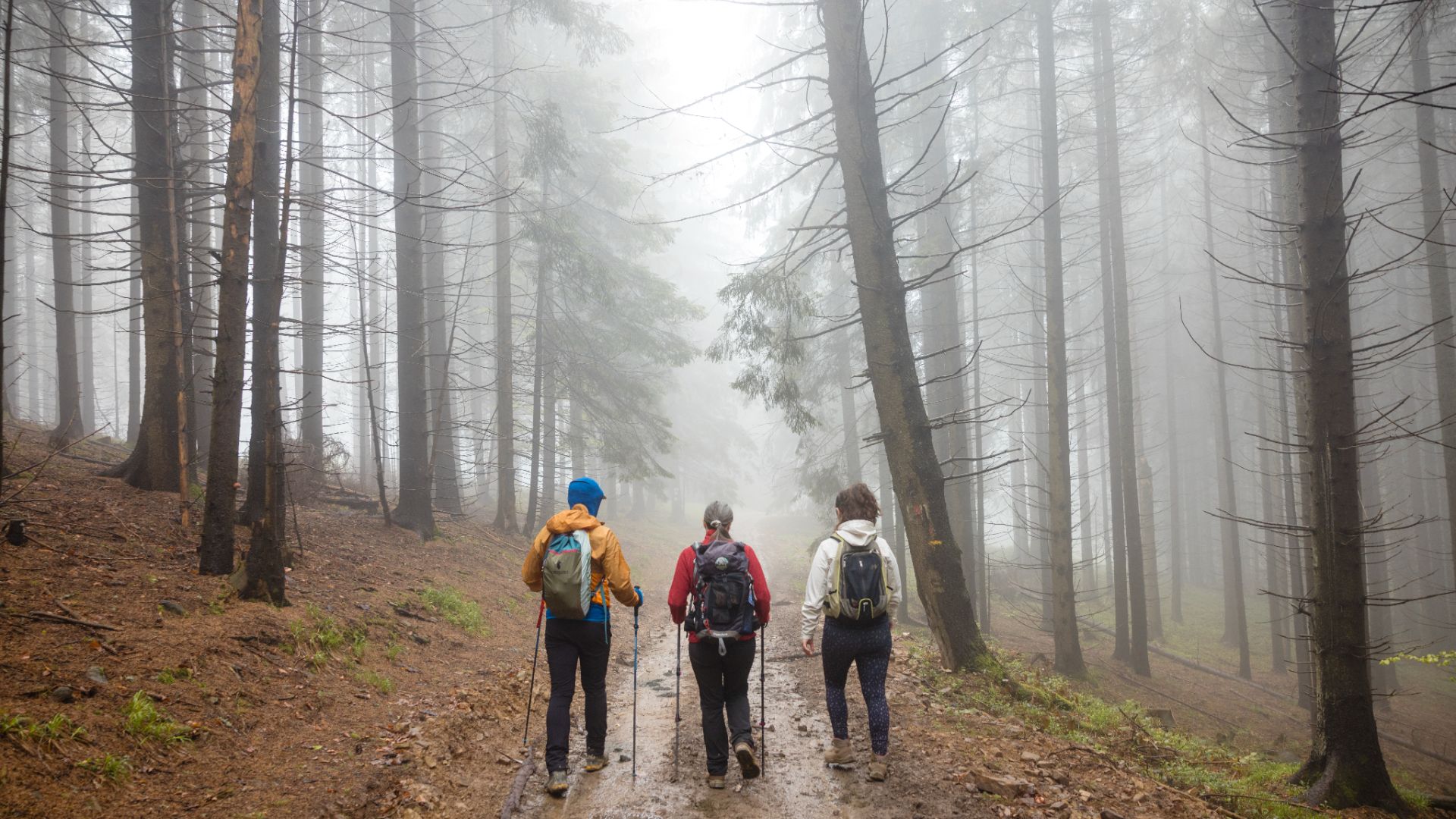
The atmosphere shifts dramatically depending on the weather. On misty mornings, low-hanging fog weaves through towering conifers, casting an eerie, mystical quality over the landscape. "There are many folk stories about forest fairies and spirits," Kocsis notes, walking steadily along a puddle-dotted trail. "Some of them are a blessing and some are evil." Under heavy, atmospheric mists, these ancient regional mythologies feel palpable and immediate.
The historical layers of the region are equally visible. During the Habsburg rule over the mountainous territory from the late 18th century until 1918, much of the indigenous beech forest—from which the Bucovina region derives its name, originating from the Slavic word "buk"—was cleared and replaced with fast-growing spruce, pine, and fir plantations. Today, tree trunks along the path bear the unmistakable emblem of the Via Transilvanica: a bold orange letter "T" enclosed within a circle. Furthermore, every single kilometer of the 1,400-kilometer route is anchored by a unique stone post hand-carved by a different artist. These markers range from minimalist abstract structures to intricate animal and plant carvings, including a playful sculpture of a bare bottom in the village of Fundu Moldovei—a tongue-in-cheek reference translating to the "Bottom of Moldova."
Culinary Traditions and Homespun Hospitality
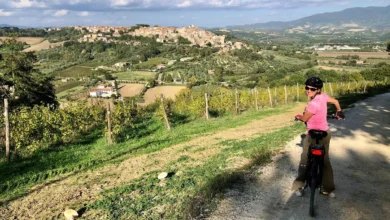
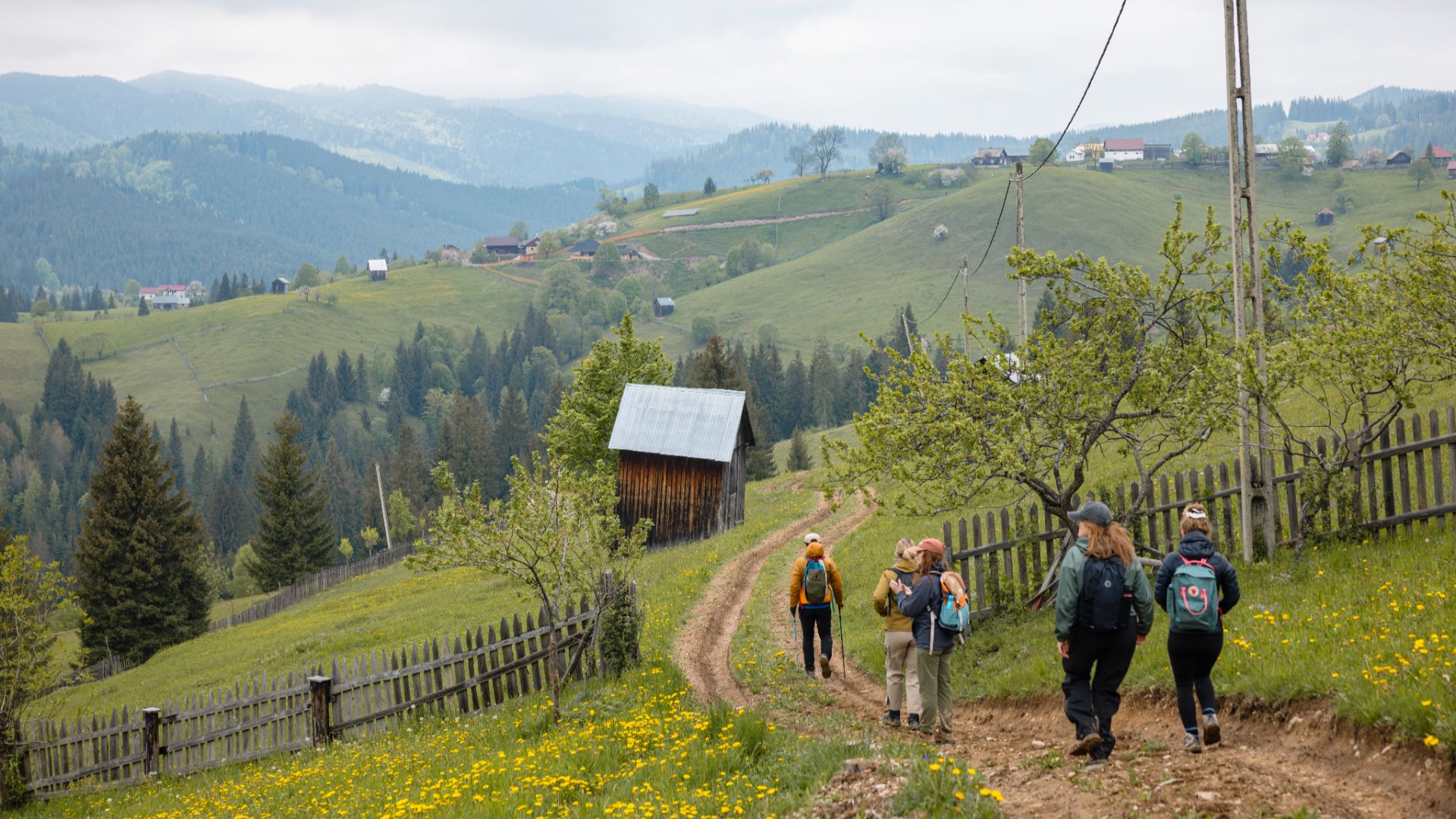
When weather conditions clear, the forest opens onto sweeping alpine vistas characterized by undulating wildflower meadows, traditional high-stacked haybarns, and distant layers of hazy mountain peaks stretching to the horizon.
These strenuous hikes are invariably rewarded by the burgeoning culinary hospitality established by local families. At Bordeiul Gligilor, a family-run guesthouse situated on a sloping hillside terrace, owners Daniela and Stefan Gliga greet exhausted hikers with traditional fruit liqueurs served in miniature decorated ceramic cups for communal toasts. This is followed by generous portions of sarmale—savory, slow-cooked cabbage rolls stuffed with seasoned meat and rice—which frequently prompt requests for immediate second helpings and recipes.

Further down the route, near the mountain resort town of Vatra Dornei, entrepreneurial initiatives continue to multiply. Popas La Cosma, run by a father and son duo, originated from a simple act of hospitality: providing an outdoor water tap for thirsty hikers passing their rustic wooden homestead. The small gesture steadily expanded into a bench, a picnic table, and eventually a dedicated wooden guesthouse. Today, the family welcomes approximately 1,500 visitors annually, offering restful lodgings or hearty charcuterie boards accompanied by impromptu table magic tricks performed by the younger Craciuneac.
Similarly, at Cabana Gigi Ursu, an alpine-style lodge operating since 1977, owner Geta Ursu notes a profound operational shift since the opening of the trail. Now in her 70s and moving with boundless energy, Ursu runs the lodge alongside her 14-year-old grandson, Andrei, who bakes the fresh, fluffy bread served to guests alongside locally produced salty cheese and homemade chili jam. For travelers completing a grueling day of trekking, relaxing in beanbags on the wooden deck overlooking the vivid green valley offers a restorative sense of tranquility.
Cultural Preservation and Architectural Heritage
Beyond its natural and culinary offerings, the Via Transilvanica acts as a conduit to Romania’s enduring cultural and religious heritage. In Bucovina, traditional attire remains a fixture of special community events, timber-framed houses line rural lanes, and the Eastern Orthodox Church retains a central role in daily communal life.
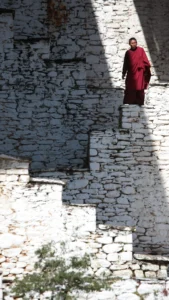
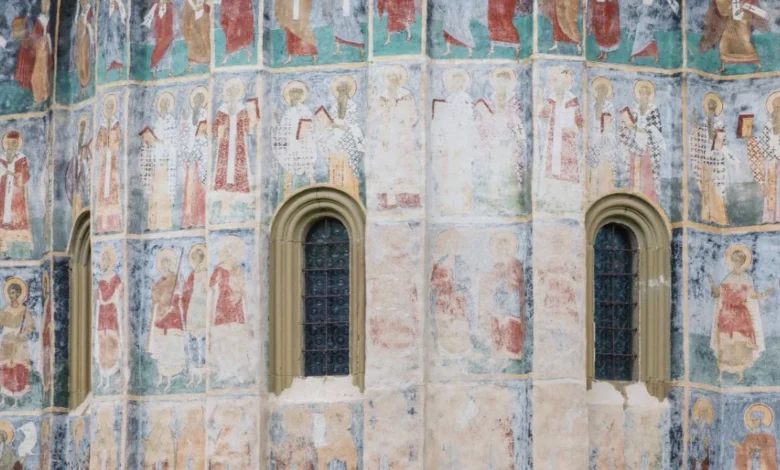
The region is internationally renowned for the "Churches of Moldavia," a collection of eight structures designated as a UNESCO World Heritage Site owing to their extraordinary 16th-century external and internal frescoes. During rest days from hiking, visitors frequently explore monasteries such as Sucevița and Moldovița. Built beneath sweeping, pagoda-style eaves, these structures are completely covered in narrative biblical art.

The facade of Sucevița depicts the intricate "Ladder of Virtues," illustrating the arduous spiritual ascension from earthly existence to heaven, while Moldovița displays a detailed family tree of Jesus Christ. Centuries of exposure to harsh mountain weather have taken a heavy toll; the northern exterior walls of Moldovița are nearly washed clean by the elements. Inside the open porches, historical scars remain visible, including Germanic names aggressively scratched into the plaster depicting the Last Judgment—tangible remnants of the Habsburg era when Orthodox institutions faced severe restrictions.
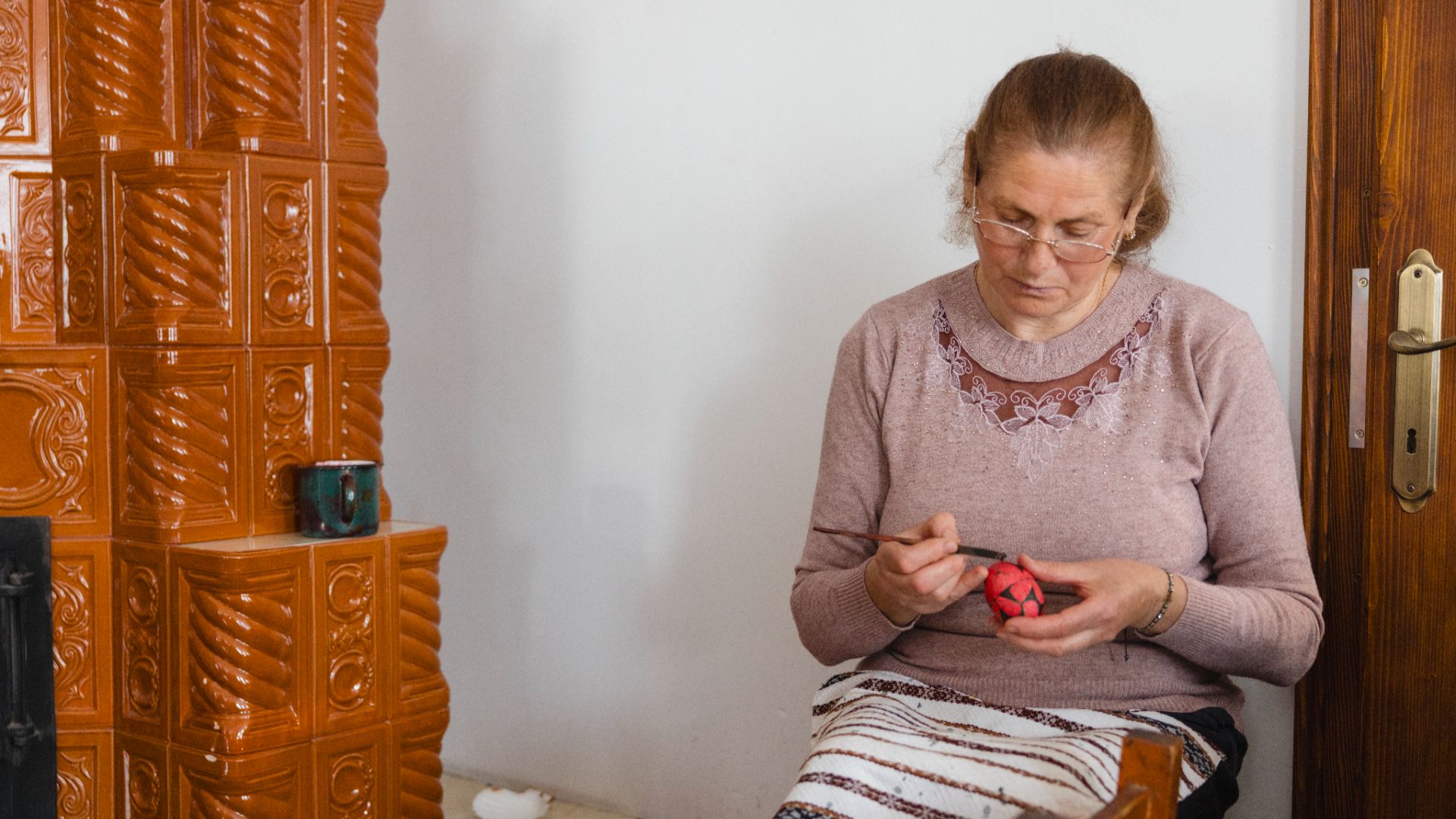
In the nearby village of Moldovița, master artisans like Viorica Semeniuc continue delicate, centuries-old traditions that predate the hiking trail by generations. Sitting in her immaculate living room decorated with religious icons and vibrant woven rugs, Semeniuc demonstrates the intricate batik technique of egg-painting, originally developed as an elaborate Easter ritual. Using pigmented beeswax warmed over a heat source and applied with a specialized copper stylus, she draws microscopic geometric patterns onto empty eggshells before submerging them sequentially in vats of colored dye. The final product features a striking, precise color palette of black, white, yellow, and red—the signature chromatic scheme of the village.
By opening their homes to the influx of hikers brought by the Via Transilvanica, residents like Semeniuc are ensuring that fragile, centuries-old artisanal traditions are transmitted to new generations rather than fading into obscurity.
Broader Implications and Future Outlook
The success of the Via Transilvanica points toward a viable blueprint for rural revitalization in Eastern Europe. By shifting the economic paradigm away from extractive industries like illegal logging and toward community-led sustainable tourism, the initiative demonstrates how environmental preservation can directly benefit local populations.
As Tășuleasa Social continues to expand infrastructure—such as standardized accommodation pods and digital mapping tools—the trail bridges the gap between rugged wilderness conservation and accessible eco-tourism. For Romania, a country historically vulnerable to the exploitation of its natural resources, the Via Transilvanica offers a powerful counter-narrative: one written not in felled timber, but in the footsteps of travelers and the thriving resilience of mountain villages.