Skipping Global Entry: How the Official Mobile Passport Control App Is Transforming U.S. Customs Re-Entry for Families


For families traveling internationally, navigating U.S. Customs and Border Protection (CBP) upon re-entry into the United States has historically presented a major logistical bottleneck. While programs like Global Entry offer expedited clearance, the rigorous application process, mandatory in-person interviews, and associated per-person fees often deter families from enrolling every member—particularly children who might miss school for interview appointments. To bridge this gap, U.S. Customs and Border Protection has increasingly promoted an alternative tool: the Mobile Passport Control (MPC) app. Operating as a free digital platform, the MPC app allows eligible travelers to submit their customs declaration forms and passport information electronically, bypassing standard kiosks and significantly reducing wait times upon arrival.
The Evolution and Architecture of Mobile Passport Control
The Mobile Passport Control program represents a significant evolution in digital border management. Initially introduced as a commercial, third-party application that required a fee for expedited features, the service has since been fully integrated and officially operated by U.S. Customs and Border Protection. The transition to a government-run, complimentary application has streamlined the customs process for millions of international travelers.
Unlike Global Entry or TSA PreCheck, the MPC app does not function as a "known traveler" program. Users are not required to undergo advance background checks, pay enrollment fees, or visit an enrollment center for an interview. Consequently, the app does not grant access to TSA PreCheck lanes for airport departures. Its utility is strictly limited to the re-entry process into the United States from international destinations.
To utilize the service, travelers download the free application from the Apple App Store or Google Play Store. The application architecture allows a single user to establish profiles for up to twelve family members, making it scalable for large families. Setting up a profile requires scanning the machine-readable zone barcode on a physical passport, validating the extracted data, and capturing a live photograph of each traveler. Upon landing on U.S. soil or at a designated preclearance location, users connect to cellular data or airport Wi-Fi, complete a brief digital customs declaration questionnaire replacing the traditional paper forms, and submit the data directly to CBP. Successful transmission generates an encrypted QR code receipt for each registered profile.
Geographic Availability and Expansion
Since its inception, the operational footprint of the Mobile Passport Control application has expanded significantly. As of late 2026, the service is accessible at 63 distinct points of entry across the United States and abroad. This network comprises 37 major U.S. international airports, 15 foreign preclearance locations, 4 land border ports of entry, 4 seaports of entry, and 3 departure locations.
Preclearance locations hold particular strategic value for international travelers. Situated in foreign airports—primarily in Canada, the Caribbean, Ireland, and the United Arab Emirates—these facilities house U.S. CBP personnel who conduct immigration, customs, and agriculture inspections before passengers board U.S.-bound flights. Travelers utilizing MPC at preclearance airports complete their customs processing abroad, allowing them to land in the United States as domestic passengers and exit the terminal immediately without undergoing further federal inspection.
Eligibility and Documentation Requirements
While the Mobile Passport Control app is designed to maximize accessibility, usage remains subject to specific regulatory parameters established by the Department of Homeland Security. The service is legally available to U.S. citizens, U.S. lawful permanent residents, Canadian citizens holding B1/B2 visitor status, and returning Visa Waiver Program travelers who possess an approved Electronic System for Travel Authorization (ESTA).
Despite the digitization of the declaration and queueing process, the application does not replace physical identification documents. Travelers are legally mandated to carry and present valid, unexpired physical passports to CBP officers upon reaching the inspection counter. Furthermore, submission of data through the app requires an active internet connection immediately upon arrival, and travelers must ensure their submissions accurately reflect their declaration items under penalty of federal law.
Operational Workflow at the Terminal
The practical application of the MPC app alters the typical passenger journey upon deplaning at a U.S. port of entry. Traditional processing requires arriving passengers to queue for biometric or touch-screen customs kiosks to scan documents and print physical receipts before joining the primary inspection line.
Travelers utilizing Mobile Passport Control are instructed to look for designated MPC signage upon entering the federal inspection services area. By bypassing the primary kiosks, users proceed directly to a specialized, dedicated MPC lane reserved for digital submissions. This separation typically results in a substantially shorter wait time compared to the general public queue.
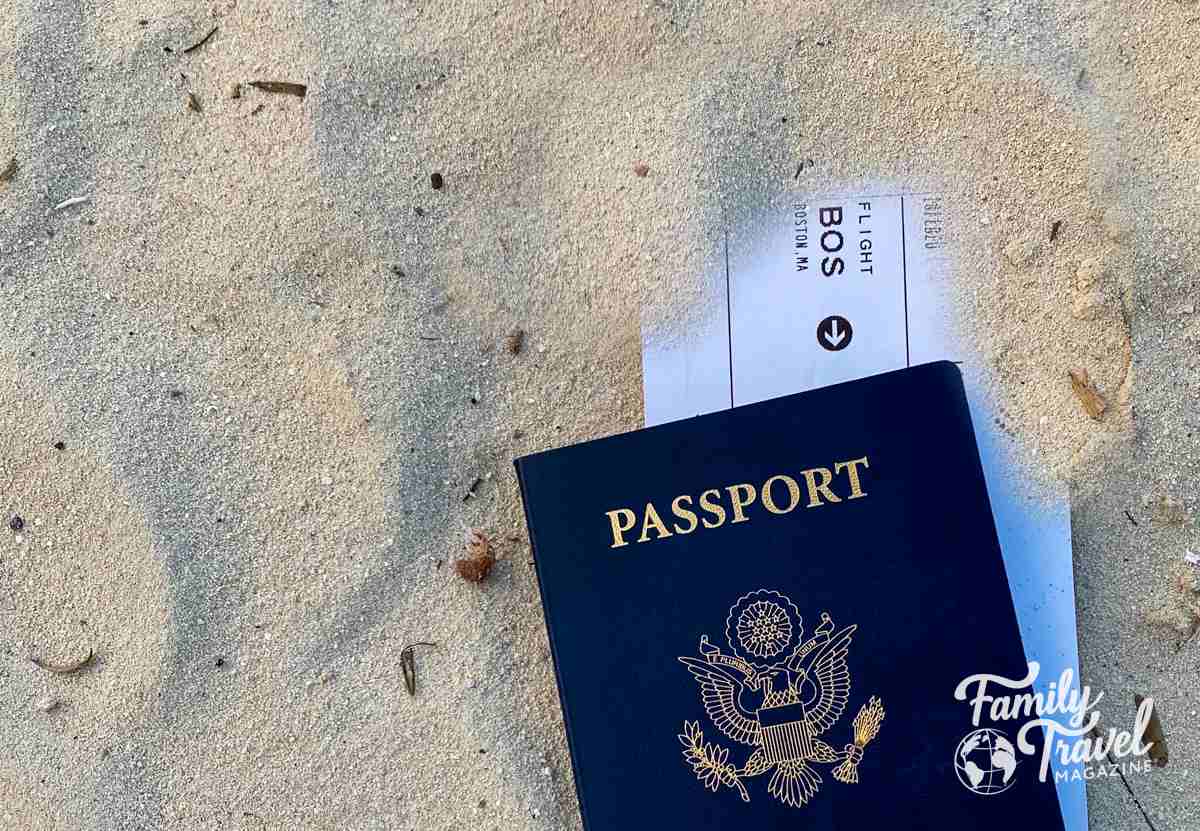
Once at the inspection podium, the traveler presents their physical passport alongside the QR code receipt displayed on their mobile device. The CBP officer verifies the electronic transmission against the physical documents, conducts standard questioning, and grants entry. Because the MPC processing loop functions with notable speed, families frequently report clearing the customs checkpoint before checked luggage has been transferred from the aircraft to the baggage carousel, highlighting a minor operational side effect of the app’s efficiency.
Comparative Analysis: MPC Versus Global Entry
For families evaluating the most efficient method for international travel, a direct comparison between Mobile Passport Control and Global Entry reveals distinct operational trade-offs.
Global Entry provides comprehensive benefits, including expedited security screening via TSA PreCheck lanes on domestic and departing flights, dedicated physical kiosks or biometric lanes upon return, and a membership validity period spanning five years. However, these advantages come with substantial friction: a non-refundable application fee per individual, mandatory background checks, fingerprinting, and lengthy scheduling backlogs for conditional approval interviews. For families with children, coordinating individual appointments can prove challenging, particularly when minors are required to appear in person alongside adult applicants.
Conversely, Mobile Passport Control requires zero financial investment, no advance screening, and no scheduling commitments. It accommodates up to twelve family members under a single device controller, eliminating the administrative burden of individual enrollments for children. Its primary limitation lies in its narrow scope: it offers no domestic departure security benefits (such as TSA PreCheck) and depends entirely on the availability of cellular or Wi-Fi connectivity upon landing. Furthermore, because MPC users do not undergo pre-screening vetting comparable to Global Entry members, they remain subject to standard random referrals for secondary agricultural or customs inspections.
Implications for the Travel Industry and Border Security
The widespread adoption of applications like Mobile Passport Control reflects a broader technological shift within U.S. Customs and Border Protection toward contactless, mobile-first passenger processing. By encouraging travelers to offload data entry onto their personal mobile devices prior to reaching federal inspection areas, CBP reduces terminal congestion, optimizes physical queue management, and minimizes the infrastructure footprint required for physical kiosks.
From an economic perspective, the availability of a free, high-efficiency alternative democratizes expedited travel for infrequent flyers and large family units who cannot justify the aggregate costs and administrative overhead of Global Entry memberships for every household member. Industry analysts note that while premium Trusted Traveler Programs will continue to cater to frequent business flyers and high-frequency international tourists, auxiliary tools like MPC provide a vital safety valve for peak travel seasons, significantly smoothing passenger flow through major international hubs like Boston Logan International Airport, John F. Kennedy International Airport, and Los Angeles International Airport.
Frequently Asked Questions
Is it worth installing and utilizing Mobile Passport Control?
For travelers who do not possess Global Entry memberships, setting up the free MPC app provides a practical hedge against long customs lines. Because installation and profile maintenance involve no financial cost or bureaucratic friction, it serves as an efficient tool for occasional international travelers.
Does the Mobile Passport app grant TSA PreCheck privileges?
No. The application is strictly engineered for U.S. re-entry customs processing. It does not interface with TSA security checkpoints, and users must still rely on traditional channels—such as standalone TSA PreCheck enrollment or Global Entry—to access expedited domestic security lanes.
Can a single smartphone manage submissions for an entire family group?
Yes. The application supports up to twelve individual profiles under one account administrator, allowing a single traveler to compile and submit customs declarations for all eligible family members simultaneously.
Are physical passports still required when using the application?
Yes. The digital receipt generated by the application supplements the customs declaration process but does not supersede legal identification requirements. Valid, unexpired physical passports must be presented to CBP officers at the inspection counter.
Who is authorized to use the Mobile Passport Control service?
Eligibility extends to U.S. citizens, lawful permanent residents, Canadian B1/B2 visitors, and returning Visa Waiver Program participants with an approved ESTA.
What constitutes a CBP preclearance location?
Preclearance locations are designated foreign airports where U.S. Customs and Border Protection personnel conduct immigration and customs inspections before departure. Passengers departing from these facilities complete all U.S. entry formalities abroad, permitting them to bypass customs inspection upon landing domestically.