UK man completes longest unsupported ocean row spanning 28,700km across the Pacific and Indian Oceans

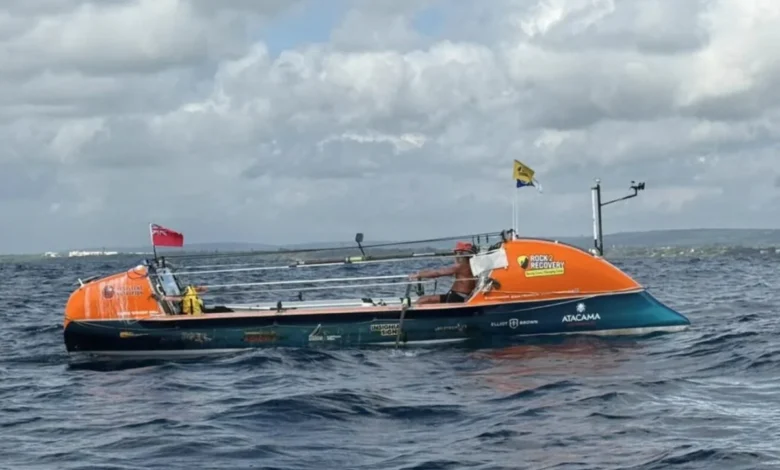
After an extraordinary 327 days, 17 hours, and 30 minutes at sea, Dave “Dinger” Bell has etched his name into the annals of maritime exploration. The British adventurer has officially concluded one of the most grueling and ambitious solo, unsupported rowing expeditions in history, traveling a staggering 28,700 kilometers from the west coast of Peru to the shores of Kenya. By traversing the vast expanse of both the Pacific and Indian Oceans without a single stop or external physical aid, Bell has pushed the boundaries of human endurance and nautical navigation.
The expedition, which commenced on November 9, 2025, represented a masterclass in logistics, mental fortitude, and survival. Armed with 350 days of provisions and a singular vessel, Bell’s objective was to prove that a human-powered crossing of two of the world’s most formidable oceans was achievable for a solo rower, provided they could navigate the psychological and physical volatility of the open sea.
A Chronology of the 28,700km Odyssey
Bell’s journey began in Peru, where he launched his vessel into the Pacific. The initial phase was defined by a pace that was, ironically, faster than he had anticipated. By April 2026, Bell found himself in a precarious position: he was making such rapid progress across the Pacific that he risked reaching the Coral Sea during the peak of the tropical cyclone season. This forced a significant tactical pivot.
To ensure his safety and the integrity of his boat, Bell was compelled to reduce his daily rowing hours, effectively “parking” in the middle of the ocean for weeks. This period of enforced inactivity proved to be one of the most significant psychological hurdles of the entire expedition. The contrast between the intense, high-energy requirement of rowing and the forced stillness required to avoid extreme weather events created a paradox that challenged his mental resilience.
By May 2026, he successfully navigated the Coral Sea, though not without incident. He faced severe weather conditions that nearly resulted in a capsize, forcing him to rely on his Emergency Position Indicating Radio Beacon (EPIRB) after water flooded his cabin. Despite these setbacks, the sight of the Australian coastline served as a critical morale booster. After carefully navigating the Great Barrier Reef and the narrow, treacherous passages of the Torres Strait, he transitioned into the Indian Ocean, marking the second major phase of his expedition.
The Indian Ocean presented a distinct set of environmental variables, characterized by unpredictable gale-force winds and poor visibility. In August 2026, a significant storm surge saw his vessel struck by a massive wave, resulting in further cabin flooding and a secondary emergency alert. Through a combination of precise equipment management and the use of a para-anchor, Bell managed to weather these storms, eventually arriving in Kilifi, Kenya, in early October 2026.
Logistical and Physical Data
Bell’s journey was characterized by high-stakes logistics. To survive nearly 11 months at sea, he relied on a tightly managed supply of rations calculated for 350 days. His ability to finish the journey with 20 days of food still in reserve is a testament to his strict self-discipline and effective caloric management.
The decision to divert his original terminus from Mauritius to Kenya added an estimated 1,800km to the total distance. This extension, necessitated by persistent southeasterly currents and prevailing weather patterns, increased the journey’s duration by roughly three weeks. From a data-driven perspective, this mid-expedition adjustment highlights the necessity for flexibility in long-distance ocean rowing. Bell’s success in covering the additional distance without depleting his supplies underscores the precision of his initial planning.
Psychological Implications and Human Endurance
The psychological toll of being isolated at sea for nearly a year is a subject of significant interest in the field of human performance. Bell’s strategy for maintaining mental health involved the consumption of audiobooks, podcasts, and recorded voice notes—tools designed to provide a semblance of social connection and cognitive stimulation.
In his communications, Bell noted that the approach to land was arguably as challenging as the departure. The shift from a life dictated by the immediate requirements of survival to the sudden influx of social interaction and the sensory stimulation of civilization caused a phenomenon he described as “total sensory overload.” Medical experts often note that the readaptation to gravity and the absence of the constant motion of the ocean can cause significant disorientation, a condition Bell experienced briefly upon his arrival in Kenya.
The Role of Technology and Safety Protocols
Bell’s expedition serves as a case study for modern ocean rowing safety. The reliance on satellite communication—specifically the use of InReach devices and EPIRBs—allowed him to maintain contact with support teams during moments of critical failure. While these devices are standard in modern ocean rowing, their role in facilitating “unsupported” status is often debated. In the context of this expedition, Bell remained truly unsupported in terms of physical replenishment or repair assistance; the technology served purely as a safety net to coordinate potential rescue efforts or to report status, rather than to receive external aid.
The equipment failure involving his autopilot system in the Indian Ocean forced him to rely on manual steering for the final legs of his journey, a physical drain that added immense strain to his daily routine. That he continued despite these mechanical failures speaks to the rugged nature of the vessel and the determination of the rower.
Broader Impact and Industry Recognition
The completion of this 28,700km row is likely to have significant implications for the ocean rowing community. It redefines the limits of what is considered a "standard" long-distance route, potentially inspiring future adventurers to consider trans-oceanic multi-leg journeys. Furthermore, his documentation of wildlife—such as the sharks that followed his vessel for weeks and the migratory birds that utilized his boat for rest—provides unique observational data from regions of the ocean that are rarely visited by humans.
In the wake of his return, maritime safety advocates have pointed to Bell’s experience as a reminder of the importance of redundant systems. While he did not require a formal rescue, his experiences with flooding and mechanical failure reinforce the necessity of rigorous testing and the maintenance of emergency protocols for any solo maritime venture.
Official Responses and Reflections
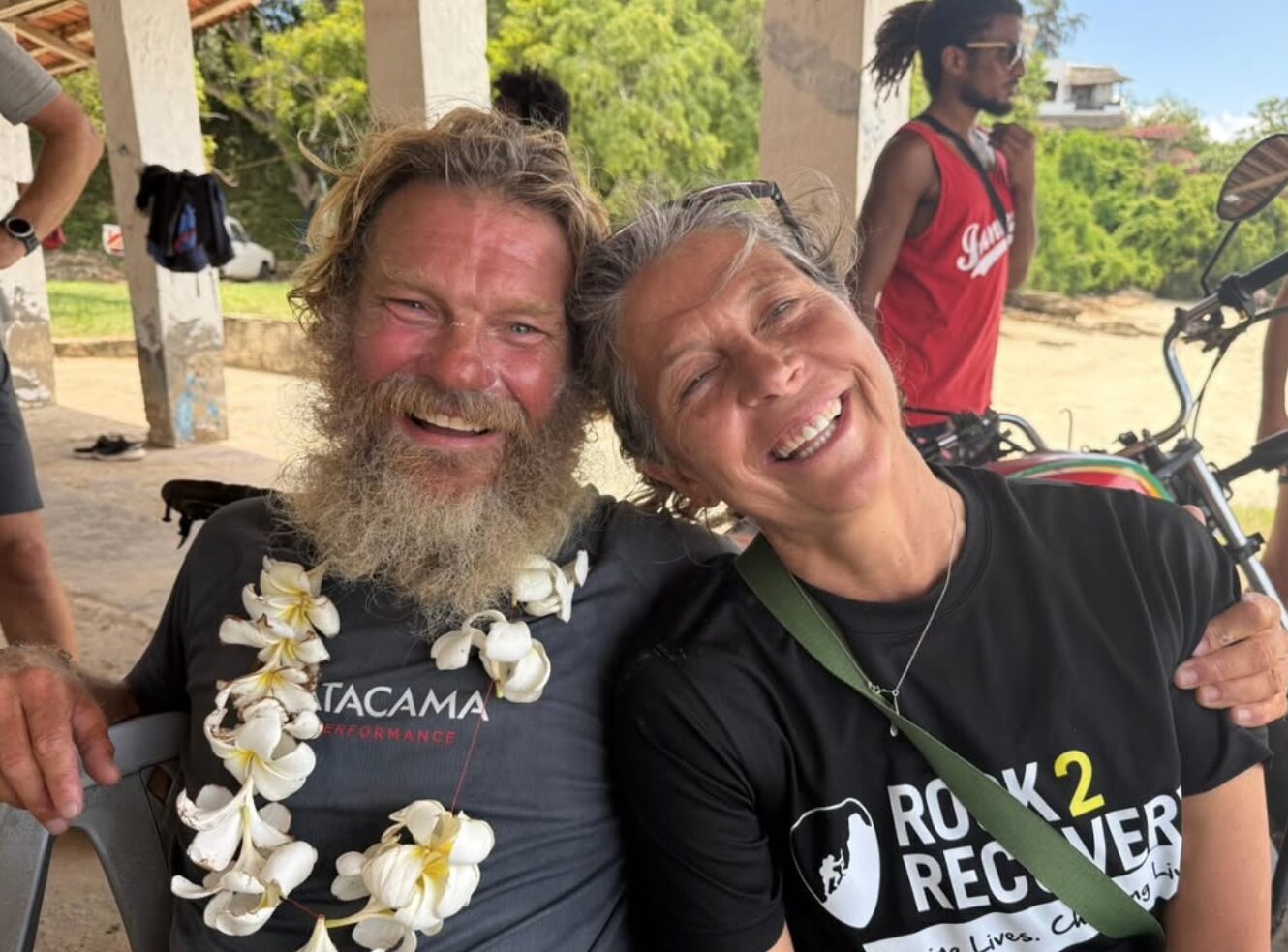
Upon his arrival in Kilifi, Bell was greeted by a support team, family, and local media. His first statements focused on the profound transition from the sea to the shore. “I’ve not stepped off that boat since the ninth of November,” he remarked. “This is the first time I’ve touched land.”
Observers noted that despite the physical atrophy associated with 327 days of sitting, Bell appeared remarkably stable. His successful recovery over the days following his arrival, characterized by a return to normal mobility and a transition back to a non-moving environment, has provided his team with valuable data regarding the long-term physical effects of ocean rowing on the human body.
The expedition concludes as a milestone in the history of human-powered travel. By prioritizing safety and adaptability over raw speed, Bell successfully navigated the intersection of extreme physical exertion and psychological endurance. His journey from Peru to Kenya stands not only as a record-breaking feat of distance but as a testament to the meticulous preparation required to survive the world’s most isolated environments. As the maritime community continues to analyze the logistical details of his trip, Bell’s feat will undoubtedly serve as a benchmark for future explorers seeking to test the limits of the human spirit against the backdrop of the open ocean.