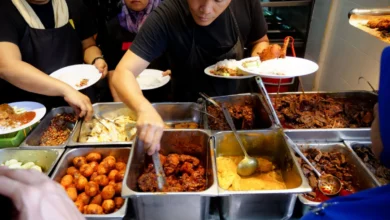
The Ultimate Culinary Itinerary: Exploring Melaka’s Historic Food Scene Through Five Essential Dining Destinations

Melaka, a coastal historical town situated on the west coast of Peninsular Malaysia, has long maintained its reputation as a premier gastronomic destination within Southeast Asia. Recognized globally for its rich multicultural heritage—which seamlessly blends Malay, Chinese, Peranakan (Baba-Nyonya), and Indian influences—the town offers a vibrant culinary landscape defined by aromatic herbs, fiery chilies, and complex flavor profiles. For travelers, culinary tourists, and food historians alike, navigating the vast array of local eateries can present a delightful challenge. To assist visitors in experiencing the most authentic flavors of the region, culinary researchers and travel authorities have compiled a definitive five-stop itinerary highlighting the finest traditional dining establishments in Melaka. This curated selection ranges from century-old coffee shops serving iconic Hainanese chicken rice balls to seaside charcoal grills specializing in freshly caught seafood infused with house-made chili sambals.
Background Context of Melaka’s Culinary Evolution
The distinctive character of Melakan cuisine is deeply rooted in the town’s history as a major international maritime trading port during the fifteenth century. Situated along the strategic Strait of Malacca, the settlement attracted merchants from China, India, the Middle East, and the Nusantara archipelago. This convergence of cultures fostered extensive intermarriages, giving rise to the Peranakan or Baba-Nyonya community, whose culinary traditions uniquely combine Chinese ingredients with local Southeast Asian spices, aromatics, and techniques.
Over subsequent centuries of colonial rule under Portuguese, Dutch, and British administrations, foreign ingredients and cooking methods were further integrated into the local diet. Today, Melaka’s food culture operates as a living archive of this history, drawing hundreds of thousands of domestic and international visitors annually. Culinary tourism has consequently emerged as a vital economic driver for the region, prompting local authorities and tourism boards to actively promote traditional heritage foods as part of Malaysia’s broader national identity.

1. Kedai Kopi Chung Wah: The Institutional Pioneer of Hainanese Chicken Rice Balls
The culinary itinerary begins in the heart of Melaka’s historic downtown, specifically at the corner of the renowned Jonker Street. Kedai Kopi Chung Wah represents a cornerstone of traditional Hainanese-Chinese kopitiam (coffee shop) culture in Malaysia. Operating within a traditional shophouse setting, the establishment is globally recognized for its signature creation: Hainanese chicken rice shaped into tightly packed, spherical balls.
Culinary Methodology and Preparation
Unlike standard plate-served chicken rice, the preparation at Chung Wah involves compressing freshly cooked, seasoned rice into spherical portions while hot. The rice is cooked in a rich poultry broth infused with substantial amounts of bruised garlic, ginger, and rendered chicken fat, imparting a distinct smokiness and depth of flavor to each bite. Paired alongside the rice balls is classic Hainan-style poached chicken, characterized by its delicately soft, fragrant skin and taut, succulent meat. Culinary purists note that boiling the chicken preserves the integrity of connective tissues, gelatinous joints, and marrow, yielding a multi-textured dining experience.

The dish is served with a specialized vinegar and garlic dipping sauce, which provides a sharp, tangy acidity designed to cut through the richness of the poultry and rice. Operating hours are strictly daytime, typically running from 9:00 AM until stocks are depleted—frequently by early afternoon due to high demand from both local patrons and international tourists. A standard meal for multiple diners generally averages around 28 Malaysian Ringgit (RM), making it an accessible historical food experience.
2. Asam Pedas Pak Man: Mastery of Sour and Spicy Curry Broths
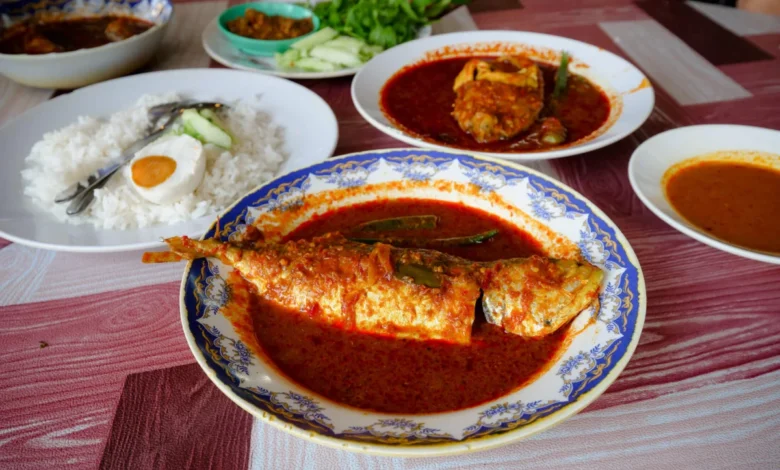
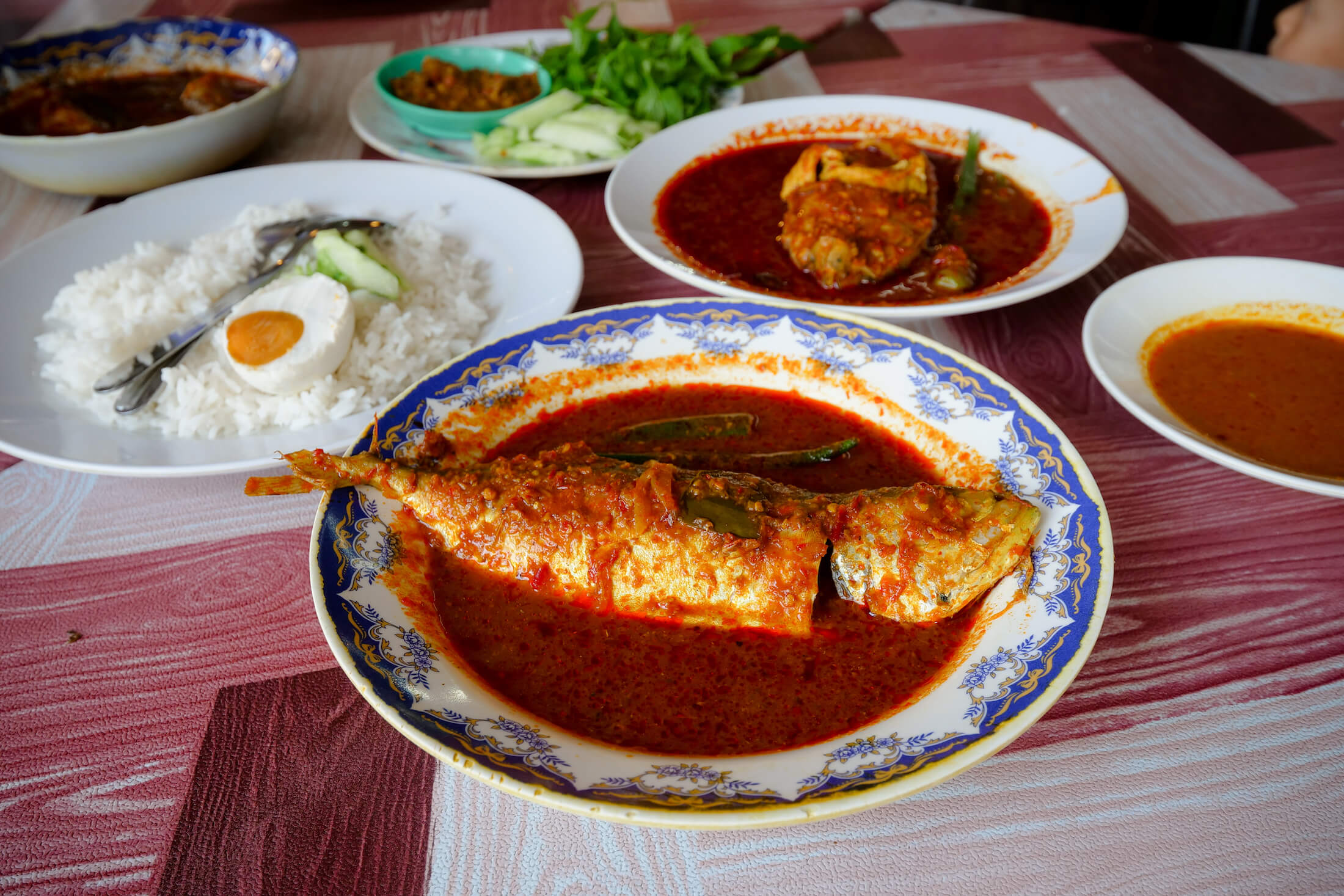
Moving deeper into the local neighborhood dining scene, the second destination on the itinerary highlights asam pedas, one of Malaysia’s most celebrated sour and spicy curry preparations. Asam Pedas Pak Man, located slightly away from the immediate tourist core, has earned a stellar reputation for its uncompromising dedication to traditional spice grinding and broth simmering techniques.

Flavor Profiles and Ingredient Selection
Asam pedas, which literally translates to "sour spicy," derives its characteristic flavor profile from a base of tamarind juice (asam) combined with a heavy paste of dried red chilies, lemongrass, galangal, and turmeric. The resulting bright red soup is simmered for hours with various proteins, most notably locally caught ocean fish such as baramundi (ikan tongol) or skipjack tuna.
According to culinary analyses of the region, the acidic tartness of the tamarind acts as a flavor enhancer that balances the intense heat of the chilies and the natural sweetness of fresh fish. In addition to its signature fish curries, Pak Man is locally esteemed for serving traditional Malay-Peranakan snacks known as kuih—coconut-based delicacies that frequently sell out shortly after the restaurant opens its doors at 8:00 AM. Patrons commonly pair the main curry dishes with fresh local herbs and sambal belacan (a pungent fermented shrimp paste chili relish), elevating the overall dining experience. A comprehensive meal for a small group generally costs approximately 73 RM.

3. Klebang Original Coconut Shake: Modern Refreshements and Local Crazes
To counterbalance the robust heat and spices of the morning meals, the third stop directs visitors slightly northwest of the town center toward the coastal area of Klebang for a popular modern beverage phenomenon: the original coconut shake.
The Rise of the Coastal Beverage Industry
Established as a modest roadside cart before expanding into a high-capacity operation, the Klebang Original Coconut Shake stall addresses the tropical climate of Peninsular Malaysia with a refreshing dairy-and-fruit combination. The beverage is prepared by blending freshly extracted coconut water and tender young coconut flesh with crushed ice, subsequently crowned with a generous scoop of vanilla ice cream.

The establishment offers regular and "special" variations—the latter featuring double scoops of ice cream—alongside savory local accompaniments such as nasi lemak (coconut milk rice) and keropok (traditional fish crackers). With prices ranging from 2.40 RM to 2.95 RM per beverage, the site handles thousands of orders daily, reflecting the massive scale of domestic food tourism in Melaka. The location also provides insights into how traditional ingredients (coconuts) are continuously adapted into contemporary street food culture.
4. Ban Lee Siang Satay Celup: Communal Dining and Interactive Skewers
Returning to downtown Melaka, the fourth destination introduces diners to satay celup, an interactive culinary tradition that merges Chinese steamboat dining concepts with rich Malay peanut and satay sauces. Ban Lee Siang stands as one of the oldest and most respected purveyors of this specialized cuisine.

The Mechanics of Satay Celup
The operational model of satay celup is centered on self-service and communal dining. Diners select from a vast array of raw and semi-cooked ingredients—including skewered meats, seafood, quail eggs, mushrooms, and vegetables such as Chinese brown tofu—displayed on long wooden sticks. Instead of individual cooking pots, tables share a central, communal urn filled with a thick, simmering peanut-and-spiced satay gravy that deepens in flavor as various ingredients are dipped and cooked within it over the course of the meal.
At the conclusion of the dining experience, the final tally is calculated simply by counting the discarded wooden sticks left on the table, with each skewer priced uniformly at approximately 1 RM. This transparent pricing structure, combined with the interactive nature of the meal, has made satay celup a staple of family dining and social gatherings in Melaka.

5. Ikan Bakar Hj Musa: Charcoal-Grilled Seafood Excellence
The final stop on the culinary tour takes diners to the coastal fringes of Melaka to experience traditional Malaysian charcoal-grilled seafood, locally known as ikan bakar. Ikan Bakar Hj Musa is frequently cited by regional food critics and local residents as one of the premier seafood destinations in the country.
Charcoal Techniques and Sambal Application
The preparation method at Ikan Bakar Hj Musa relies heavily on precise temperature control using open charcoal pits. Customers select raw seafood—ranging from stingray (ikan pari) and squid to tiger prawns and various reef fish—measured and priced per 100 grams. Once selected, the seafood is brushed with a proprietary chili sambal paste before being wrapped in banana leaves and placed directly over glowing coals.

As the fish roasts, the heat causes the applied layer of cool chili paste to partially caramelize and fuse with the natural juices of the seafood, creating a textured, jam-like glaze rich in shallots, chili, and aromatic herbs. Side dishes of salted grilled shrimp and Chinese-style stir-fried greens complement the heavy protein focus. A typical multi-person seafood feast at the establishment ranges around 99 RM, providing a fitting conclusion to a comprehensive exploration of Melaka’s food culture.
Broader Economic and Cultural Implications
The enduring popularity of these five culinary destinations underscores the economic resilience of traditional foodways in Malaysia. While rapid urbanization and modernization have transformed many urban centers across Southeast Asia, Melaka’s dedication to preserving heritage recipes—ranging from Hainanese rice balls to Peranakan curries—serves as a vital anchor for cultural tourism.

For policymakers and local business owners, the standard of excellence maintained by establishments like Kedai Kopi Chung Wah and Asam Pedas Pak Man demonstrates that culinary authenticity remains a primary driver of sustainable regional development. As domestic and international travel continues to evolve post-pandemic, structured food itineraries provide an effective framework for visitors to engage meaningfully with local history, supporting multi-generational family businesses and safeguarding intangible cultural heritage for future generations.
Related posts: