Slothee Still Wants Coffee Expands Global Childrens Literature Series with Cultural Exploration and Educational Adventures

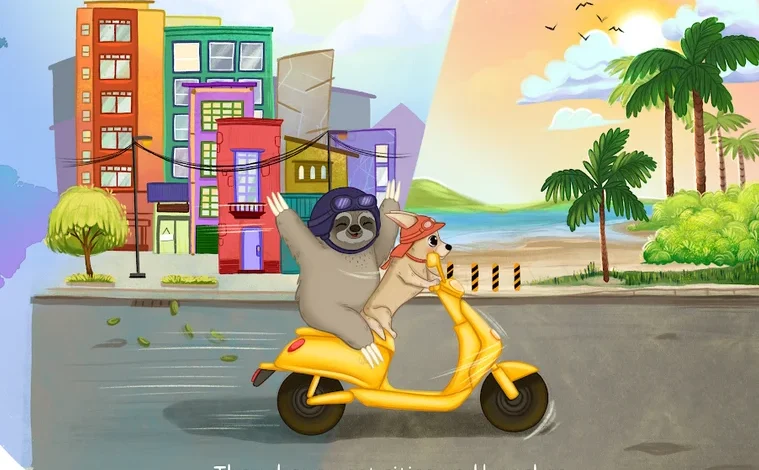
The landscape of children’s literature continues to evolve with the official release and ongoing expansion of Slothee Still Wants Coffee, the second installment in the popular Slothee and Friends book series. Designed to engage young readers and adults alike, the publication follows the titular character, Slothee, on an extensive international journey spanning multiple continents in search of the world’s finest cup of coffee. Beyond the central narrative quest, the book functions as an educational resource, introducing children to diverse cultures, geography, international agricultural traditions, and the value of global friendship. The release marks a significant milestone for the series, building upon the foundational success of its predecessor while establishing a broader educational framework that addresses cultural literacy and global awareness in early childhood education.
Background and Origins of the Slothee and Friends Series
The inception of the Slothee and Friends series stems from a growing demand in the children’s publishing market for literature that seamlessly blends entertainment with geographic and cultural education. In an increasingly interconnected global society, early childhood educators and literary experts have consistently emphasized the importance of introducing children to cultures outside their immediate environments. The character of Slothee was originally conceived to serve as a relatable, unhurried guide through complex global landscapes, utilizing the universal appeal of travel and culinary exploration—specifically through the lens of coffee and tea culture—to spark curiosity in young minds.
The first book in the series introduced readers to Slothee and established the character’s overarching motivation: discovering the ultimate cup of coffee. Building upon that premise, Slothee Still Wants Coffee expands the geographic scope significantly. While the inaugural title focused on establishing character traits and localized adventures, the second installment adopts a macro-level approach, mapping out a multi-nation expedition that reflects the actual global coffee belt and major agricultural regions associated with the beverage.
Chronology of Slothee’s Global Expedition
The narrative structure of Slothee Still Wants Coffee follows a carefully mapped itinerary that mirrors real-world trade routes and prominent coffee-producing nations. The chronological progression of Slothee’s journey takes readers across the globe, offering localized insights into each stop along the way.
The expedition commences in Costa Rica, a nation globally renowned for its high-altitude bean cultivation and rich volcanic soil. Here, Slothee is introduced to traditional harvesting methods and the ecological dedication required to produce specialty coffee. From Central America, the narrative transitions to Peru, where Slothee explores the Andean highlands, encountering cooperative farming structures and indigenous agricultural practices that have been passed down through generations.
Moving northward, the journey continues in Mexico, highlighting the vibrant cultural tapestry of Mesoamerica, the integration of coffee into daily community life, and the rich biodiversity of the region’s shade-grown plantations. The itinerary then crosses the Caribbean to Jamaica, where Slothee explores the prestigious Blue Mountain region, learning about the stringent quality controls and unique microclimates that contribute to some of the world’s most sought-after and expensive coffee varieties.
The expedition then extends across the Atlantic to the African continent, specifically stopping in Uganda. This leg of the journey introduces readers to the birthplace of Robusta coffee and the vital role that smallholder farmers play in the nation’s economy, emphasizing community resilience and agricultural innovation. Asia is represented through a vibrant stop in Vietnam, the world’s second-largest coffee producer, where Slothee experiences the distinct roasting traditions, unique brewing apparatuses, and bustling café culture characteristic of Southeast Asia.
Finally, the voyage concludes in Australia, representing the contemporary epicenter of specialty coffee culture. In Australia, Slothee observes modern café innovations, urban coffee roasting techniques, and the fusion of global coffee trends within a multicultural metropolitan setting. This chronological and geographical progression ensures that readers are exposed to a wide array of ecosystems, social structures, and economic models associated with a single global commodity.
Supporting Data and Educational Impact in Childrens Literature
The integration of agricultural education and cultural geography within children’s literature represents a strategic pedagogical approach supported by literacy and childhood development data. According to educational studies compiled by organizations such as the National Association for the Education of Young Children (NAEYC), children exhibit a heightened capacity for cultural empathy and geographic retention when abstract concepts are anchored to narrative-driven characters and sensory experiences.
Statistics from the publishing sector indicate a steady rise in demand for non-fiction and culturally diverse fiction aimed at readers aged four through ten. Books that incorporate global trade elements—such as how coffee travels from a farm to a cup—contribute to financial and ecological literacy at an early age. By contextualizing the origins of everyday items, publications like Slothee Still Wants Coffee bridge the gap between consumer products and the global labor force, fostering an early appreciation for international agriculture.
Furthermore, reading comprehension metrics demonstrate that multi-setting narratives improve spatial awareness and map-reading skills in elementary school students. When children follow a character across Costa Rica, Peru, Mexico, Jamaica, Uganda, Vietnam, and Australia, they are implicitly engaging with global cartography, encouraging them to locate these nations on a world map and ask informed questions regarding international geography.
Industry and Educational Responses
Educators, librarians, and literary critics have offered favorable evaluations of the Slothee and Friends series, noting its effectiveness as both a recreational read and a supplemental classroom tool. Elementary school educators have highlighted the book’s utility in social studies and geography curricula, where teachers frequently seek accessible media to introduce concepts of international trade and cultural diversity.
Literary analysts point out that the decision to use a sloth—an animal famously known for its deliberate, unhurried pace—creates a unique narrative contrast with the fast-paced nature of modern global travel. This stylistic choice encourages young readers to slow down, observe details, and absorb cultural nuances rather than rushing through the plot. Industry observers have further noted that the series successfully fills a distinct niche in the children’s market, combining culinary anthropology with accessible adventure fiction.
While formal corporate endorsements are absent from independent literary projects of this scale, independent bookstores and children’s literature reviewers have praised the visual design, cultural sensitivity, and accuracy with which international landscapes are depicted. The collaborative effort between authors, illustrators, and cultural consultants ensures that each country visited is represented with authenticity and respect, avoiding homogenized stereotypes in favor of genuine cultural appreciation.
Broader Implications and Future Outlook
The release and reception of Slothee Still Wants Coffee carry broader implications for the future of thematic children’s publishing. As parents and educators increasingly prioritize global citizenship and inclusivity, content creators are challenged to produce materials that expand young worldviews beyond domestic borders. The success of the Slothee series demonstrates that children are fully capable of engaging with complex, international themes when presented through engaging, character-driven storytelling.
Looking ahead, the creators of the Slothee and Friends franchise have announced plans for further expansions within the literary universe. Future publications are slated to explore additional facets of global beverage culture, including comprehensive explorations of international tea traditions, regional preparation methods, and expanded world adventures that introduce new animal companions and ecological lessons. These upcoming releases aim to solidify the franchise as a comprehensive resource for global cultural education.
Ultimately, Slothee Still Wants Coffee transcends its status as a simple picture book, functioning as a gateway to global awareness. By tracing the journey of a simple cup of coffee across seven distinct regions, the publication equips young readers with an early understanding of the interconnected world, the diversity of human culture, and the universal bonds of friendship that connect communities across oceans and continents.