Scaling the Seven Levels of Wat Phu Tok: Thailand’s Architectural and Spiritual Marvel in Bueng Kan

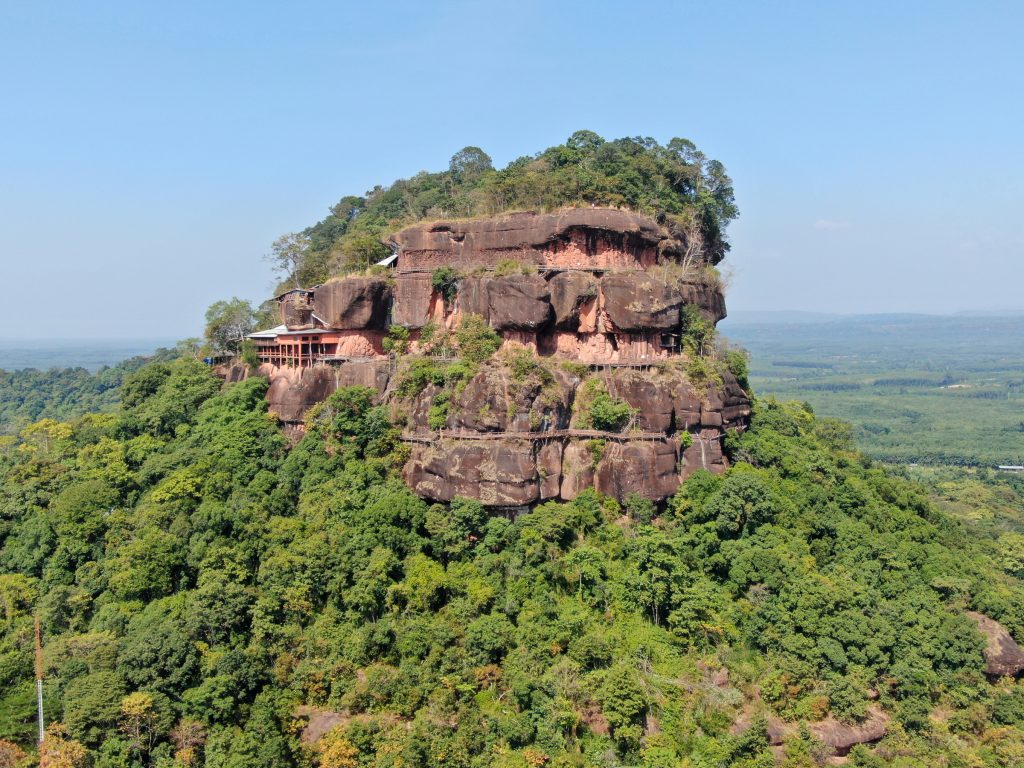
Steeped in spiritual significance and architectural ingenuity, Wat Jetiyakhiri—widely recognized as Wat Phu Tok—stands as one of Thailand’s most extraordinary cultural landmarks. Situated in the remote northeastern province of Bueng Kan, deep within the Isan region, the temple complex offers a unique convergence of ascetic Buddhist tradition and perilous mountain engineering. Translating locally from the Isan dialect as the "lonely mountain," Phu Tok is a solitary sandstone monolith rising 359 meters above the surrounding flat terrain. Over the decades, this isolated geological formation has transformed from a snake-infested wilderness into a profound pilgrimage site featuring a labyrinth of wooden cliffside walkways representing the seven stages of Buddhist enlightenment.
Main Facts of the Temple Complex
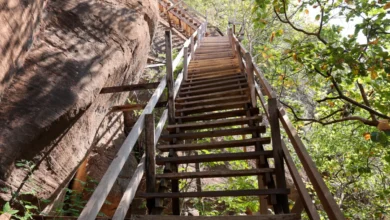
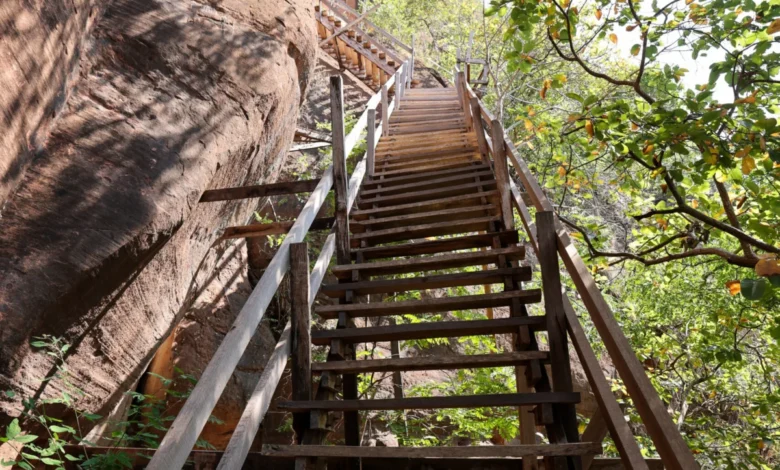
Wat Phu Tok is located approximately 30 minutes by road from Bueng Kan city center. The defining feature of the site is its intricate network of hand-built wooden stairs, ladders, and scaffolding-style walkways anchored directly into the sheer vertical faces of the red sandstone rock. Designed to facilitate meditative isolation, the scaffolding system wraps around the mountain’s circumference, ascending through seven distinct tiers. While the lower tiers serve as foundational approaches and feature basic ordination halls, the upper tiers—particularly levels five and six—offer sweeping panoramic views of the Mekong River basin and dense regional forestry, alongside intricate networks of shrines, caves, and meditation cells.

Historical Chronology and Origin
The genesis of Wat Phu Tok dates back to the late 20th century, shaped by the vision of the revered ascetic monk Luang Pu Juan. Historically, the rugged terrain, dense thickets, and high concentration of venomous serpents made the mountain virtually uninhabitable and rarely visited by locals. However, these very elements of isolation and danger drew Luang Pu Juan, who sought a remote sanctuary conducive to deep Buddhist meditation.

In recognition of the mountain’s potential as a spiritual retreat, the monk spearheaded a monumental construction project. Alongside local laborers and devout followers, Luang Pu Juan engineered a system of wooden staircases and walkways designed to make the upper sections of the cliff accessible. The architecture was deliberately structured into seven levels, aligning directly with the Buddhist theological concept of the seven stages of spiritual awakening and mental purification (Saptabojjhanga).
Despite the tragic death of Luang Pu Juan in an aviation accident, construction and maintenance of the wooden pathways have continued under successive generations of monks and local administrative support. The site remains an active monastery, functioning simultaneously as a place of monastic devotion and a destination for adventurous travelers.

Architectural Layout and the Seven Levels
Navigating Wat Phu Tok requires physical stamina and a tolerance for heights, as the ascent transitions from conventional forest trails to cantilevered wooden planks suspended over steep drops.

The journey begins at the base of the mountain, where a large lake and park area welcome visitors before the terrain steeply inclines. The initial levels feature modest stone and wooden steps that gradually steepen into ladder-like configurations.
Level One through Four: Serving as the transitional zones from the base forest, these levels feature minor shrines and vegetation-choked cliff faces. The wooden planks here begin to demonstrate the characteristic bounce and angle typical of the mountain’s elevated pathways.

Level Five: Marking a significant structural shift, the fifth level serves as the primary hub of the temple grounds. Unlike the narrow cliffside traverses, this tier features wide ground-level pathways, extensive courtyards, and the complex’s largest ordination hall. It also houses diverging paths that lead to secluded rock-cut shrines cantilevered off the main body of the mountain, representing a notable architectural detour.
Level Six: Widely regarded as the structural and experiential highlight of Wat Phu Tok, the sixth level is split evenly between ground-level walking paths and precarious wooden walkways anchored directly into the rock cliffs. Spanning the circumference of the mountain, these wooden planks offer unobstructed views of the Bueng Kan landscape and the distant Mekong basin. While structural engineers and maintenance crews routinely inspect the hardware securing the walkways to the sandstone, the illusion of exposure provides an intensely thrilling experience for visitors.

Level Seven: Representing the summit of the mountain, the final tier is historically noted for its high population of venomous snakes. Access to the seventh level is undertaken strictly at the visitor’s own risk. Unlike the engineered walkways of the lower tiers, the summit lacks extensive man-made infrastructure, consisting primarily of natural forest canopy and vantage points overlooking the region.
Socio-Economic Impact and Tourism in Bueng Kan

The inclusion of Wat Phu Tok has significantly influenced the tourism profile of Bueng Kan, which was established as Thailand’s 77th province in 2011 after separating from Nong Khai. Historically reliant on agriculture and cross-border trade with Laos, the province has gradually integrated cultural and eco-tourism into its local economy.
Regional tourism authorities and hospitality stakeholders have noted an incremental rise in domestic and international visitors drawn to Isan’s off-the-beaten-path attractions. Unlike the overcrowded temple complexes of Bangkok, Chiang Mai, or Ayutthaya, Wat Phu Tok offers an experience characterized by vast open spaces, ecological preservation, and remote serenity. However, provincial planners emphasize the importance of sustainable tourism management to protect the fragile sandstone ecology and ensure the structural integrity of the aging wooden infrastructure.

Safety Protocols and Analytical Implications
The physical nature of Wat Phu Tok necessitates strict adherence to safety protocols. Structural assessments indicate that while the wooden planks and anchor bolts undergo regular maintenance by the resident monastic community and local volunteers, the environmental exposure to seasonal monsoons accelerates wear and tear on organic building materials.

Experts in heritage site management emphasize that balancing public access with historical preservation remains a primary challenge for remote sites like Wat Phu Tok. The absence of heavy modern safety barriers on the sixth-level cliff walks preserves the authentic, unvarnished aesthetic of the meditation paths, but it places the onus of responsibility directly on the visitor. Consequently, tourism boards and safety officials continuously advise mindfulness, appropriate footwear, and strict adherence to designated pathways to mitigate the risk of falls in an environment where a single misstep could result in severe injury or fatality.
Broader Significance within Thai Buddhism

Beyond its architectural novelty and tourism appeal, Wat Phu Tok holds deep significance within the Thai Forest Tradition of Theravada Buddhism. The physical act of scaling the seven tiers serves as an active metaphor for the monastic struggle against sensory distraction, fear, and attachment. By embedding sacred shrines within the dangerous topography of a remote mountain, the creators of Wat Phu Tok reinforced the foundational Buddhist belief that profound spiritual clarity is often achieved by confronting physical vulnerability and embracing the quiet isolation of the natural world.
Related posts: