Beyond Sustainability: How Regenerative Travel is Redefining Global Tourism in Singapore

The global tourism industry stands at a critical historical crossroads, forced to reckon with the profound environmental and social impacts of mass mobility. For decades, the vanguard of responsible tourism championed the ethos of sustainable travel: a framework focused primarily on mitigation, damage control, and conservation. Travellers were encouraged to minimise their carbon footprints, reduce single-use plastics, respect local cultural norms, and tread lightly upon fragile ecosystems. However, as the compounding crises of accelerated climate change, severe overtourism, and deepening ecological degradation continue to mount, industry leaders, policymakers, and environmental scientists are concluding that simply doing less harm is no longer sufficient.
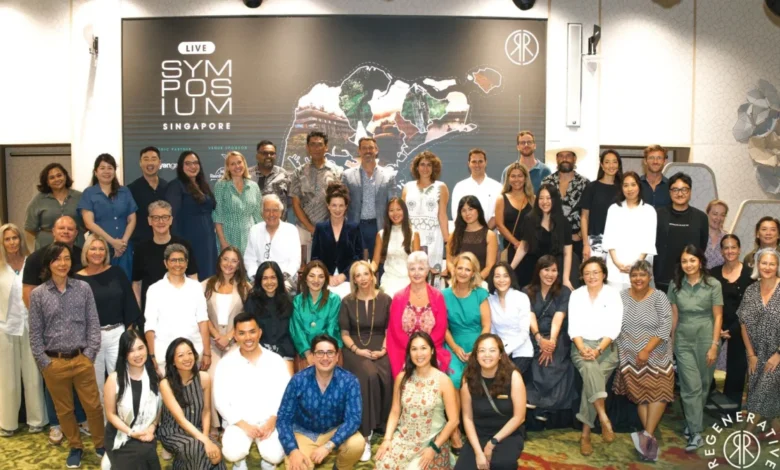
This urgent imperative served as the central thesis at the recent Regenerative Travel Asia Symposium held in Singapore. Gathering at the cutting-edge Mandai Rainforest Resort by Banyan Tree, international hospitality leaders, Indigenous community representatives, conservationists, and sustainable travel advocates convened to interrogate a paradigm-shifting question: What if the travel and tourism industry could actively restore ecosystems, strengthen local communities, and rebuild our relationship with the natural world rather than merely sustaining it?
The multi-day summit provided a crucial platform for dissecting the transition from conventional, consumption-driven tourism models to an integrated, regenerative framework. By moving beyond the preservationist mindset, regenerative travel establishes a dynamic operational standard where visitors, hospitality providers, and host communities act as mutual benefactors in a thriving, interconnected global network.
The Evolution of Travel: From Consumption to Regeneration
To understand the current momentum behind regenerative travel, industry analysts point to a long-standing historical trajectory defined almost exclusively by extraction. Since the advent of commercial mass aviation in the mid-20th century, global tourism has operated primarily as a consumerist enterprise. Destinations have frequently been marketed as commodities to be consumed, photographed, and abandoned, often leaving behind severe resource depletion, economic displacement, and ecological strain.
The Regenerative Travel Asia Symposium marked a concerted effort to dismantle this extractive model. Amanda Ho, co-founder and CEO of Regenerative Travel, set the intellectual and philosophical tone during her opening address. Ho described regenerative tourism not merely as an operational strategy, but as a fundamental psychological and systemic shift—moving from the head to the heart, from a mindset of scarcity to one of abundance, and from an individualistic focus to a collective responsibility. She challenged delegates and participants to conceptualise tourism as a living relationship between people, places, and nature, rather than a transactional industry.
Reinforcing this perspective, keynote speaker Juliet Kinsman highlighted the philosophical dangers of humanity’s perceived separation from the natural world. In an increasingly digital, hyper-technological age defined by artificial intelligence and virtual experiences, Kinsman argued that the most vital task facing society is "regenerating humanity." This human-centric restoration involves actively rebuilding our visceral connections to the planet and to one another, ensuring that technological advancements do not further alienate us from the ecological systems that sustain all life.
The Traveller’s Paradox: Intent versus Action
Consumer sentiment data presented at the symposium indicates that a profound shift in traveller consciousness is already underway. Jeremy Tran of Sustainable Travel Asia shared compelling research commissioned by global travel platform Booking.com, revealing that an overwhelming 85% of modern travellers actively desire more sustainable travel options. Furthermore, 69% of respondents expressed a clear aspiration to leave the destinations they visit better than they found them.
Despite these encouraging statistics, the symposium highlighted a pervasive disconnect: the vast chasm between wanting to travel responsibly and knowing how to execute that desire effectively.
Tran pointed directly to the pervasive influence of social media in distorting contemporary travel patterns. In the modern digital landscape, viral algorithms can transform obscure local communities and fragile natural environments into global tourism trends overnight. This hyper-accelerated exposure frequently triggers severe overtourism, overwhelming local infrastructure and displacing residents. The symposium underscored the critical need for intentional travel—prompting consumers to interrogate their motivations before booking a trip. Travellers are increasingly urged to look past curated digital trends and evaluate why they are travelling, how their presence impacts the host region, and whether their expenditure directly benefits local populations.
Wellness, Culture, and the Principle of Exchange
Another prominent thematic pillar at the Singapore symposium was the intersection of wellness tourism and regenerative practices. Historically, wellness travel has focused narrowly on individual restoration—offering spa treatments, meditation retreats, and fitness programmes that utilize local healing traditions, Indigenous botanical knowledge, and ancient practices.
Regenerative travel broadens this scope exponentially, asking a transformative question: Can a wellness retreat simultaneously restore the psychological, social, and ecological wellbeing of the very communities and ecosystems that make those healing experiences possible? By framing regeneration as a relational rather than purely environmental concept, industry experts emphasized that true wellness cannot exist in an isolated bubble while local ecosystems degrade or host communities suffer economic distress.
This holistic view extends directly to cultural exchange. Indigenous populations and traditional communities must never be reduced to passive hosts or scenic backdrops for tourist entertainment. Instead, travel experiences must be rooted in genuine, equitable cultural exchange rather than economic extraction.
Maitri Fischer, a leader in environmentally sustainable design with Eco-Mantra, addressed the stark operational challenges that arise when rapid tourism development outpaces local community governance. Drawing upon the cautionary tale of Bali, Fischer detailed the severe socio-environmental pressures caused by hyper-overdevelopment, including critical waste management bottlenecks, agricultural land loss, and unsustainable strain on local water supplies and energy infrastructure. Fischer argued that for tourism to achieve genuine regeneration, host communities must be elevated from mere recipients of economic trickle-down benefits to active, empowered decision-makers shaping the future of their own lands and cultural heritage.
Industry in Action: Case Studies of Regeneration
While individual consumer choices are vital, the operational transformation of the global tourism sector ultimately depends on the proactive leadership of hotels, resorts, tour operators, and destination management organisations. Several pioneering hospitality groups showcased concrete, scalable models of regenerative tourism during the symposium, proving that commercial viability and ecological restoration can coexist.
Prominent regional operators such as the Banyan Group, The Datai Langkawi, and Potato Head Bali presented innovative case studies detailing how their properties actively contribute to local healing processes. However, one of the most widely cited benchmarks of comprehensive regeneration discussed at the event was Song Saa Private Island in Cambodia.
Established on a tract of degraded land with the explicit vision of ecological restoration rather than traditional luxury development, Song Saa demonstrated the profound impact of purpose-driven hospitality. Through the establishment of the Song Saa Foundation, the resort played a pivotal role in creating Cambodia’s first officially recognized Marine Protected Area, safeguarding vital coral reefs and marine biodiversity. Furthermore, the property prioritizes local employment, with approximately 75% of its workforce drawn directly from surrounding rural communities. On-site operational strategies—including advanced waste management, systematic food waste reduction, and comprehensive rainwater harvesting systems—drastically minimize the resort’s environmental footprint. Crucially, Song Saa integrates its guests into this ecological journey, inviting visitors to participate in active coral restoration dives, marine research, and community outreach programmes, thereby transforming passive tourists into active environmental stewards.
Economic Accessibility and the Risk of Greenwashing
Despite these inspiring success stories, industry leaders at the symposium did not shy away from confronting systemic challenges and potential pitfalls facing the regenerative movement.
Foremost among these concerns is the looming threat of greenwashing. As "regenerative travel" gains traction as a global buzzword, there is a distinct commercial risk that the term will be co-opted as a superficial marketing label rather than backed by substantive operational changes. Experts warned that unless regenerative claims are anchored in radical transparency, verifiable community participation, and measurable long-term ecological metrics, the movement risks losing its credibility. Both corporate stakeholders and individual consumers bear a collective responsibility to demand accountability and rigorous third-party verification.
Furthermore, critical discussions emerged regarding economic accessibility. If regenerative travel remains confined exclusively to the ultra-luxury market—exemplified by high-end private island eco-resorts—its overall societal impact will remain inherently limited. For the movement to drive genuine global change, regenerative principles must be scaled and adapted across all tiers of the tourism industry, making conscious, restorative travel accessible to mid-range travellers, backpackers, and budget-conscious families alike.
The Healing Power of Connection
As global climate pressures intensify and international travel volume continues to rebound toward pre-pandemic highs, the urgency of systemic transformation has never been more pronounced. Nick Hardman, a marine biologist and the Head of Sustainability at Banyan Group, encapsulated the overarching sentiment of the symposium during a panel discussion, asserting that the tourism industry possesses a monumental, underutilized power to act as an active agent in planetary healing.
Addressing the perennial challenge of motivating public engagement with environmental crises, Hardman emphasized that intellectual awareness must be bridged with emotional resonance. "You have to make it personal," Hardman told the audience. Whether through immersive marine conservation initiatives, hands-on habitat restoration projects, or respectful engagement with Indigenous cultural custodians, individuals are psychologically hardwired to protect what they deeply care about—and they care most about what they feel a personal connection to.
Conclusion: A Commitment to Mutual Benefit
The Regenerative Travel Asia Symposium concluded with a clear, unifying takeaway: the future of global tourism cannot be built upon perfection, but it must be demanded on intention. Regenerative travel invites a fundamental reorientation of human mobility, shifting the global traveller’s journey across a tripartite continuum: from mere consumption to deep connection, and ultimately, to meaningful contribution.
As consumers navigate an increasingly complex travel landscape, individual contributions begin with intentional choices. By demanding corporate transparency, supporting community-led initiatives, patronizing businesses that reinvest in local infrastructure, and critically evaluating the socio-economic distribution of tourism revenue, travellers can help steer the industry toward a resilient future defined by mutual benefit. Ultimately, at its highest iteration, transformative travel does not merely change the perspective of the individual visitor; it actively fortifies, uplifts, and restores the communities and ecosystems that graciously open their doors to the world.