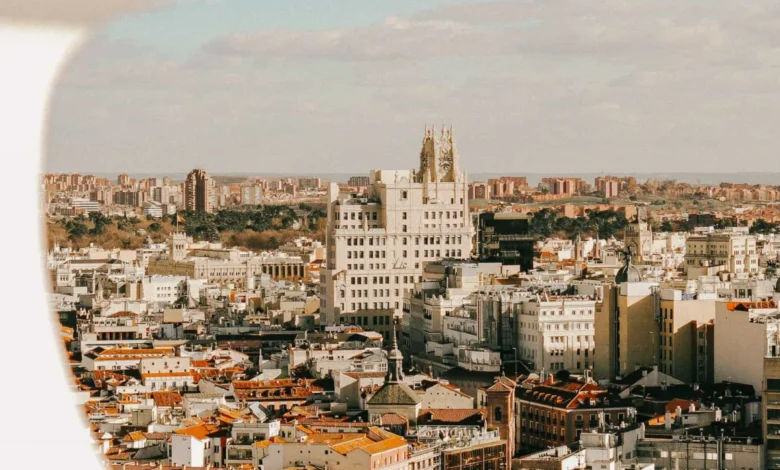
Madrid serves as the cultural, economic, and political heart of Spain, attracting millions of international travelers annually. As the nation’s capital, the city offers a dense concentration of UNESCO World Heritage sites, world-class art institutions, and a culinary landscape that blends centuries-old tradition with contemporary innovation. For travelers seeking a structured approach to exploring this sprawling metropolis, a five-day itinerary provides an optimal balance between iconic sightseeing and the immersion into local neighborhoods that defines the Madrilenian experience.

The Landscape of Light and Artistic Heritage
The foundation of any visit to Madrid is the "Paisaje de la Luz" (Landscape of Light), a UNESCO World Heritage site that encompasses the Paseo del Prado and the Buen Retiro Park. This urban landscape represents a unique example of the 18th-century enlightened city planning, integrating nature with cultural institutions.

The Prado Museum remains the anchor of this area. Established in 1819, the museum houses one of the world’s most extensive collections of European art, featuring works by Goya, Bosch, and Velázquez. Art historians emphasize the importance of Diego Velázquez’s Las Meninas (1656), a masterpiece of the Spanish Golden Age that continues to be a subject of academic study due to its complex composition and spatial manipulation.

In proximity, the Reina Sofía Museum focuses on 20th-century art, most notably serving as the permanent home for Pablo Picasso’s Guernica. Commissioned by the Spanish Republican government for the 1937 Paris International Exposition, the mural serves as a poignant commentary on the horrors of the Spanish Civil War.

Culinary Evolution and Market Culture
Madrid’s gastronomic identity is characterized by the coexistence of traditional "tavernas" and high-end, Michelin-starred establishments. The city’s market culture, exemplified by the Mercado de San Miguel, illustrates the evolution of food consumption in urban centers. While historically serving as local fresh produce hubs, many of these markets have pivoted to serve as gastronomic showrooms, providing a platform for local vendors to showcase regional specialties like jamón ibérico and patatas bravas.

Data from the Madrid Tourism Board indicates that gastronomy is the primary driver for a significant portion of international tourism, with visitors spending, on average, 30% of their daily travel budget on food and beverage experiences. The neighborhood of La Latina remains the epicenter of the tapas tradition, where the density of bars allows for the cultural practice of ir de tapeo—moving from one establishment to another to sample small plates.

Historical Architecture and Royal Governance
The architectural history of Madrid is marked by the transition from the Hapsburg era to the Bourbon monarchy. The Royal Palace of Madrid (Palacio Real) stands as a testament to this shift. Constructed on the site of a 9th-century Alcázar, the current structure dates back to the 18th century. With over 3,400 rooms, it is the largest functioning royal palace in Western Europe.

Adjacent to the palace is the Almudena Cathedral, the seat of the Roman Catholic Archdiocese of Madrid. The construction of the cathedral was a protracted process, beginning in 1883 and not reaching completion until 1993, when it was consecrated by Pope John Paul II. This structure represents a unique architectural blend of Neoclassical exteriors and Neo-Gothic interiors, reflecting the changing aesthetic priorities of the Spanish state throughout the 20th century.

Urban Planning: Parks as Civic Spaces
Madrid’s urban design philosophy prioritizes public accessibility to green spaces. El Retiro Park, spanning over 125 hectares, serves as the city’s "green lung." Originally a royal retreat, it was opened to the public in the late 19th century. The park’s Crystal Palace, an iron and glass structure built in 1887, was originally designed as a greenhouse for exotic flora from the Philippines. Today, it serves as a venue for contemporary art exhibitions.

Beyond the city center, the Casa de Campo represents a massive expansion of civic space. Once a royal hunting ground, it is now nearly five times the size of New York’s Central Park. The inclusion of the Madrid Amusement Park and the zoo within its boundaries highlights the city’s strategy of multipurpose land use, catering to both tourism and local recreational needs.

Chronology of Major Landmarks
- 1600s: The development of Plaza Mayor, which served as the center of Madrid’s social and political life, including bullfights, trials, and public markets.
- 1819: The inauguration of the Prado Museum, signifying the start of Madrid’s status as a global art capital.
- 1937: The creation of Guernica, which eventually found its home in Madrid in 1992, signaling a milestone in the city’s post-dictatorship cultural recovery.
- 1993: The consecration of the Almudena Cathedral, finalizing a project that had been in development for over a century.
- 2021: The formal recognition of the "Paisaje de la Luz" as a UNESCO World Heritage site, cementing the city’s status in global heritage preservation.
Socio-Economic Implications of Tourism
The influx of tourism in Madrid has profound implications for the local economy. According to recent reports from the city’s tourism office, the sector accounts for approximately 10% of the city’s GDP. This dependence on tourism has led to a strategic focus on sustainable management. Officials have increasingly promoted "off-the-beaten-path" neighborhoods like Chamberí and Las Salesas to alleviate congestion in the historical center.

Furthermore, the emphasis on local boutiques and independent artisans in areas like Las Salesas reflects a broader push to preserve the city’s unique identity against the homogenization often brought by mass tourism. The city’s investment in public infrastructure, such as the expansion of pedestrian-friendly zones around the Gran Vía, suggests a long-term goal of balancing economic growth with the quality of life for residents.

Strategic Planning for the Modern Traveler
For those navigating the city, the most efficient approach involves a systematic geographic division. The first days are best spent in the "Golden Triangle of Art" (Prado, Reina Sofía, and Thyssen-Bornemisza museums). Mid-week is ideal for exploring the historic Hapsburg and Bourbon quarters, including the Royal Palace and the surrounding administrative buildings.

The latter portion of a trip allows for "slow travel," focusing on peripheral areas like the Temple of Debod—an authentic Egyptian temple donated to Spain in 1968 in gratitude for the country’s assistance in saving the temples of Abu Simbel. The preservation of this site requires careful environmental monitoring, providing an example of how Madrid manages international cultural assets.

Conclusion and Practical Recommendations
As the city continues to modernize, its historical assets remain its most significant draw. Visitors are encouraged to utilize the official Madrid Tourism website and local cultural portals to stay informed on event schedules, as the city’s calendar is frequently updated with seasonal festivals, such as the Fiestas de San Isidro or the La Paloma festival in La Latina.

For the contemporary visitor, success in Madrid is measured not by the number of monuments checked off a list, but by the ability to navigate the city’s distinct daily rhythm—which includes the late-afternoon siesta and the late-night dining culture. By balancing the rigors of museum-going with the leisure of a neighborhood terrace, travelers can gain a genuine understanding of the city that serves as the gateway to the Iberian Peninsula. Whether through the lens of its art, its food, or its royal history, Madrid offers a complex and rewarding experience that remains a cornerstone of European travel.
Related posts: