When Christopher Wilmot-Sitwell first arrived in Indonesia during the late 1980s, the nation’s tourism sector was defined by a stark dichotomy. For the vast majority of international visitors, the archipelago was synonymous with the singular province of Bali, often navigated via the shoestring budgets of the backpacker trail. Today, Wilmot-Sitwell, a director at the London-based luxury travel agency Cazenove & Loyd and a Robb Report Travel Master, oversees a vastly different reality. He now crafts bespoke, three-week expeditions that traverse the sprawling 17,000-island nation, offering high-net-worth clients immersive access to UNESCO World Heritage sites, private water blessings, and secluded marine sanctuaries. The transition from a transit-heavy, limited-infrastructure destination to a premier global luxury hub marks a significant maturation in Southeast Asian tourism.

A Historical Perspective on Indonesian Tourism
The professionalization of the Indonesian travel sector can be traced back to the late 1980s and early 1990s, catalyzed by the visionary development of Aman Resorts by Adrian Zecha. By establishing properties that emphasized extreme privacy, architectural harmony with the landscape, and a deep respect for local culture, Zecha effectively created a new blueprint for luxury hospitality in the region.
However, unlike the Mediterranean or the Caribbean, where tourism infrastructure evolved in a linear, integrated fashion, Indonesia’s geography presented unique challenges. With 17,000 islands—of which roughly 6,000 are inhabited—the logistical requirements for seamless, high-end travel are substantial. For visitors arriving from the United States, where transit times can reach 30 hours, the friction of inter-island travel has historically been a barrier. Edita Sgovio, a veteran travel specialist at Kensington Tours, notes that while the allure of the archipelago is unmatched, it lacks the operational "seamlessness" found in more established destinations like the Greek Islands. Consequently, the modern luxury experience in Indonesia is no longer just about the destination; it is about the curation of the journey.

The Rise of Bespoke Expeditionary Travel
To bridge the gap between rugged terrain and refined comfort, agencies have pivoted toward "ultraluxe" offerings. Earlier this year, Kensington Tours launched a dedicated division designed specifically to streamline the complexities of Indonesian travel. By integrating land tours, private villa accommodations, expedition-style marine adventures, and luxury yacht charters, these agencies aim to eliminate the logistical "heavy lifting" that often deters affluent travelers.
The current flagship of this trend is the Indonesia Odyssey, a nine-day itinerary that serves as a case study in modern, high-touch travel. With a price point starting at approximately $70,000 per person—exclusive of international airfare—the journey emphasizes both the cultural depth of the interior and the pristine beauty of the outer islands. Guests typically begin their transition in Bali, often staying at properties such as the Mandapa, a Ritz-Carlton Reserve in Ubud, where the architectural design is specifically intended to insulate guests from the island’s rapid urbanization and traffic.

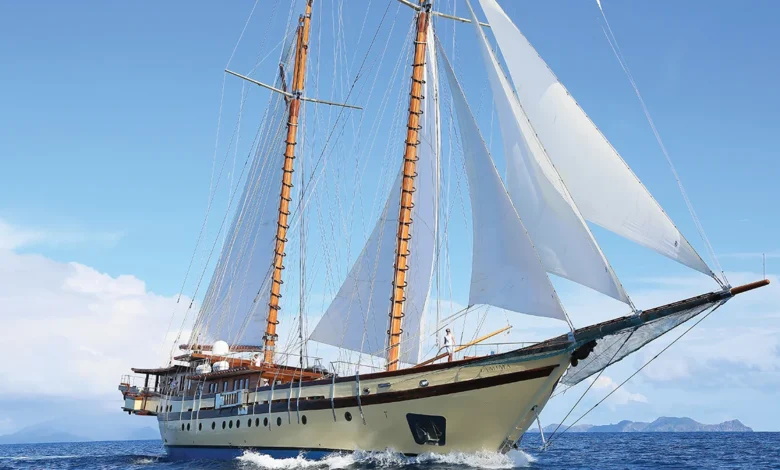
The core of this experience involves a four-day voyage aboard a traditional phinisi, such as the Lamima. These vessels, which blend indigenous boat-building heritage with modern luxury amenities, allow for exploration of the Lesser Sunda Islands—an area where marine biodiversity is at its global zenith. The cultural immersion is maintained through interactions with local communities and experts, such as the celebratory rituals performed for guests upon their return from shore excursions to visit the Komodo dragons. The final leg of the journey usually transitions to the surf-and-spa haven of Nihi Sumba, which provides a stark contrast to the dense, tropical atmosphere of Bali.
Data and Infrastructure: The Future of the Archipelago
The shift toward high-end, dispersed tourism is not merely a preference of luxury agencies but a strategic objective of the Indonesian government. Data from the Ministry of Tourism and Creative Economy indicates that the government is aggressively pursuing the "Five Super Priority Destinations" initiative, which aims to distribute tourist traffic more evenly across the archipelago.

Key infrastructure projects currently under development include the expansion of international airport capacity in northern Bali and the improvement of inter-island connectivity. These developments are intended to reduce the reliance on Jakarta and Denpasar as the sole gateways into the country. Analysts suggest that once these projects reach operational maturity—likely within the next five to seven years—the accessibility of regions like Labuan Bajo and the Raja Ampat archipelago will significantly shift, potentially increasing luxury volume by 15 to 20 percent.
The Enduring Appeal of Bali
While the luxury market is pushing for diversification, the "Bali brand" remains a resilient pillar of the industry. The island has evolved from a simple beach destination into a global center for craft, wellness, and high-end retail. Brands like John Hardy have helped solidify Bali’s reputation as a hub for artisanal excellence.

Reed Krakoff, creative chairman of John Hardy, observes that the island’s unique topography—where high-altitude forests, terraced rice paddies, and volcanic coastlines exist in close proximity—creates a rare environmental diversity that few other luxury destinations can match. "It’s really rare that you have these kinds of differentiated environments so close together," Krakoff notes. This density of experience allows a traveler to move from a silversmithing workshop in the morning to a high-end beach club in Uluwatu by sunset, maintaining a sense of cultural continuity while indulging in international-standard luxury.
The Implications of Vetted Travel
The emergence of this curated model has significant implications for the future of travel in the Global South. By "zigging when people zag," as Wilmot-Sitwell advises, high-end travelers are increasingly moving away from the "teeming masses" of traditional tourist zones. This movement has two primary consequences:

- Economic Distribution: By shifting the focus to outer islands, tourism expenditure is distributed more equitably, supporting local economies in underdeveloped regions that previously lacked the capital to sustain high-end infrastructure.
- Conservation and Preservation: The focus on yacht-based exploration and smaller, exclusive resorts allows for a more controlled footprint in sensitive ecosystems. When travel is "truly vetted," as Sgovio emphasizes, it necessitates a closer relationship between tour operators and local ecological authorities, potentially creating a sustainable cycle of conservation-funded tourism.
As the industry moves toward 2026, the definition of a luxury vacation in Indonesia is clearly moving away from the singular, static resort experience. It is becoming a fluid, multifaceted itinerary that leverages the vast, fragmented geography of the country as its greatest asset rather than its primary hurdle. For the modern traveler, the goal is no longer just to reach Indonesia, but to navigate its complexity with a level of precision that makes the vast, 17,000-island expanse feel both accessible and intimate. Through the integration of luxury marine vessels, private aviation, and deep-local knowledge, the Indonesian travel landscape is effectively rewriting the rules of remote-area hospitality.