The tradition of the advent calendar has undergone a remarkable metamorphosis in recent years, evolving from a simple cardboard display housing modest confectionery into a sophisticated vehicle for luxury branding and high-end retail. While the practice originated in the 19th century as a way for German Lutherans to track the days leading up to Christmas, the 2026 market reflects a significant shift toward exclusivity, artisanal craftsmanship, and the premiumization of the holiday countdown experience. For the modern consumer, these calendars are no longer mere novelty items; they are curated collections of haute parfumerie, rare spirits, and bespoke beauty treatments that represent the pinnacle of their respective industries.
The Evolution of the Luxury Countdown
The commercialization of the advent calendar began in earnest with the introduction of chocolate-filled cardboard windows in the mid-20th century. However, the current iteration of the luxury advent calendar serves a different purpose: it is a strategic marketing tool that allows heritage brands to showcase their full range of products to loyal customers. By aggregating a series of full-sized and miniature offerings, brands such as Sisley Paris, Liberty of London, and Jo Malone provide an immersive brand experience that encourages customer retention and introduces new product lines to a high-net-worth demographic.
The sheer scale of the investment in these items has also reached new heights. While standard retail calendars are widely available, the "super-premium" segment has carved out a niche for collectors. The record-holder for the most expensive calendar remains the one-off commission by British designer Debbie Wingham, valued at approximately $10.3 million. Created in 2021, this piece, constructed from reclaimed ebony and housing diamond-encrusted artifacts and bespoke travel experiences, underscored the potential for the advent calendar to function as a high-value collector’s item rather than a disposable seasonal decoration.
2026 Market Timeline and Retail Strategy
The retail calendar for luxury advent offerings has shifted significantly. In previous decades, these items were largely marketed in November. Today, the timeline has been compressed to capitalize on early-bird consumer demand. By August, the first announcements begin to circulate, and by mid-September, many major retailers launch their pre-order waitlists.
Industry data suggests that this early availability is not merely a logistical convenience but a calculated response to supply chain constraints and the "FOMO" (fear of missing out) marketing strategy. For instance, the Liberty of London beauty advent calendar has historically sold out for over a decade, creating a sense of urgency that drives engagement long before the first door is opened on December 1. Retailers have found that by positioning these items as limited-edition releases, they can sustain high demand even as price points for these curated boxes often exceed $1,000.
Curated Selections: Beauty and Wellness
The beauty and wellness sectors remain the most active participants in the luxury calendar space. These offerings are designed to provide a comprehensive regimen, often combining skincare, makeup, and fragrance.
Sisley Paris has set a high aesthetic standard for 2026 by collaborating with Parisian artist Marie-Victoire de Bascher. The calendar, which features intricate floral illustrations, functions as a decorative object as much as a beauty repository. With 25 products ranging from the Lyslait Cleansing Milk to the Phyto-Noir Mascara, the collection represents a significant value-add for the brand’s existing clientele.
Similarly, the Harrods Beauty Advent Calendar 2026 continues to dominate the premium market by aggregating 32 products from industry titans such as Augustinus Bader, Charlotte Tilbury, and Medik8. The inclusion of these third-party brands under the Harrods banner creates a "one-stop-shop" experience that leverages the department store’s status as a curator of luxury goods.
Selfridges has taken a more quantitative approach, packing 40 products behind its 25 doors, with 33 in full size. With a total value exceeding $1,700, such calendars are increasingly marketed as a cost-effective way to acquire a high-end beauty wardrobe, appealing to consumers who view the purchase as a rational investment in premium goods.
The Spirits and Lifestyle Segment
Beyond beauty, the luxury spirits industry has successfully adapted the advent concept for connoisseurs. Drinks by the Dram has elevated the format with its "Very Old & Rare Whisky Collection." Moving away from traditional paper packaging, the brand utilizes hand-crafted black oak and walnut cabinets that resemble antique apothecary chests. The inclusion of 30ml wax-sealed samples—including the Dalmore 45 Year Old 1966 and The Balvenie 40 Year Old—transforms the countdown into an educational experience. The addition of Riedel glassware and professional-grade tasting notes reinforces the narrative that these are not merely samples, but a curated masterclass in rare distillation.
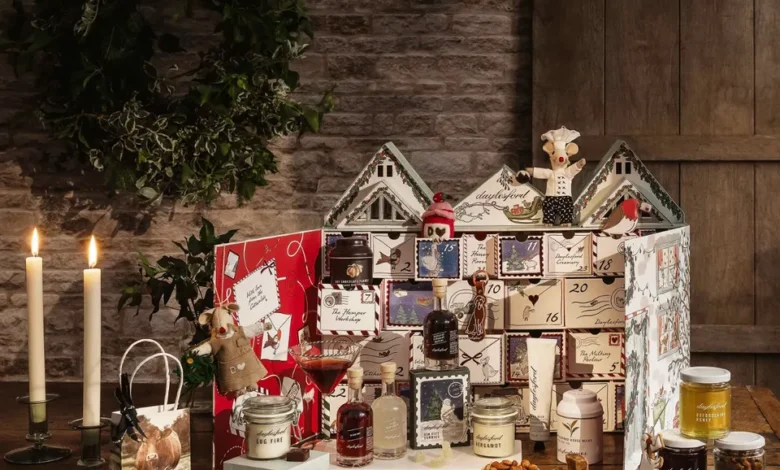
For those focused on the domestic sphere, brands like Daylesford and Villeroy & Boch offer a different value proposition. Daylesford’s wooden calendar is intended for reuse, emphasizing sustainability and the "English Christmas" aesthetic, while Villeroy & Boch’s porcelain-heavy Christmas Toys collection targets the collector market. These items serve as heirlooms, intended to be brought out annually and passed down through generations.
Strategic Implications and Consumer Behavior
The shift toward "empty" luxury calendars, such as those offered by Fortnum & Mason, indicates a growing desire for personalization. By providing the structural vessel—often made of high-quality wood and featuring intricate designs—the brand empowers the consumer to curate the contents themselves. This reflects a broader trend in luxury retail: the transition from passive consumption to active participation.
Furthermore, the integration of technology and gamification—such as the "Golden Ticket" initiatives seen at Liberty of London—serves to increase brand loyalty. When a consumer purchases a $1,000+ item with the potential for a $1,350 reward hidden inside, the purchase becomes an event, a lottery, and a social media-ready moment.
Economic and Environmental Considerations
The rise of the luxury advent calendar is not without its critics. Environmental concerns regarding excessive packaging have led many brands to emphasize the "reusability" of their containers. The trend toward wooden chests, vanity cases, and porcelain boxes is a direct response to consumer pressure to reduce single-use waste. For example, Dr. Barbara Sturm’s 2026 vanity case is designed to be repurposed as a travel case, while the Guerlain x Germanier jewelry box collaboration explicitly encourages the secondary use of the packaging as a long-term storage solution.
From an economic perspective, these calendars represent a resilient segment of the luxury market. Even in periods of economic uncertainty, the "affordable luxury" price point—typically ranging from $500 to $2,000—remains attractive. It allows consumers to engage with multiple high-end brands simultaneously at a lower price point than if they were to purchase each item individually.
Conclusion
As we look toward the 2026 holiday season, the luxury advent calendar has cemented its place as a cornerstone of the festive retail calendar. Whether through the lens of rare whisky, high-performance skincare, or artisanal home décor, these products demonstrate a sophisticated understanding of the modern consumer’s desire for curation, exclusivity, and tradition. By balancing the "magic" of the daily countdown with the material substance of high-end commodities, brands are successfully navigating the transition from simple retailers to purveyors of the seasonal experience. As the market continues to mature, one can expect further innovations in packaging, content, and the integration of digital, experiential elements that ensure the advent calendar remains a staple of the luxury holiday landscape.