The Historical and Economic Evolution of Rhodes Town A Strategic Guide to the Dodecanese Capital

Rhodes Town, the administrative and cultural heart of the Dodecanese island chain, represents one of the most complex urban environments in the Mediterranean, characterized by a distinct bifurcation between its modern administrative center and its UNESCO-protected medieval core. As a primary gateway for international tourism in Greece, the city serves as a critical case study in the preservation of cultural heritage amidst the pressures of modern commercial expansion. The municipality is architecturally divided into Neohóri, the modern town established primarily during the Italian occupation in the early 20th century, and the Old Town, a fortified medieval enclave that remains one of the best-preserved examples of Gothic urban planning in Europe.
Historical Chronology and Geopolitical Significance
The development of Rhodes Town is defined by several distinct historical epochs that have left an indelible mark on its physical and cultural landscape. The city was founded in 408 BCE according to a grid plan by Hippodamus of Miletus, quickly rising to prominence as a naval powerhouse and a center of Hellenistic culture. This era was defined by the construction of the Colossus of Rhodes, a bronze statue of the sun god Helios and one of the Seven Wonders of the Ancient World, which stood for 54 years before being toppled by an earthquake in 226 BCE.
The most transformative period for the city began in 1309 when the Order of the Knights of Saint John of Jerusalem, also known as the Knights Hospitaller, seized the island. Over the next two centuries, they transformed Rhodes into a formidable bastion of Christendom, constructing the massive fortifications and the Palace of the Grand Master. This era ended in 1522 following a six-moth siege by the Ottoman forces of Suleiman the Magnificent. For nearly four centuries under Ottoman rule, the city’s skyline was altered with minarets and domed hammams.

The 20th century brought further shifts in sovereignty. In 1912, Italy occupied the Dodecanese, initiating a period of significant architectural renovation and the construction of the modern Neohóri district. Following World War II, Rhodes was formally unified with the Hellenic Republic in 1948. In 1988, the Old Town was designated a UNESCO World Heritage site, a status that has fundamentally shaped the city’s modern economic and conservation policies.
The UNESCO Old Town: Architectural and Cultural Analysis
The Old Town of Rhodes is enclosed within a four-kilometer-long circuit of walls, featuring a labyrinthine layout of approximately 200 streets and lanes. Unlike many open-air museums, the Old Town remains a living city, home to a resident population and active commercial enterprises.

The Knights’ Quarter and the Palace of the Grand Master
The northern sector of the Old Town, known as the Collachium, was the administrative and residential hub of the Knights. The central artery of this district is the Street of the Knights, an impeccably preserved medieval thoroughfare lined with the "Inns of the Tongues," which housed the various national divisions of the Order. At the highest point of the city stands the Palace of the Grand Master. Originally a Byzantine citadel, it was expanded by the Knights in the 14th century. While the interior underwent significant reconstruction during the Italian administration in the 1930s to serve as a summer residence for Victor Emmanuel III and Benito Mussolini, the exterior remains a premier example of 14th-century military architecture.
Religious and Social Infrastructure
The Old Town reflects a multicultural history through its diverse religious structures. The Archaeological Museum of Rhodes is housed within the former Great Hospital of the Knights, a 15th-century structure that demonstrates the Order’s dual mission of military defense and medical care. Nearby, the presence of the Sulemaniye Mosque and the Kahal Shalom Synagogue—the oldest synagogue in Greece—highlights the city’s historical role as a Mediterranean crossroads.

The Modern Capital: Neohóri and Mandraki Harbour
The New Town, or Neohóri, serves as the economic engine of the island. It is characterized by wide boulevards and Italian-era public buildings, such as the Town Hall, the National Theatre, and the Government House, which blend Art Deco and Fascist architectural styles with local Rhodian motifs.
Mandraki Harbour and Maritime Economy
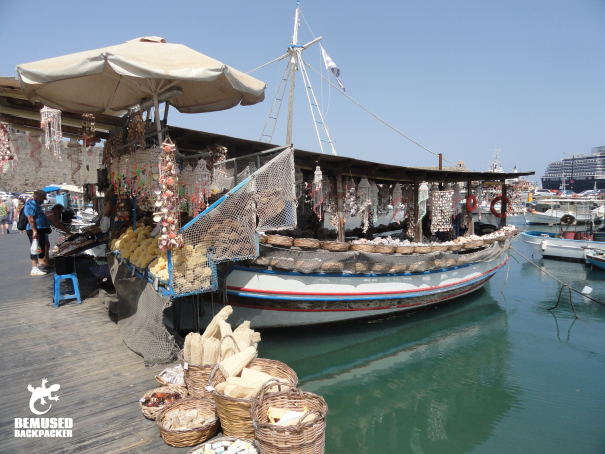
Mandraki Harbour, once the primary military port of ancient Rhodes, now serves as a hub for luxury yachting, excursion boats, and regional ferries. The harbor’s entrance is marked by two bronze statues of fallow deer, Elefos and Elafina, which stand on the pillars where the feet of the Colossus are traditionally believed to have rested. The three medieval windmills located on the harbor breakwater remain as remnants of the city’s industrial past, originally used to grind grain brought in by merchant vessels.

Research and Cultural Institutions
The northern tip of the city houses the Hydrobiological Station of Rhodes, an Art Deco building that serves as both a research center for the Mediterranean marine environment and a public aquarium. Furthermore, the Modern Greek Art Museum provides a critical link between the island’s ancient history and its contemporary identity, housing one of the most significant collections of 20th-century Greek paintings and sculptures outside of Athens.
Tourism Statistics and Economic Impact
Rhodes is one of the most visited destinations in the Eastern Mediterranean, with tourism accounting for a substantial portion of the regional GDP. According to data from the Hellenic Statistical Authority and the Rhodes Airport (Diagoras), the island consistently receives over 2.3 million international arrivals annually during peak years.

The economic structure of Rhodes Town is heavily reliant on the cruise industry. Mandraki and the nearby commercial port are frequent stops for major cruise lines, often resulting in daily influxes of 5,000 to 10,000 passengers during the summer months. This high-density tourism has necessitated strict management of the Old Town’s infrastructure to prevent environmental degradation and maintain the integrity of the UNESCO site.
Strategic Travel and Safety Logistics
For international visitors and regional stakeholders, the management of Rhodes Town involves complex logistics regarding transportation, safety, and seasonal fluctuation.

- Seasonality: The primary tourist season extends from May to October. Regional tourism boards have increasingly advocated for "shoulder season" travel in April and September to mitigate the effects of over-tourism and the intense Mediterranean heat, which frequently exceeds 35°C (95°F) in July and August.
- Regional Connectivity: Rhodes serves as a strategic maritime link between the European Union and Turkey. Regular ferry services connect Rhodes Town to Marmaris and Fethiye, requiring strict customs and currency protocols (Euro vs. Turkish Lira) for day-trippers.
- Local Infrastructure: The city utilizes a dual transportation system. A municipal bus network (RODA) services the urban area and the northern coast, while the KTEL network connects the capital to southern destinations like Lindos. Within the Old Town, motorized vehicle access is strictly regulated to protect the cobblestone streets.
- Public Safety: While Rhodes maintains a low crime rate compared to other European capitals, local authorities have identified specific "tourist traps" in high-traffic areas such as Mandraki Harbour. These typically involve unauthorized street vendors and "gift" scams. The Hellenic Police maintain a specialized Tourist Police division to assist international visitors and monitor commercial compliance.
Broader Implications and Future Outlook
The primary challenge facing Rhodes Town is the balance between economic exploitation through tourism and the rigorous requirements of heritage conservation. The Rhodes Municipality, in coordination with the Greek Ministry of Culture, has implemented ongoing restoration projects, particularly concerning the medieval fortifications and the structural integrity of the Palace of the Grand Master.
Inferred statements from local hospitality associations suggest a shift toward "quality tourism"—focusing on longer stays and cultural engagement rather than high-volume, short-term cruise visits. This strategy aims to distribute the economic benefits more evenly across the local community while reducing the physical strain on the Old Town’s medieval infrastructure.

As climate change introduces new variables, such as increased heatwave frequency and rising sea levels, the preservation of the island’s coastal assets, including Mandraki Harbour and the Aquarium, has become a priority for regional planners. The future of Rhodes Town depends on its ability to evolve as a modern administrative center while serving as a global steward of its multi-layered historical legacy. Through strategic investment in sustainable infrastructure and the promotion of its diverse cultural history—from the Hellenistic Acropolis to the Gothic Knights Quarter—Rhodes Town remains a pivotal landmark in the Mediterranean geopolitical landscape.