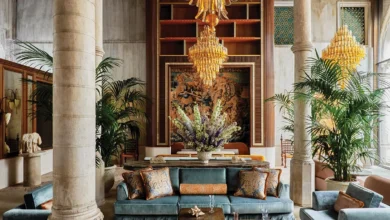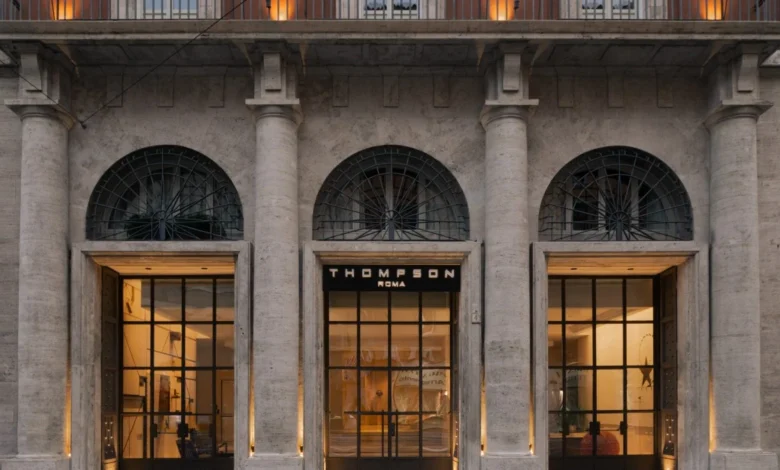
The arrival of Thompson Rome, the latest addition to the Hyatt Hotels Corporation’s lifestyle portfolio, signifies a pivotal shift in the Italian capital’s competitive luxury landscape. Housed within a meticulously restored landmark building dating back to the 1940s, the property is positioned not merely as a hotel but as a curated cultural venue. By blending mid-century architectural integrity with contemporary art-centric design, Thompson Rome aims to capture the growing demographic of affluent, experience-driven travelers who prioritize aesthetic immersion alongside traditional hospitality services.

Architectural Heritage and Restoration
The building that now serves as the home of Thompson Rome was originally constructed during a transformative period in Italy’s urban planning. Located in a prime position within the city, the structure features the bold, geometric sensibilities characteristic of the 1940s, a design language that has been carefully preserved by the development team.
Restoration efforts were focused on maintaining the structural soul of the landmark while integrating modern infrastructure necessary for a five-star hospitality experience. Architects and designers involved in the project emphasized the retention of original stone facades, sweeping staircases, and high-ceilinged galleries. By marrying these historic elements with bespoke, modern furnishings, the hotel creates a dialogue between Rome’s storied past and its vibrant, evolving art scene. The restoration serves as a blueprint for adaptive reuse projects in European cities, where historical preservation laws often present significant barriers to entry for global hotel chains.

A Strategic Entry into the Italian Market
For Hyatt, the launch of Thompson Rome is a tactical expansion within the competitive European market. The Thompson brand, known for its focus on sophisticated design and localized culinary programming, fills a specific niche for Hyatt. While brands like Park Hyatt cater to the ultra-luxury, traditional segment, the Thompson flag is designed to appeal to a more cosmopolitan, creative, and younger demographic of high-net-worth individuals.
The hotel’s opening is part of a broader strategy by Hyatt to grow its presence in Italy—a market that has historically been dominated by independent boutique hotels and local family-run luxury groups. By leveraging the scale of the Hyatt platform, Thompson Rome benefits from the World of Hyatt loyalty program, a significant competitive advantage over independent luxury properties that lack the reach of global distribution systems.

Curated Experiences and Design Philosophy
At the heart of the property’s value proposition is its commitment to art and design. The interior spaces have been conceptualized as an extension of the city’s dense artistic fabric. Rather than relying on generic luxury decor, the hotel features a rotation of installations from local and international artists.
This "art-first" approach extends to the guest experience, where the concierge services are replaced by “experience curators” tasked with connecting guests to private gallery viewings, artist-led tours of Rome’s hidden bas-reliefs, and off-the-beaten-path cultural excursions. This shift reflects a broader trend in the hospitality sector: the transition from "luxury as consumption" to "luxury as access." Guests are no longer simply paying for a bed; they are paying for a curated gateway into the local zeitgeist.

Economic and Tourism Impact
The launch of the property is expected to have a tangible impact on the local hospitality sector. As Rome continues to navigate the complexities of over-tourism and infrastructure maintenance, high-end properties like Thompson Rome play a critical role in attracting "high-value" visitors. These guests, who typically stay longer and spend more on local experiences, dining, and cultural events, contribute significantly to the city’s tax revenue and support the maintenance of its historical sites.
Industry analysts note that the hospitality market in Rome has seen a 12% increase in average daily rates (ADR) over the last 24 months, driven by strong demand and a limited supply of high-end, modernized hotel inventory. The introduction of the Thompson property adds much-needed capacity at the premium end of the market, potentially influencing pricing strategies among competing luxury hotels in the vicinity.

Chronology of Development
The project’s timeline underscores the logistical challenges of developing real estate in a city as ancient as Rome.
- Late 2021: Hyatt announces its intent to expand the Thompson brand into key European urban centers.
- Early 2022: The site of the 1940s landmark is acquired, with preliminary structural surveys and historical preservation permits initiated.
- 2023–2024: Extensive renovation work takes place. This period involved complex negotiations with local heritage boards to ensure that interior modifications remained compliant with the city’s strict zoning regulations for historical landmarks.
- Mid-2025: Final interior fit-outs are completed, with a focus on commissioning site-specific art installations.
- October 2026: The official public opening of the hotel marks the culmination of nearly five years of planning and construction.
Official Perspectives and Market Response
While Hyatt has remained focused on the operational launch, industry stakeholders have noted the significance of the project. “The Thompson brand has a unique capability to interpret the soul of a city through the lens of modern design,” stated a spokesperson for a leading hospitality consultancy. “In a city as saturated with history as Rome, this is a delicate balance. If successful, this property will likely become the benchmark for how global brands navigate historic preservation while remaining relevant to a modern, design-conscious audience.”

Local business owners in the district have expressed optimism regarding the hotel’s opening. There is a general expectation that the hotel will act as a "cultural anchor," drawing a steady stream of sophisticated travelers to the area, which in turn benefits neighboring independent boutiques, cafes, and artisanal shops.
Broader Implications for Luxury Travel
The opening of Thompson Rome is emblematic of a larger movement in global tourism. Luxury travelers are increasingly rejecting the "standardized luxury" of the late 20th century in favor of properties that feel rooted in their specific geographic location. This is often referred to as "sense of place" branding. By grounding the hotel in the specific architectural history of the 1940s and the contemporary artistic scene, the property manages to feel both timeless and urgent.

Furthermore, the integration of such a high-profile brand into a protected landmark building suggests a evolving relationship between international hotel operators and municipal governments. As cities like Rome seek to upgrade their tourism infrastructure, partnerships that preserve historic assets while upgrading them to international standards are becoming the preferred model for urban development.
Looking Ahead: Sustainability and Future Growth
As the hotel begins its first full season, all eyes will be on its operational performance and its ability to maintain its high-end positioning. Sustainability remains a key area of interest. The renovation of the 1940s structure included the integration of energy-efficient climate control systems and water-saving technologies, which are essential for compliance with modern European environmental standards.

The successful launch of Thompson Rome sets a precedent for Hyatt’s future expansion in Italy. With the market showing continued resilience despite global economic headwinds, the company is expected to look for further opportunities to acquire and restore historic properties. For travelers, the hotel offers a new lens through which to view the Eternal City—one that respects the weight of the past while embracing the creativity of the future.
In summary, the opening of Thompson Rome is more than a commercial endeavor; it is a synthesis of history, art, and modern hospitality. By restoring a piece of the city’s mid-century heritage and transforming it into a hub for contemporary culture, the property provides a blueprint for how luxury hotels can serve as vital, dynamic members of the urban landscape. As the city continues to evolve, Thompson Rome stands ready to host the next generation of travelers who seek a deeper, more artistic connection to the heart of Italy.