The logistical complexities of winter sports travel are often exacerbated by the limitations of commercial aviation. For the high-net-worth traveler, the transition from urban center to high-altitude resort is frequently marred by the "last mile" problem: lengthy ground transfers from major hubs, unpredictable commercial flight schedules, and the inherent friction of navigating crowded terminals with specialized equipment. By utilizing private aviation, travelers can bypass these bottlenecks, landing at smaller, strategically positioned airfields that place them within minutes of world-class slopes. However, operating private aircraft in mountainous regions requires specialized flight planning, a sophisticated understanding of localized weather patterns, and access to private aviation terminals (FBOs) capable of handling high-performance business jets.

The Evolution of Mountain Aviation Logistics
Historically, mountain aviation was restricted by the technical limitations of earlier aircraft, which struggled with the high-altitude density altitudes and short, narrow runways common in the Alps and the Rockies. Over the past two decades, advancements in avionics, airframe performance, and terrain awareness systems have expanded the accessibility of these regions. Modern business jets, such as the Dassault Falcon 8X or the Bombardier Global 7500, possess the short-field performance capabilities necessary to access airfields like Samedan (St. Moritz) or Courchevel (CVF), the latter being famously challenging due to its steep, uphill-sloping runway and lack of a go-around procedure.
The demand for these routes has seen a measurable uptick. According to recent data from WingX, a firm specializing in global business aviation intelligence, private jet activity to key alpine airports consistently spikes between December and March. This seasonal surge reflects a broader trend: the prioritization of time-efficiency among ultra-high-net-worth individuals who view the mountain escape as a finite resource during a condensed winter window.
Strategic Alpine Airports and Operational Considerations
Selecting the correct airfield is as critical as selecting the resort itself. Each destination presents unique aeronautical challenges.
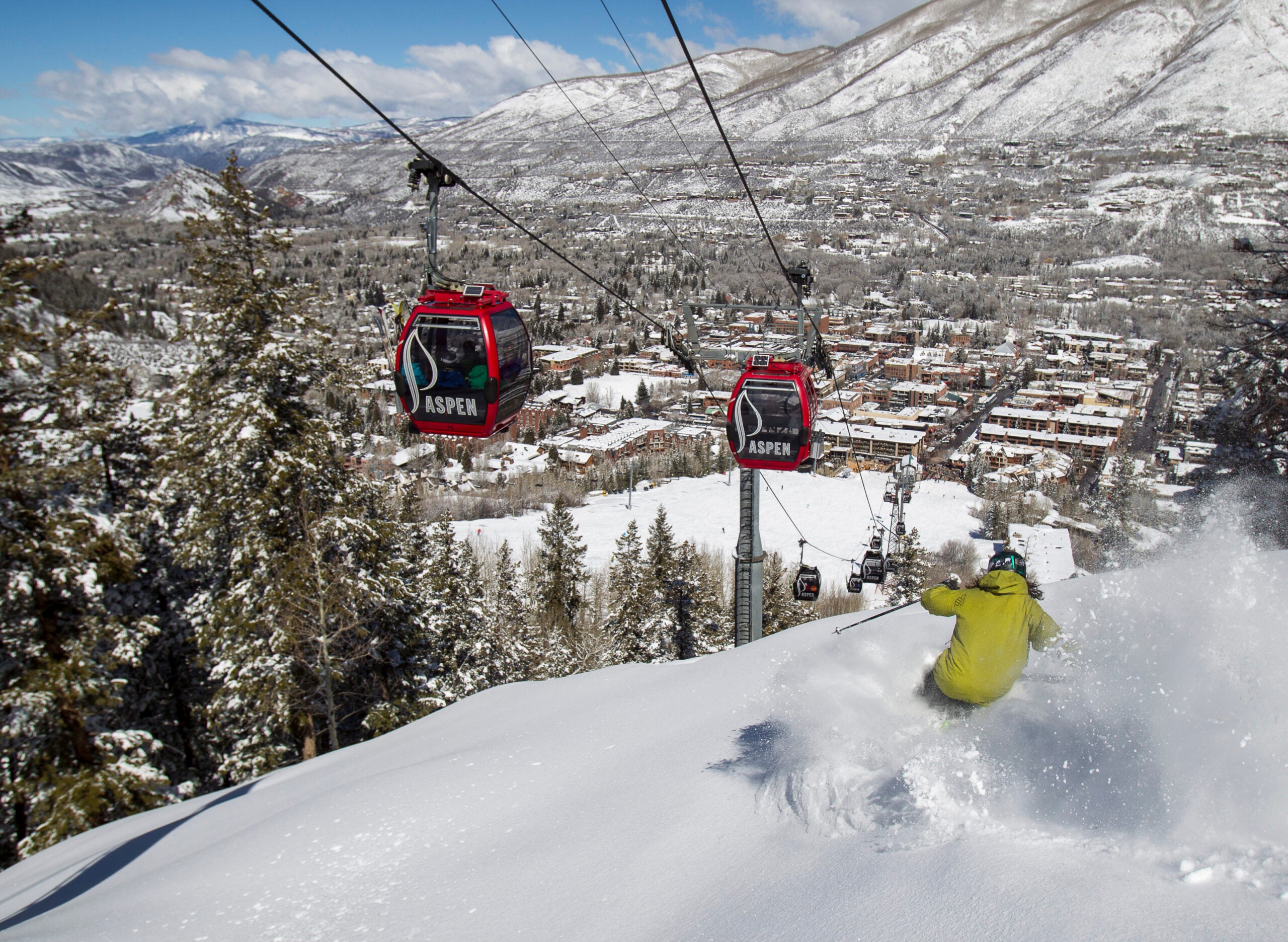
- Aspen/Pitkin County Airport (ASE): Located just minutes from the center of Aspen, this airport is the gold standard for access. However, its proximity to mountainous terrain necessitates a strictly regulated flight path and a 95,000-pound maximum aircraft weight limit. Pilots operating here must undergo specialized training to handle the steep descent and potential turbulence.
- Samedan Airport (SMV): Serving St. Moritz, this is one of the highest airports in Europe at 5,600 feet above sea level. It operates under strict visual flight rules (VFR), meaning that during inclement weather, flights are frequently diverted to Zurich or Milan. The implication for travelers is a requirement for a high degree of flexibility in scheduling.
- Courchevel Altiport (CVF): Perhaps the most exclusive landing strip in the world, the Courchevel Altiport features an 18-degree gradient. Due to its extreme nature, it is restricted to specific, smaller private aircraft and highly experienced pilots. For larger jets, the nearby Chambéry (CMF) serves as the primary gateway, followed by a luxury helicopter transfer.
Chronology of a Seamless Alpine Weekend
The efficiency of a private ski weekend relies on a synchronized itinerary. A typical operational timeline begins 72 hours before departure:

- T-Minus 72 Hours: Weather briefing and slot allocation. Alpine airports often operate on a "prior permission required" (PPR) basis. The flight operations team verifies runway conditions and ensures that the aircraft’s performance profile is compatible with current snow density and density altitude projections.
- T-Minus 24 Hours: Coordination with the ground transport partner. In destinations like Niseko, where snowfall can exceed several meters in a single week, private aviation operators coordinate with local ground teams to ensure that snow clearance at the private hangar or apron is ready for arrival.
- Arrival Day: The "tarmac-to-slope" transition. For an aircraft landing at Aspen at 10:00 AM, the objective is to have the passenger on the chairlift by 11:30 AM. This requires pre-cleared customs (if international) and pre-arranged, pre-heated vehicles waiting at the base of the aircraft.
- Departure Day: Post-ski logistics. Aircraft are positioned to depart during the window of highest visibility, typically mid-morning, to avoid the mountain fog that often settles during the late afternoon.
Supporting Data and Market Trends
The luxury ski market is not merely a niche; it is a significant driver of regional economies. In the 2023-2024 season, resorts like Courchevel reported that luxury arrivals via private aviation accounted for approximately 25% of their total high-end hospitality revenue. The growth of the "ski-in, ski-out" luxury property market—hotels that offer private helipads or direct access to local airstrips—has been mirrored by the increase in fractional jet ownership.
Companies such as NetJets and Flexjet report that "mountain routes" are among their most requested flights during the winter season. These operators have invested in aircraft specifically suited for these regions, such as the Embraer Phenom 300, which offers excellent short-runway performance and can reach most major alpine airports from any European or North American metropolitan center.

Institutional Responses and Safety Protocols
Aviation authorities, including the European Union Aviation Safety Agency (EASA) and the Federal Aviation Administration (FAA), have implemented increasingly rigorous safety standards for mountain flying. These protocols include mandatory recurrent training for pilots and upgraded terrain-avoidance software on all aircraft flying these routes.
Industry experts emphasize that safety is the primary barrier to entry for many regional airports. "The perception of risk in mountain flying is high, but when managed with the correct aircraft and experienced crew, it is the most reliable way to travel," notes a senior flight safety consultant. "The shift in the industry is toward a ‘total journey’ approach, where the flight is just one component of a pre-vetted, end-to-end luxury logistical chain."
Broader Implications for Luxury Tourism
The rise of private aviation to alpine resorts has shifted the competitive landscape of mountain tourism. Resorts are no longer judged solely on the quality of their snow or the length of their runs; they are increasingly judged by their "aviation accessibility index." Destinations that invest in infrastructure—such as improved FBO facilities, extended runways, or dedicated helicopter transfer hubs—are capturing a larger share of the ultra-luxury demographic.
This trend has profound implications for the sustainability and infrastructure development of alpine communities. While private aviation provides a significant economic stimulus, it also places pressure on local infrastructure to accommodate high-frequency, short-duration visitors. Furthermore, the carbon footprint of private aviation is under increased scrutiny, prompting some luxury operators to offer carbon-offset programs and explore Sustainable Aviation Fuel (SAF) integration, even in the most remote mountain locations.
The Synthesis of Luxury and Efficiency
Ultimately, the decision to fly private to a ski destination is a valuation of time and convenience. By eliminating the commercial flight experience—characterized by rigid scheduling, terminal navigation, and potential luggage delays—the private traveler transforms the transit experience from a logistical burden into a seamless extension of the vacation itself.
Whether one is heading to the high-glamour slopes of St. Moritz, the culinary epicenter of Courchevel, or the powder-heavy terrain of Niseko, the modern alpine traveler expects an environment where the service begins the moment they step onto the aircraft. As technology continues to bridge the gap between aviation performance and remote geography, the barrier to accessing the world’s most exclusive mountain retreats will continue to shrink, provided that the traveler maintains a rigorous approach to flight planning and operational coordination. The integration of high-performance aviation with world-class hospitality remains the defining characteristic of the contemporary luxury winter experience.