Slothee Still Wants Coffee Expands Global Children’s Literature Series with Educational Journeys Through World Cultures and Coffee Regions

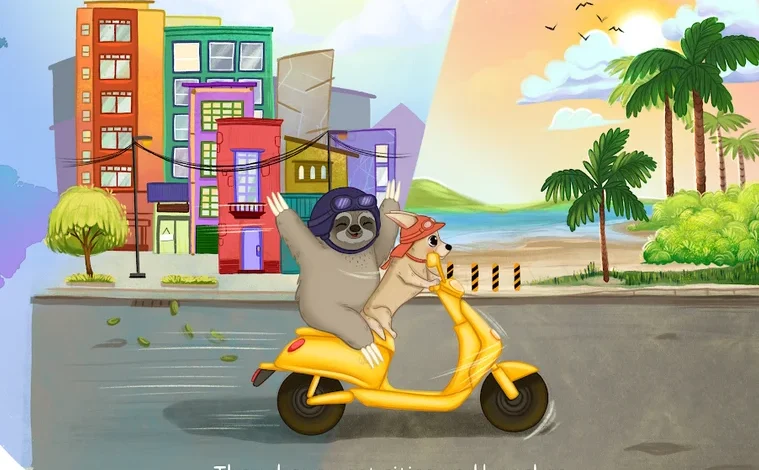
The landscape of children’s literature continues to evolve with the official release and ongoing expansion of Slothee Still Wants Coffee, the second installment in the popular Slothee and Friends book series. Designed to educate young readers and adults alike, the publication follows the titular character, Slothee, on an ambitious international quest to discover the finest cup of coffee in the world. Spanning multiple continents, the narrative combines engaging storytelling with geographical education, cultural exploration, and the promotion of global friendship. The release comes at a time when publishers and educators are placing an increased emphasis on multicultural awareness and experiential learning within early childhood development.
The origins of the Slothee and Friends series trace back to a growing demand in the children’s publishing market for literature that introduces young audiences to geography, international trade, and cultural diversity in an accessible format. The first book established the character of Slothee as a curious, travel-oriented sloth with a specific passion for specialty beverages. Building upon the foundational success of the debut title, the creative team conceptualized a broader narrative arc that would take the protagonist to some of the world’s most renowned agricultural and cultural landscapes.
The timeline of Slothee’s latest literary journey is marked by strategic international transitions that mirror the global coffee supply chain. In Slothee Still Wants Coffee, the protagonist departs from the lush landscapes of Costa Rica, a nation globally celebrated for its high-altitude shade-grown coffee beans and rich biodiversity. From Central America, the narrative chronologically tracks Slothee’s expedition southward to Peru, highlighting the Andean nation’s burgeoning specialty coffee sector and indigenous agricultural heritage.
The journey then moves northward to Mexico, exploring the distinct coffee-growing regions of Oaxaca and Chiapas, before crossing the Caribbean Sea to Jamaica. In Jamaica, the narrative focuses on the world-famous Blue Mountain region, known for producing some of the rarest and most expensive coffee beans on the global market. Following the Caribbean leg, the expedition extends to the African continent, specifically Uganda, where the narrative incorporates elements of East African culture and the crucial role of Robusta and Arabica bean cultivation in local economies.
The itinerary subsequently shifts to Asia, featuring Vietnam, the world’s leading producer of Robusta coffee, offering readers insight into Southeast Asian brewing traditions and daily life. The grand tour concludes in Australia, a country renowned for its vibrant, sophisticated café culture and pioneering contributions to modern espresso preparation. Throughout this extensive chronology, Slothee encounters a diverse array of animal characters who serve as cultural guides, teaching him about local customs, traditional preparation methods, and the significance of community sharing.
Publishing industry data indicates a steady rise in the popularity of educational fiction that integrates real-world commodities and geography. According to recent literacy and publishing reports, books that incorporate elements of geography, social studies, and diverse cultural practices experience higher engagement rates among readers aged four to eight. Industry analysts note that introducing children to global supply chains—such as the journey of coffee from farm to cup—fosters early economic literacy and an appreciation for international labor and agriculture.
Publishers, educators, and literary critics have offered favorable perspectives on the educational implications of the Slothee and Friends series. Representatives from independent children’s bookstores have highlighted the title’s effectiveness in sparking classroom discussions about cultural geography. Educators point out that fictional narratives anchored in real-world geography provide an ideal bridge for young learners to grasp complex concepts such as international trade, agricultural processes, and cultural heritage without feeling overwhelmed by traditional academic textbooks.
From a pedagogical standpoint, the integration of distinct national settings serves a dual purpose. It not only entertains the reader through vivid illustrations and whimsical character interactions but also establishes a factual framework regarding where everyday commodities originate. While coffee is consumed by millions of adults globally on a daily basis, children rarely receive insight into the agricultural labor, climate conditions, and international trade agreements that bring the beverage to local storefronts. By framing this educational content through the lens of an amiable sloth on a quest, the authors successfully democratize economic and geographical data for a younger demographic.
The broader implications of Slothee Still Wants Coffee extend into the realms of cultural empathy and global citizenship. In an increasingly interconnected yet polarized world, early exposure to diverse cultures, traditions, and environments is widely considered by child psychologists to be a critical component of cognitive and social development. By depicting characters from various regions who demonstrate hospitality, share traditional knowledge, and celebrate their local heritage, the book reinforces values of inclusivity and cross-cultural appreciation.
Furthermore, the commercial success of travel-themed children’s literature signals a sustained consumer preference for interactive and exploratory learning formats. Parents and guardians increasingly seek out media that encourages curiosity about the outside world, particularly as digital platforms continue to reshape how children consume information. Literature that promotes physical exploration—even within the bounds of fiction—encourages children to ask questions about maps, languages, and foreign environments.
Looking ahead, the creators of the Slothee and Friends series have indicated that the literary universe will continue to expand. Future installments are slated to explore additional coffee-producing regions, introduce tea-focused explorations, and undertake new world adventures that highlight different ecosystems, historical landmarks, and cultural traditions. As the portfolio of titles grows, the overarching mission remains steadfast: to cultivate a lifelong love of reading, geography, and cultural discovery among the next generation of global citizens. Through meticulous attention to cultural representation and engaging storytelling, the series has positioned itself as a notable contribution to contemporary children’s educational literature.