The Evolving Landscape of the Cotswolds: A Transformation of English Heritage and Modern Hospitality

For generations, the Cotswolds has served as the definitive archetype of English country-house living. Defined by its honey-hued limestone cottages, sprawling aristocratic estates, and the rhythmic cycle of rural life—marked by grazing deer and the occasional frantic pheasant—the region has long functioned as a sanctuary for the elite. It is a place where the hum of a Land Rover is the standard soundtrack and the property market is guarded with near-medieval intensity. In this corner of England, real estate transactions are rarely advertised with the commercial vulgarity of a "sold" sign; instead, properties are often quietly "spoken for," with a 12-week moratorium giving local residents first right of refusal before any listing reaches the wider market.
However, beneath this veneer of unchanging pastoral tradition, a significant metamorphosis is underway. The Cotswolds is currently navigating a delicate equilibrium between its historical identity and the demands of a contemporary, globalized tourism market. This evolution has been precipitated by a wave of high-concept hospitality projects that have firmly cemented the region on the international map, moving the area beyond its domestic roots into a global destination for the affluent traveler.
The Catalyst of Change: A New Era of Hospitality
The turning point for the modern Cotswolds can be traced back to 2015, a landmark year that signaled a shift in how the region positioned itself. The opening of Soho Farmhouse served as a primary disruptor. The club’s launch was met with such unprecedented demand—recorded at over 4,500 unfulfilled waiting-list requests in its inaugural year—that it necessitated an immediate and significant expansion of its accommodation capacity. This event did not just mark the arrival of a new business; it signaled that the market for "cool," design-led, and community-focused country living was drastically underserved.
This surge in popularity has not gone unnoticed by global observers. Aimee Hodgkin, chief hotel curation officer at Mr & Mrs Smith, notes that the Cotswolds has become a cornerstone of the company’s portfolio. "The narrative around the Cotswolds has definitely evolved over the past few years," Hodgkin observes. "Guests aren’t necessarily choosing between traditional and ‘cool’ properties. The most successful hotels are the ones that balance timeless hospitality with a clear sense of personality and relevance. Travelers still want roaring fires, beautiful gardens, and exceptional service, but they also want thoughtful design, compelling food and drink experiences, and somewhere that feels connected to contemporary culture."
Chronology of an Estate: The Case of Lucknam Park
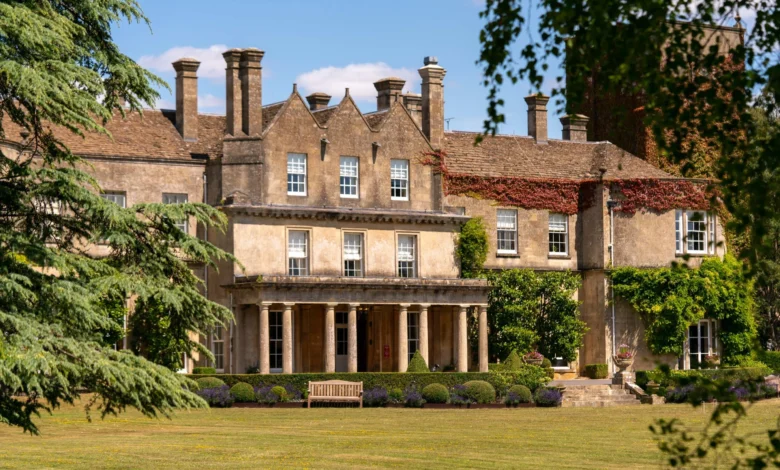
To understand the tension between preservation and progress, one must look at institutions like Lucknam Park. Situated on the southern fringes of the Cotswolds, the estate represents the "old guard" successfully navigating the transition. The property’s history is extensive, with roots as a Saxon settlement before evolving into a 1720 Palladian mansion.

The estate’s heritage is not merely a marketing tool; it is a tangible record of British history. Its mile-long driveway, flanked by towering lime and beech trees planted in 1827, provides a grand entrance that served a tactical purpose during the Second World War. Between 1939 and 1945, the estate acted as an informal headquarters for airmen from the nearby RAF Colerne, and the thick canopy of trees provided essential camouflage for Spitfires and Hurricanes against enemy reconnaissance.
Today, the estate manages its 500 acres of listed parkland and five-acre formal garden, which includes a Walled Garden dating back to the 1830s. Yet, the property has not stagnated. The introduction of the Walled Garden restaurant—a structure defined by floor-to-ceiling glass and minimalist aesthetics—contrasts sharply with the 18th-century library, where books still bear the handwritten provenance of former owners like Geo S Norton. This juxtaposition defines the current regional trend: the preservation of the structural "bones" of the past, married to the functional requirements of the 21st-century luxury traveler.
Data and Infrastructure: The Wellness Economy
A critical component of this regional evolution is the heavy investment in wellness infrastructure. As the travel industry shifts toward "experience-based" luxury, hotels are reallocating capital to capture this market. At Lucknam Park, for example, recent renovations have moved beyond aesthetic updates to focus on high-performance facilities. The installation of a modern indoor-outdoor hydrotherapy pool, a cryotherapy chamber, and an infrared sauna reflects a broader industry trend where the "country house" experience is increasingly measured by the quality of its health and recovery offerings.
This shift is not unique to Lucknam Park. Properties such as Thyme have demonstrated that relevance is maintained through programming rather than just architecture. By offering a continuous cycle of wellness experiences, cookery workshops, and seasonal cultural events, these estates ensure a high rate of repeat visitation. For the tourism sector, this moves the region away from a one-off "sightseeing" destination to a recurring retreat, stabilizing revenue streams throughout the off-season.
Architectural Divergence: Tradition vs. Modernity
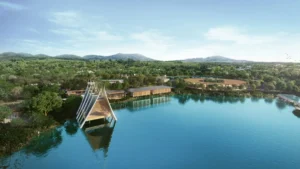
While historic estates are retrofitting for the modern age, the landscape is also being populated by entirely new concepts. Lakes by Yoo, a residential-cum-hotel estate spread across 850 gated acres near Lechlade, represents the polar opposite of the Lucknam Park model. There is no historical narrative here; the draw is instead centered on striking, contemporary architecture and extreme privacy.
This model appeals to a specific demographic—the "invisible" guest who seeks the benefits of a country estate without the traditional social requirements of the manor house. By providing self-contained, architecturally distinct units, these developments cater to a rising demand for autonomy. This creates a fascinating bifurcation in the regional market: on one side, the "social" country house defined by staff-to-guest interaction and long-tenured service; on the other, the "private" estate defined by seclusion and architectural autonomy.

Socio-Economic Implications and Future Outlook
The influx of capital into the Cotswolds has undeniable socio-economic implications. The property market, already one of the most exclusive in the United Kingdom, continues to face intense pressure. The "spoken for" culture of local real estate acts as a defensive mechanism, yet the rising profile of the region suggests that the demand for property will likely continue to outstrip supply.
From a labor perspective, the stability offered by established estates remains a competitive advantage. At long-standing institutions, where staff tenures frequently exceed a decade, there is a level of service quality and institutional knowledge that newer, design-focused developments struggle to replicate. This "human capital" is the Cotswolds’ greatest asset in a global market that is increasingly automated.
Looking ahead, the success of the region will depend on its ability to manage its density. As international interest, particularly from the US market, remains high, the challenge for the Cotswolds will be to prevent the erosion of the very qualities that made it a destination in the first place: the silence, the space, and the sense of history.
For the "old guard," the path forward is clear: success is not found in competing with the avant-garde, but in recognizing that the modern traveler desires a curated synthesis. By integrating contemporary technology and modern design into the historic fabric of the landscape, the Cotswolds is not merely preserving its past; it is re-authoring its future. The region remains a study in contrasts, where a Spitfire’s camouflage path can sit comfortably alongside a cryotherapy chamber, proving that the English countryside is far from a relic of a bygone era—it is, and remains, a dynamic and evolving asset on the global stage.
Related posts: