Beyond the Silver Screen: The Enduring Legacy of Robert Redford and the Evolution of Sundance Mountain Resort

For nearly four decades, the global cinematic elite traded the polished pavement of Hollywood for the rugged, snow-dusted hiking boots of the Utah wilderness, converging annually on the Sundance Film Festival. This celebration of independent cinema, birthed by actor and director Robert Redford, transformed a modest two-theater event in Park City into a cornerstone of the international film industry. On September 16, 2025, the world lost the man behind this cultural phenomenon; Robert Redford passed away at his home in Sundance, Utah, at the age of 89. His death marked the close of a transformative chapter for American film and the quiet, mountain-bound community he championed for more than half a century.
A Chronology of a Visionary’s Haven
The story of Sundance is inextricably linked to Redford’s desire to create a sanctuary where art and nature could coexist. In the late 1960s, long before the festival’s global expansion, Redford purchased a small ski area in Provo Canyon. He sought a place that felt, as he often described it, like a place to "breathe differently."
The evolution of the site followed a deliberate, slow-growth philosophy. In 1981, Redford founded the Sundance Institute, a nonprofit organization designed to foster independent storytelling. By 1985, the Institute assumed the stewardship of the U.S. Film Festival, eventually rebranding it as the Sundance Film Festival. The impact was profound: by 2019, the festival had reached its zenith, showcasing 242 projects to over 122,000 attendees across Park City, Salt Lake City, and the Sundance Mountain Resort itself.
However, recognizing the inevitability of change, Redford began preparing for his departure years before his passing. In 2020, he sold the Sundance Mountain Resort to a joint venture between Broadreach Capital Partners and Cedar Capital Partners. This transaction ensured that the resort would continue to operate as a premium destination while upholding the land-use ethics Redford had spent decades establishing. The subsequent announcement that the film festival would relocate to Boulder, Colorado, in January 2027 represents a strategic shift for the festival, leaving the original Utah site to focus on its identity as a year-round mountain retreat.

Conservation as a Corporate Mandate
While the festival departs, the physical legacy of the Sundance Institute remains deeply rooted in the soil of Provo Canyon. Following the 2020 ownership transition, the Redford family, in collaboration with the new resort ownership and the nonprofit Utah Open Lands, secured the future of the surrounding acreage. They expanded the Redford Family Elk Meadows Preserve, placing additional tracts of land under permanent conservation easements. Today, more than 70 percent of the property is classified as a protected nature sanctuary, a decision that cements the resort’s status as a leader in sustainable hospitality.
The resort’s "second act" has been marked by measured, high-quality growth. In 2026, the property unveiled a new 63-room Inn and a high-speed chairlift—developments that adhered to a master plan approved by Redford before his death. These upgrades represent a careful balancing act between modern luxury requirements and the rustic, organic aesthetic that defined the resort’s early years.
Leadership and the "Sundance Spirit"
The operational continuity of the resort is largely credited to Chad Linebaugh, the resort’s president and general manager. A longtime veteran of the property who began his tenure as a waiter at age 24, Linebaugh has become the primary custodian of Redford’s vision. To facilitate further refinement of the guest experience, the resort recently appointed Kit Pappas as the new managing director. Pappas brings extensive experience from the luxury hospitality sector, including tenures at major global brands like Ritz-Carlton and Capella.
The strategic hiring of an industry veteran like Pappas signals a commitment to elevating the "Sundance product" without sacrificing its soul. Linebaugh has explicitly stated that the goal is not to compete with the rapid, large-scale expansions seen at nearby resorts like Deer Valley or Snowbird. "I want this to remain its own thing with its authentic personality," Linebaugh noted. "With nature and art at its core and a commitment to protecting the environment, we are not interested in keeping up with the Joneses."
Data-Driven Growth and Market Positioning
Market performance metrics suggest that the resort’s unique value proposition is resonating with a modern audience. Despite the impending departure of the film festival, interest in the property has surged. Data from the 2025-2026 fiscal year indicates a 30 percent increase in weddings and large group bookings. Social media engagement, particularly on platforms like TikTok, has driven a younger demographic to discover the resort, shifting the brand’s image from a niche cinephile hangout to a premier destination for experiential luxury.

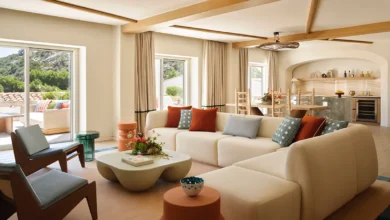
The resort’s portfolio of 10 privately managed luxury homes, including the notable "Cascade Ridge" property, provides a snapshot of the high-end market the resort serves. These homes, which feature professional-grade amenities, taxidermy-adorned interiors, and panoramic views of the 11,752-foot Mount Timpanogos, cater to travelers seeking isolation and artistic inspiration.
The Intersection of Art and Industry
Sundance continues to function as a talent incubator, maintaining the infrastructure that once hosted iconic directors like Quentin Tarantino, Ryan Coogler, and Chloé Zhao. The on-site Art Studio remains a vital component of the guest experience, offering workshops in painting, pottery, and silversmithing. By prioritizing these hands-on creative outlets, the resort ensures that the "maker culture" Redford instilled remains at the forefront of the guest journey.
For the ski enthusiast, the resort offers a markedly different experience from the high-traffic slopes of the Wasatch Range. Roughly 80 percent of the resort’s skiing clientele are local residents, creating a community-focused atmosphere. With a balanced distribution of terrain—half expert and half beginner/intermediate—the resort maintains a manageable footprint that avoids the over-commercialization often associated with destination ski resorts.
Implications and Future Outlook
The passing of Robert Redford marks the end of an era, yet the institutionalization of his values appears secure. The transition of the film festival to Boulder is a purely logistical evolution; the cultural impact of the Sundance Institute remains embedded in the educational and artistic programs that will continue to operate from the canyon.
As the resort enters this new era under the leadership of the current management team, the primary challenge will be maintaining the sense of "authentic discovery" that defined Redford’s tenure. The success of the recent 63-room expansion and the influx of wedding and event business suggest that the market is eager for the specific brand of "unplugged" luxury that Sundance offers.

Reflecting on the life of the man who started it all, one cannot help but recall the audio recordings often played for guests at the resort. In his own words, Redford described the canyon as a remedy for the "chaos and busyness" of the world. "Once I get to Provo Canyon and come up this narrow road, I start to breathe differently," he said. As the resort moves forward, it remains a testament to that sentiment: a place where the mountain air and the quiet, deliberate pace of life remain the ultimate luxury.
With rooms at the Inn starting at $433 per night, the property remains accessible to those who value the intersection of rugged wilderness and intellectual engagement. As neighboring resorts continue to expand their skiable terrain and infrastructure, Sundance stands as a quiet, stubborn counterpoint—a sanctuary that prioritizes the preservation of the landscape and the cultivation of the human spirit above all else. The road to the canyon remains narrow, but as history has shown, it is a path that continues to lead to something truly exceptional.