The Ultimate Guide to European Travel Connectivity: Navigating eSIM Data Plans, Carriers, and Modern Mobile Requirements


As international tourism rebounds to pre-pandemic levels, the logistics of staying connected while traversing European borders have undergone a quiet technological revolution. For decades, international travelers relied heavily on physical SIM cards, local kiosks at arrival airports, or exorbitant daily roaming fees charged by domestic home carriers in North America and beyond. Today, the widespread adoption of embedded electronic SIM (eSIM) technology has fundamentally transformed how visitors manage high-speed mobile data abroad. Offering instant digital delivery, dual-SIM capabilities, and freedom from physical hardware swaps, eSIMs have rapidly become the preferred method for modern globetrotters navigating the European Union and surrounding regions.

Background and Context of European Mobile Roaming
To fully understand the current landscape of European mobile data, one must examine the regulatory shifts that have shaped the market over the last decade. A pivotal moment for continental travel occurred when the European Union officially outlawed mobile data roaming fees across member states. This regulatory milestone means that any data plan purchased within a participating EU country—whether acquired through a French, German, or Spanish provider—operates seamlessly across borders without incurring additional roaming penalties. Consequently, a traveler landing in Paris can purchase an eSIM from a major French carrier and use that exact data allocation while touring Rome, Berlin, or Warsaw.

However, this borderless convenience comes with specific geographic caveats. Popular destinations such as the United Kingdom and Switzerland remain outside the European Union. While many continental carriers extend their coverage to include UK and Swiss networks, travelers must carefully verify individual plan parameters to avoid unexpected connectivity drops or premium surcharges upon crossing non-EU borders.
Comparative Cost Analysis: Domestic Carriers Versus Prepaid eSIMs

For travelers hailing from the United States, Canada, or Australia, utilizing domestic home mobile carriers for international travel has historically been the path of least resistance. Major telecommunications corporations offer various international add-ons, yet these services frequently present severe financial and performance drawbacks.
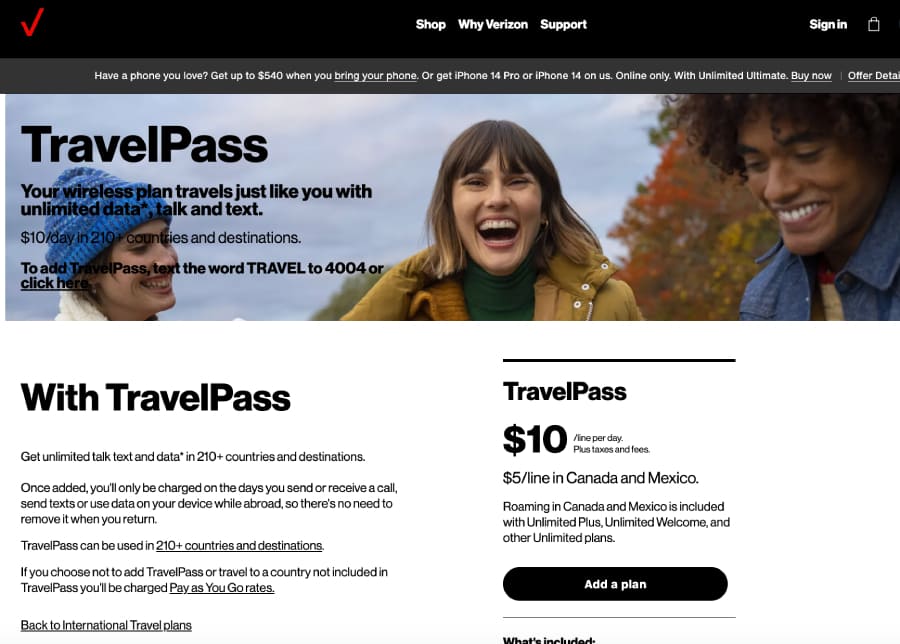
For instance, prominent US providers like AT&T and Verizon routinely charge a standardized daily international pass rate of approximately $10 per day. While these daily passes mirror a user’s domestic data pool, subsidiary limitations often apply; Verizon, for example, throttles users down to sluggish 3G speeds after exhausting a two-gigabyte daily threshold. T-Mobile historically offers international data included in select tiered plans, but these offerings typically default to crawling 2G speeds once a cumulative five-gigabyte limit is reached, rendering high-bandwidth functions like real-time navigation or email synchronization nearly impossible without purchasing expensive high-speed data add-ons.
By contrast, prepaid third-party eSIM providers offer a significantly more economical alternative. Specialized regional plans frequently average between $2 and $5 per day, translating to savings of up to 80 percent compared to traditional carrier daily roaming packages. Furthermore, third-party providers bypass the predatory overage fees often levied by legacy domestic operators, which can scale up to $30 per gigabyte.
The Modern Necessity of Mobile Data in Europe

A decade ago, navigating Europe offline with a paper guidebook and a physical map was a viable, albeit rustic, way to travel. Today, the rapid digitization of European infrastructure has elevated high-speed mobile data from a luxury convenience to an absolute operational necessity. Modern European society relies heavily on digital interfaces for daily commerce, transit, and hospitality.
Paper transit tickets have largely been replaced by smartphone barcodes and municipal transit apps. Urban navigation, real-time public transportation schedules, and rideshare services like Uber depend entirely on uninterrupted cellular connectivity. Furthermore, the post-pandemic hospitality sector widely implements contactless experiences: traditional paper restaurant menus have been universally substituted by QR codes, museums and historic landmarks mandate timed-entry digital booking tickets, and a growing number of dining establishments require smartphone-based payment processing. Attempting to navigate these digital systems relying solely on sporadic, unreliable public Wi-Fi hotspots introduces substantial friction and vulnerability to an international itinerary.
Leading eSIM Providers and Plan Configurations
The explosion of the eSIM market has introduced numerous competing brands, prompting industry analysts to categorize providers into two primary segments: specialized data-only brands offering flexible durations, and official digital retailers partnering with major European telecommunications infrastructure giants.

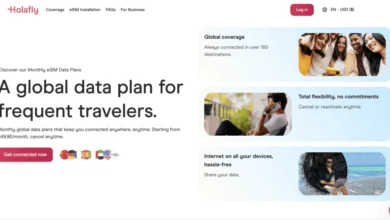
Holafly stands out in the former category as a prominent European-based provider specializing in unlimited data packages. Operating across durations ranging from one to 90 days, Holafly plans appeal to heavy data consumers who wish to bypass tracking gigabyte consumption limits. The per-day cost scales more favorably for extended trips, generally ranging between $2.50 and $5.00 daily.
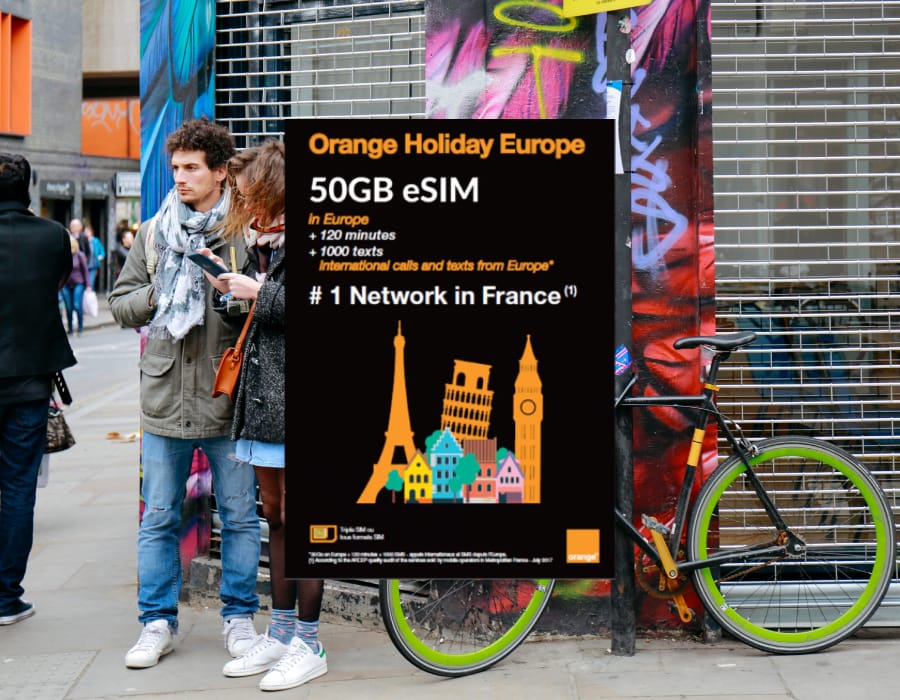
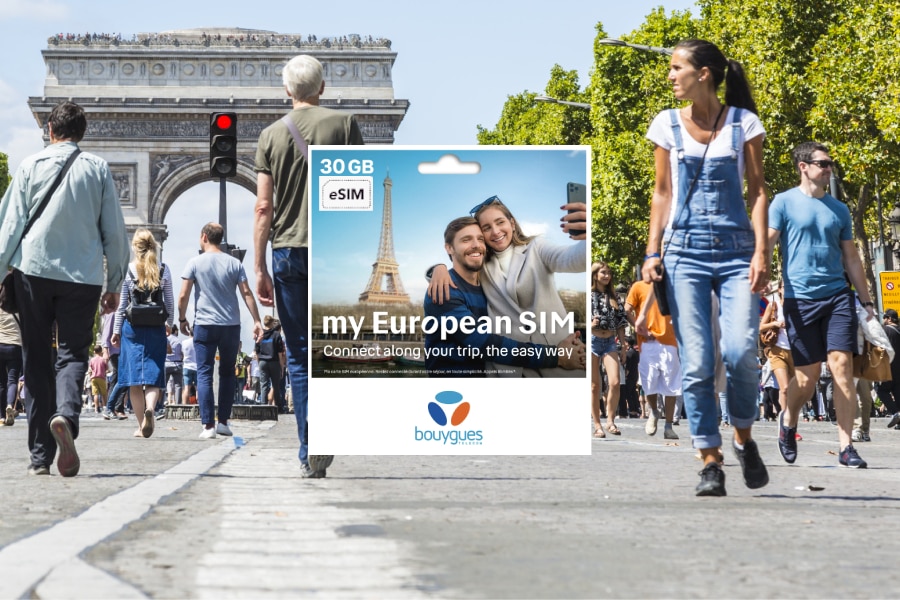
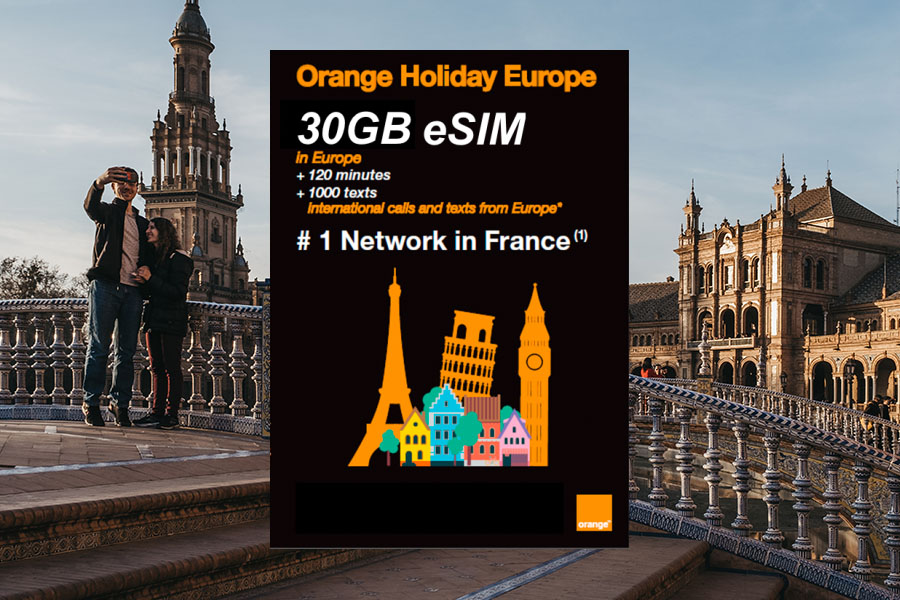
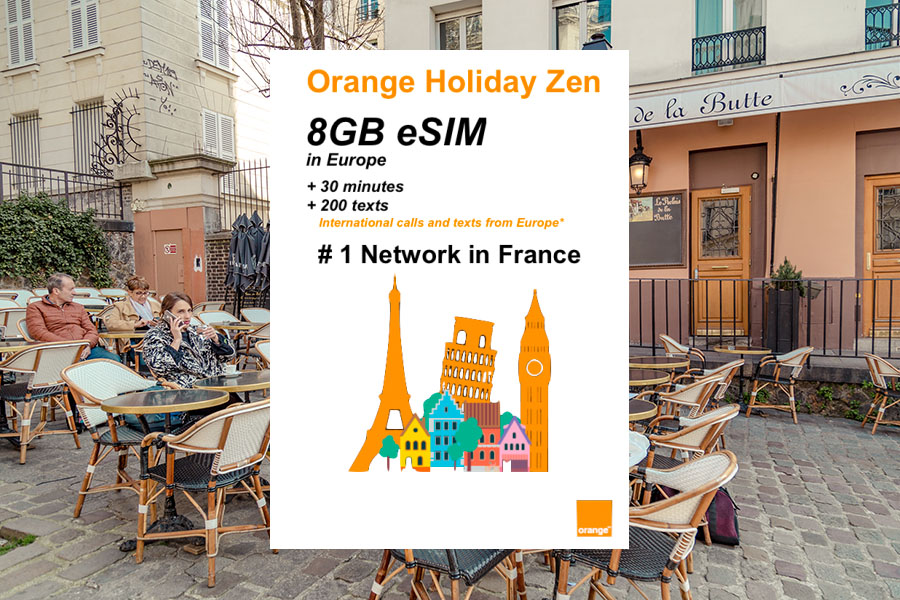
Conversely, platforms like SimOptions function as authorized digital retailers for established European mobile network operators, including Orange, Bouygues Telecom, and O2. These infrastructure-backed plans typically provide fixed data allotments—ranging from 10 gigabytes to 70 gigabytes—coupled with crucial auxiliary features. Premium offerings, such as the Orange Holiday Europe or Bouygues My European eSIM plans, supply users with a legitimate French or European telephone number, enabling traditional voice calling and SMS text messaging alongside generous data allowances and mobile hotspot tethering capabilities.
Technical Mechanics: What is an eSIM and How Does it Function?
An eSIM is not a physical object that can be touched or misplaced; rather, it is a rewritable digital SIM chip permanently embedded directly onto a smartphone’s motherboard. Activation occurs entirely through software integration. By scanning a Quick Response (QR) code or downloading a carrier-specific mobile application, a device can securely download network provisioning profiles in seconds.
This technological leap introduces significant functional advantages. Most contemporary smartphones manufactured since 2019 are equipped with dual-SIM architecture, supporting both a traditional physical SIM card and one or more active eSIM profiles simultaneously. This dual functionality allows travelers to maintain their domestic home phone number active for critical security functions—such as receiving banking fraud alerts, two-factor authentication (2FA) codes, and urgent text messages—while routing all cellular data usage through the affordable European travel eSIM.
Moreover, travelers are spared the administrative headache of locating a physical storefront upon arrival, paying costly international shipping fees for physical SIM delivery, or fumbling with miniature metal SIM-ejector tools and delicate plastic cards inside crowded airport terminals.
Device Compatibility and Activation Protocols
Before purchasing any digital data plan, consumers must verify two fundamental technical prerequisites: device compatibility and network carrier status. Essentially all iPhones manufactured from the iPhone XS generation onward support eSIM technology. Notably, Apple’s domestic market strategy shifted decisively with the United States release of the iPhone 14 series and subsequent generations, which abandoned the physical SIM tray entirely in favor of an exclusively eSIM-dependent architecture. Android users are similarly well-positioned; major flagship devices from Samsung, Google Pixel, and other prominent manufacturers produced over the last four years feature native eSIM integration.

Crucially, consumers must ensure their smartphone is carrier-unlocked. Devices locked to a specific domestic telecommunications provider via software restrictions will reject foreign network profiles until officially unlocked by the home carrier.
The activation protocol itself has grown increasingly streamlined. Industry experts universally recommend purchasing and downloading the eSIM profile prior to departure, utilizing home Wi-Fi to complete initial app installations and configuration steps. However, travelers must exercise caution regarding activation timers: many prepaid plans initiate their validity countdown the exact moment the profile is activated on a network. Activating a 14-day data plan a week prior to boarding an international flight effectively squanders half of the paid service period. Standard practice dictates completing the installation phase at home, but deferring final network activation until the aircraft touches down on European soil.

Implications and Future Outlook for International Connectivity
The widespread commercial maturation of eSIM technology marks a permanent shift in consumer telecommunications. By dismantling the monopolistic pricing structures long maintained by domestic mobile carriers regarding international roaming, digital SIMs have democratized mobile connectivity for millions of travelers. As telecommunications regulators continue to press for frictionless cross-border communication and smartphone manufacturers phase out legacy hardware slots, the reliance on physical SIM cards will likely complete its transition into obsolescence. For the modern European traveler, securing reliable, high-speed connectivity is no longer an exercise in logistics and compromise, but a seamless digital transaction executed in the palm of one’s hand.
Related posts: