The Landscape of Light: A UNESCO Heritage Milestone
In July 2021, the United Nations Educational, Scientific and Cultural Organization (UNESCO) officially inscribed the "Paseo del Prado and Buen Retiro, a landscape of Arts and Sciences" onto its World Heritage List. This area, commonly referred to as the "Landscape of Light," encompasses nearly 200 hectares of urban space. The designation serves as a formal recognition of the site’s unique integration of culture and nature within a dense metropolitan environment.

The site includes the Paseo del Prado—one of the oldest tree-lined urban boulevards in Europe—and the Retiro Park, originally created as a royal retreat in the 17th century. The inclusion of this area in the World Heritage List has had significant implications for local tourism policy, encouraging a shift toward sustainable urban development and the preservation of historical greenery. City officials and urban planners have noted that the designation acts as a catalyst for ongoing restoration projects, including the revitalization of the park’s iconic Crystal Palace and the structural reinforcement of historical monuments along the boulevard.

Chronology of Cultural Development
The cultural density of Madrid is a result of centuries of royal patronage and state investment. The city’s "Golden Triangle of Art" provides a historical timeline of European creativity:

- 17th Century: The construction of the Retiro Park by Philip IV, designed as an aristocratic refuge.
- 1819: The inauguration of the Museo del Prado, initially intended to house the Spanish Royal Collection. It now contains over 8,000 paintings, including works by Velázquez, Goya, and El Greco.
- 1992: The opening of the Museo Nacional Centro de Arte Reina Sofía, focused on 20th-century art, with Pablo Picasso’s 1937 masterpiece Guernica serving as its centerpiece.
- 1999: The opening of the Museo Thyssen-Bornemisza, which bridged the gaps in the existing national collections by providing a comprehensive survey of Western art history.
Data from the Madrid Tourism Board indicates that these three institutions consistently draw over 5 million visitors annually, creating a significant economic multiplier effect for local hospitality, transportation, and retail sectors.

Culinary Infrastructure and Economic Significance
The culinary landscape of Madrid is characterized by a mix of traditional taverns and modern, Michelin-starred establishments. The city’s market culture, exemplified by the Mercado de San Miguel and the Mercado de Vallehermoso, plays a vital role in the city’s food security and tourism economy.

The Mercado de San Miguel, a historic cast-iron structure dating back to 1916, underwent a major private-public renovation in the early 2000s, transforming it into a high-end gastronomic hub. Economic reports from the Madrid Chamber of Commerce suggest that such markets contribute significantly to the city’s "gastronomic tourism" segment, which accounts for roughly 15% of the capital’s total tourism revenue. The integration of local producers with high-end culinary tourism has allowed for the preservation of artisanal food production methods, such as those found in the poultry and wine sectors in the Chamberí district.

Strategic Planning for Visitors
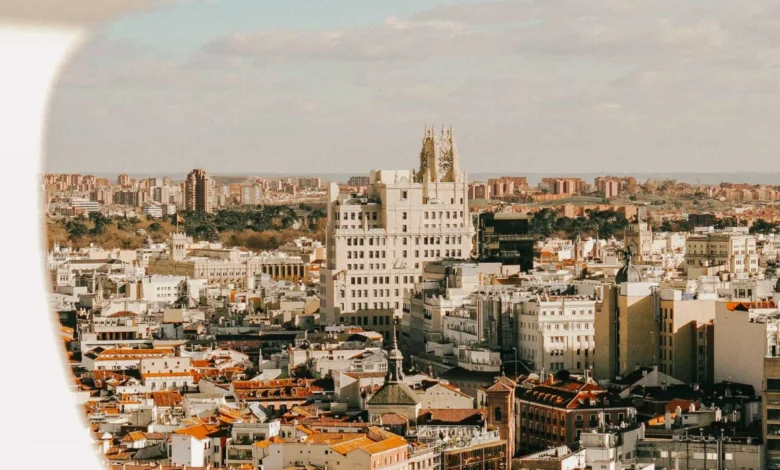
For the contemporary traveler, the logistical challenge of Madrid lies in its vastness. The city’s geography is divided into distinct districts, each with specific historical functions. The "Madrid Central" zone, which includes the historic center (Centro), has implemented strict low-emission vehicle regulations in recent years. These policies, while controversial during their implementation, have successfully reduced nitrogen dioxide levels in the city center by approximately 30%, according to municipal environmental reports.

Visitors are encouraged to utilize the city’s extensive public transportation network, which is consistently ranked among the most efficient in Europe. The Madrid Metro, the sixth-largest underground system in the world, connects all major cultural and residential hubs.

The Royal and Religious Core
The Royal Palace of Madrid (Palacio Real) remains the official residence of the Spanish monarchy for state ceremonies, despite the King and Queen residing at the Zarzuela Palace. The Palacio Real, covering 135,000 square meters with over 3,400 rooms, is the largest royal palace in Western Europe.

Adjacent to the palace stands the Almudena Cathedral. Its completion in 1993, following over a century of construction delays, represents a unique fusion of neoclassical and neo-Gothic styles. The site’s crypt, which houses the remains of prominent Spanish figures and aristocrats, is managed by the Archdiocese of Madrid and serves as a primary point of research for ecclesiastical historians. Access to these areas is strictly regulated to ensure the preservation of the structural integrity of the 19th-century foundations.

Emerging Districts and Urban Renewal
Beyond the established tourist hubs, districts like La Latina and Chamberí provide insight into the city’s social dynamics. La Latina is noted for its medieval street layout, which has remained largely unchanged for centuries. The area’s economic vitality is sustained by a high density of small-to-medium-sized enterprises (SMEs).

Conversely, the development of the "Madrid Río" project—a massive urban renewal effort that buried a segment of the M-30 motorway—has transformed the banks of the Manzanares River into a 10-kilometer-long linear park. This project is frequently cited by international urban planning organizations as a model for "re-wilding" post-industrial city centers. It has provided the city with thousands of hectares of new recreational space, effectively connecting the southern districts to the urban core.

Future Implications and Sustainable Tourism
The Madrid City Council, in conjunction with the Regional Government, has launched a "Strategic Plan for Tourism 2024-2027." The primary objective is to move away from volume-based tourism and toward "value-based" tourism. Key pillars of this strategy include:

- Digitalization: Implementation of real-time crowd management tools to prevent overcrowding in the Prado and Reina Sofía museums.
- Sustainability: Incentivizing hotels to adopt zero-waste certifications and increasing the number of pedestrian-only zones.
- Regional Integration: Encouraging visitors to explore satellite locations beyond the city center, such as the historic towns of Alcalá de Henares and Aranjuez, which are also UNESCO World Heritage Sites.
Market analysts suggest that if these initiatives are successful, Madrid could see a 10-15% increase in tourism-related tax revenue without a corresponding increase in infrastructure strain. However, the city faces ongoing challenges regarding the impact of short-term rental platforms on housing affordability. The local government has responded with increased regulatory scrutiny on property licenses, a move supported by the Madrid Hotel Business Association, which argues for a level playing field between professional hospitality providers and private rentals.

Conclusion
Madrid remains a city of profound complexity, balancing its status as a historic royal capital with its role as a modern European financial and cultural center. For those planning an itinerary, the city offers a diverse array of experiences that reflect its multifaceted history. Whether through the study of its art, the exploration of its culinary traditions, or the observation of its urban development, Madrid provides a comprehensive look at the evolution of European society. As the city continues to navigate the pressures of modern tourism and urbanization, its commitment to preserving its "Landscape of Light" remains its defining characteristic, ensuring its place as a cornerstone of the global cultural heritage.