Capri Without The Crowds: 9 Best Things To Do In The Italian Island’s Quietest Corners

The island of Capri, a rugged limestone jewel situated in the Tyrrhenian Sea, remains one of Italy’s most iconic travel destinations. Renowned for its dramatic cliffs, luxury boutiques, and the ethereal glow of the Blue Grotto, the island attracts over two million visitors annually. However, this popularity has created significant logistical strain, particularly during the peak summer months of July and August. As cruise ships dock in Naples and high-speed ferries deposit thousands of day-trippers onto the shores of Marina Grande, the island’s narrow streets and historic sites often reach maximum capacity.

This influx has forced local authorities and tourism boards to consider more sustainable management practices. For travelers seeking an authentic experience, the challenge lies in navigating the island when its infrastructure is at its most taxed. By understanding the ebb and flow of tourism, visitors can access the island’s most historic and scenic sites while avoiding the most intense periods of congestion.

The Dynamics of Tourism and Strategic Timing
The current tourism model on Capri is heavily influenced by the cruise industry. Statistical data indicates that the vast majority of day-trippers follow a predictable schedule, arriving via ferry or hydrofoil from Naples or Sorrento between 10:00 am and 11:00 am. This creates a massive, concentrated surge in the island’s central hubs, such as the Piazzetta di Capri and the funicular station. Most of these visitors depart by 5:00 pm, leaving the island to overnight guests.

To mitigate the impact of this density, travel experts increasingly recommend visiting during the "shoulder" seasons. Data from the Campania regional tourism office suggests that April, May, September, and October offer a significant reduction in visitor numbers. During these months, the daily average of arrivals can drop by as much as 40% compared to the mid-summer peak. Furthermore, the number of cruise ships docking in the Bay of Naples decreases significantly as winter approaches, allowing for a more tranquil exploration of the island’s interior.

For those constrained to peak-season travel, the primary strategy involves temporal adjustment. By departing on the earliest available ferry from Naples—often as early as 7:00 am—visitors can reach the island before the main wave of tourists. This allows for a three-to-four-hour window of relative quiet before the peak crowds arrive.

Strategic Navigation and Independent Exploration
A common pitfall for many tourists is the reliance on organized shore excursions provided by large cruise operators. These tours often focus on a narrow set of locations, leading to bottlenecks at key transit points. Independent travelers can optimize their time by opting for private, small-group excursions. These alternatives are not only more flexible in their scheduling but also frequently avoid the most crowded drop-off points, allowing for a more intimate encounter with the island’s geography.

1. The Heart of the Island: Capri Town
Capri Town serves as the administrative and commercial center of the island. Upon arrival at the port of Marina Grande, most visitors utilize the funicular, a cog-railway that climbs the steep incline to the town center in roughly six minutes. While the funicular is an efficient piece of engineering, queues can extend for an hour during peak times.

The town itself is a nexus of culture and commerce, housing the Church of Santo Stefano and the iconic Piazzetta. The area is also home to a high concentration of luxury retail, with major Italian fashion houses maintaining a constant presence. For those interested in the economic aspect of the island, the prevalence of tax-free shopping for non-EU residents serves as a significant draw. When dining, seeking out family-run establishments like Buca di Bacco or Al Grottino offers a departure from the more heavily marketed tourist venues, providing a more localized culinary experience.

2. Anacapri: The Higher Altitude Alternative
Located at a higher elevation than Capri Town, Anacapri offers a distinct, more pastoral atmosphere. Reaching this part of the island requires navigating narrow, winding roads that characterize the region’s topography.

Anacapri is home to significant historical sites, including the Church of Saint Sophia and the Church of San Michele, the latter being a testament to the island’s 18th-century architectural heritage. The area around Piazza della Vittoria is the primary transit hub. Visitors are encouraged to explore the local artisan shops that line the streets, which offer a more grounded alternative to the high-end retail of the lower town.

3. The Monte Solaro Ascent
The Monte Solaro Chair Lift remains a hallmark of the island’s tourism infrastructure, offering an aerial view of the Sorrentine Peninsula and the Gulf of Naples. The ascent takes approximately 15 minutes and carries passengers to the highest point on the island. While the experience is visually rewarding, it is a significant point of congestion.

For those who prefer a more physical approach, the Monte Solaro trail offers a rigorous hiking alternative. This route allows visitors to experience the landscape at a slower pace and provides a more comprehensive view of the island’s flora and geology. Given the high temperatures of the summer months, however, this activity requires adequate preparation and hydration.

4. Villa San Michele and Historical Preservation
Villa San Michele is a significant cultural site in Anacapri, once the home of Swedish physician and author Axel Munthe. The villa, constructed in the late 19th century, reflects the eclectic architectural styles of the era and houses an extensive collection of antiquities. The gardens are particularly notable for their panoramic views of the northern coastline. By visiting this site, travelers gain insight into the 19th-century European fascination with Capri, which was instrumental in establishing the island as a destination for the intellectual and social elite.

5. The Gardens of Augustus
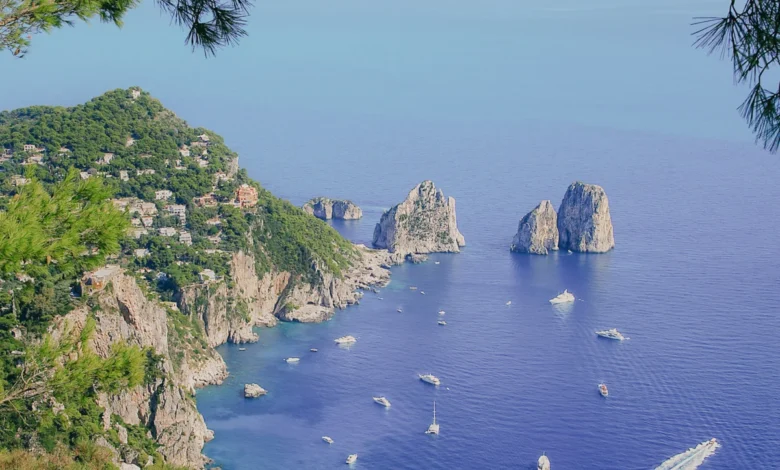
The Gardens of Augustus are a masterpiece of botanical planning and landscape architecture. They offer one of the most famous views on the island: a vertical drop overlooking the Via Krupp, a historic switchback road carved into the cliffside. The gardens provide a vantage point for observing the Faraglioni, the iconic rock formations that have become the primary symbol of Capri. Access to these gardens is managed through a small entrance fee, which helps fund the ongoing preservation of the site.

6. Maritime Exploration
The coastline of Capri is perhaps best understood from the water. Boat tours offer access to geological features that are inaccessible by land, including the Grotto Verde and the famous Blue Grotto.

Recent years have seen an increase in the number of private boat operators offering sustainable, small-scale tours. This has allowed for a more dispersed distribution of tourists around the island’s perimeter. Experts suggest that booking these tours in advance is critical, as the limited capacity of the vessels leads to frequent sell-outs during the high season.

7. The Logistics of Marina Grande
Marina Grande acts as the gateway to the island. As the main port, it is the site of constant activity. While it is often viewed simply as a transit point, the area contains several local amenities. Beach clubs such as Le Ondine offer a place to rest during the wait for return transport, providing a necessary reprieve from the intense summer heat.

8. The Shoreline of Marina Piccola
Situated on the south coast, Marina Piccola is historically significant as the site where the Roman Emperor Augustus once sought refuge. Today, it is a popular area for swimming and sunbathing. Because the beach is comprised primarily of stone rather than sand, it is essential for visitors to be prepared for the terrain. While it remains a high-traffic area, its proximity to the Mediterranean waters makes it a staple of the Capri experience.

9. The Hiking Experience
Beyond the chairlift, the trail system on Capri serves as a reminder of the island’s rugged nature. The path to the summit of Monte Solaro is one of the most well-marked, yet it is often overlooked by those seeking a more leisurely visit. For the prepared hiker, the trail provides a sense of solitude that is difficult to find elsewhere on the island.

Broader Implications of Sustainable Tourism
The strategies discussed—shifting travel times, opting for independent tours, and exploring the lesser-known interior—are not merely individual preferences; they are increasingly necessary steps for the long-term preservation of Capri. The island’s fragile ecosystem and historical infrastructure are under constant pressure from the sheer volume of visitors.

By dispersing the flow of tourism, visitors can contribute to a more sustainable model, one that benefits the local economy without compromising the integrity of the environment. As the global tourism industry continues to evolve, the case of Capri serves as a primary example of how travelers can balance the desire for exploration with the need for responsible and respectful engagement with world-renowned heritage sites.