Slothee Still Wants Coffee Expands Global Childrens Literature Series with Cultural Explorations and Coffee Traditions

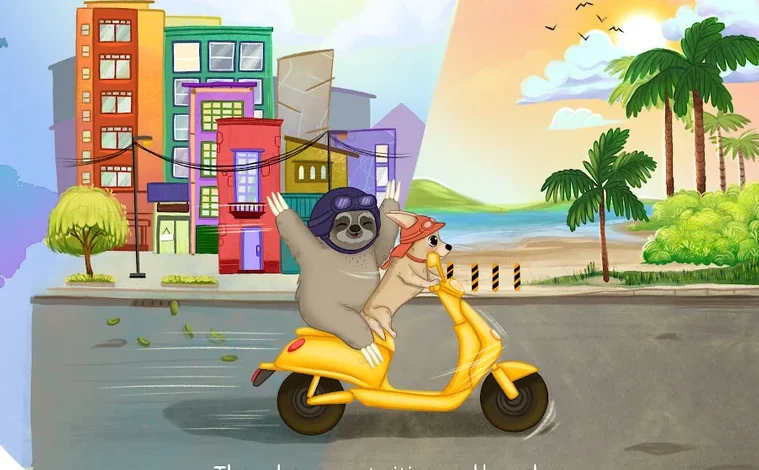
The landscape of children’s educational literature is experiencing a notable expansion with the official release of Slothee Still Wants Coffee, the second installment in the globally focused Slothee and Friends series. Published to engage young readers and adults in cross-cultural discovery, the newly released volume follows the lovable sloth protagonist on an extensive international journey spanning seven distinct nations, all united by a single quest: finding the ultimate cup of coffee. Building upon the foundational success of its predecessor, the latest publication deliberately merges geography, anthropology, and storytelling into a cohesive educational tool designed to foster early global awareness.
Background and Evolution of the Slothee and Friends Franchise
The genesis of the Slothee and Friends series stems from a growing demand within the children’s publishing sector for narratives that move beyond domestic settings to introduce young audiences to international cultures, agricultural processes, and global interconnectedness. Created by a team of authors and educators passionate about travel and culinary heritage, the series utilizes anthropomorphic characters to make complex global systems accessible to pre-literate and early-reader demographics.
The first book in the series established Slothee as an adventurous explorer with an affinity for high-quality coffee, setting a whimsical yet informative tone. While children’s literature frequently introduces animals in natural habitats, the Slothee and Friends franchise places its central character within authentic human contexts, interacting with local traditions, agricultural economies, and regional gastronomy. The decision to focus on coffee—a commodity consumed globally by billions of adults—provides a unique intergenerational bridge, encouraging parents and educators to discuss international trade, farming, and cultural appreciation with children.
Chronology of Slothee’s Global Itinerary
The narrative structure of Slothee Still Wants Coffee is built upon a carefully mapped itinerary that takes the protagonist across multiple continents, exposing readers to diverse topographies, climates, and brewing traditions. The geographical progression of the book has been designed to mirror actual global coffee belts and major export regions.
Beginning in the lush rainforests of Costa Rica, known for its rich volcanic soil and meticulous bean cultivation, Slothee’s journey immediately immerses the reader in Central American agricultural practices. From there, the narrative shifts to Peru, highlighting the Andean nation’s rising prominence in specialty organic coffee production. The journey then moves northward to Mexico, showcasing the deep-rooted shade-grown coffee traditions of regions like Chiapas and Veracruz.
Leaving the Americas, the narrative spans the Caribbean to incorporate Jamaica, celebrating the world-renowned Blue Mountain coffee and the unique island culture that produces it. The protagonist’s itinerary then extends across the Atlantic to the African continent, specifically targeting Uganda. This segment introduces readers to the robust coffee heritage of East Africa, emphasizing the foundational role of smallholder farmers in the global supply chain.
Continuing eastward into Asia, Slothee visits Vietnam, the world’s leading producer of Robusta beans, where the book introduces readers to distinct regional brewing methods, such as the use of condensed milk and traditional drip filters. Finally, the journey concludes in Australia, representing the vibrant, modern café culture of Oceania, characterized by innovations in espresso artistry and Melbourne’s globally recognized coffee subculture. Along this extensive route, Slothee encounters a diverse array of animal companions who act as cultural guides, teaching the protagonist—and by extension, the reader—about local customs, languages, and environmental stewardship.
Supporting Data and Educational Impact in Childrens Publishing
The release of Slothee Still Wants Coffee arrives at a time when educational experts and publishers are placing increased emphasis on global literacy and cultural empathy from an early age. According to recent educational studies, children who are exposed to multicultural literature demonstrate higher levels of cognitive flexibility, enhanced vocabulary acquisition, and a greater capacity for empathy toward unfamiliar traditions.
Furthermore, integrating real-world commodities like coffee into children’s media aligns with a broader pedagogical trend known as place-based and commodity-chain education. Statistics from international agricultural organizations indicate that coffee is one of the most traded agricultural commodities globally, sustaining the livelihoods of over 125 million people worldwide, primarily in developing nations. By introducing concepts of global agriculture, fair trade awareness, and regional diversity through an engaging narrative framework, the book provides a foundational economic and geographical literacy that is rarely found in traditional fiction targeted at early readers.
Publishing industry data highlights a steady 15 percent year-on-year growth in demand for children’s books that feature non-Western settings, diverse protagonists, and environmental themes. Educators and school librarians have increasingly advocated for titles that serve dual purposes: entertaining young readers while simultaneously meeting curriculum standards in social studies, geography, and cultural education. Slothee Still Wants Coffee directly addresses this market demand by transforming a daily adult ritual into an accessible, educational adventure.
Official Perspectives and Creative Direction
While specific statements from the creative and editorial teams behind the Slothee and Friends series emphasize a commitment to wholesome entertainment, the broader publishing community has widely noted the strategic value of the project. Industry analysts point out that the series bridges a significant gap in the juvenile literature market by combining geography with sensory exploration.
In interviews discussing the conceptualization of the franchise, the creators have underscored that the primary objective is to spark curiosity about the wider world. By utilizing a sloth—an animal stereotyped for slowness and leisure—as an energetic traveler, the books subvert expectations and encourage children to slow down, observe their surroundings, and appreciate the immense effort required to bring everyday items from remote corners of the globe to a local neighborhood café.
The narrative deliberately avoids overly academic language, choosing instead to rely on vibrant illustrations, interactive storytelling elements, and relatable character interactions. This approach ensures that children as young as four years old can engage with the visual storytelling, while older elementary school readers can comprehend the geographical and cultural nuances embedded within the plot.
Broader Market Implications and Future Prospects
The successful rollout of Slothee Still Wants Coffee carries significant implications for the future direction of the Slothee and Friends franchise and independent children’s publishing as a whole. As parents and educators continue to seek out media that promotes global citizenship, books that cross geographical boundaries with cultural sensitivity are positioned to capture substantial market share.
Publishing insiders anticipate that the positive reception of the second book will accelerate plans for future expansions within the intellectual property. According to early development roadmaps released by the creative team, subsequent volumes will continue Slothee’s adventures by exploring alternative beverage traditions, such as the history and ceremony of tea across Asian and European nations, as well as delving deeper into environmental conservation and wildlife preservation efforts in the regions visited.
The commercial viability of expanding into merchandise, interactive digital applications, and educational classroom toolkits is currently being evaluated by publishing stakeholders. Because the core themes of the book—friendship, discovery, and global appreciation—transgress cultural and linguistic barriers, translation rights for international editions are already under negotiation, ensuring that Slothee’s educational journey will reach non-English-speaking markets in the near future.
Ultimately, Slothee Still Wants Coffee transcends the traditional boundaries of a simple animal adventure story. By meticulously mapping out a multi-country expedition centered around a universally recognized agricultural product, the publication offers a masterclass in how children’s literature can simultaneously entertain, educate, and inspire the next generation of global citizens. As the book enters distribution channels worldwide, its impact on early childhood education and cross-cultural understanding will continue to resonate within classrooms, libraries, and family living rooms alike.