Beyond the Manual: Why Everything You Know About Aperture, Shutter Speed, and ISO Needs an Update

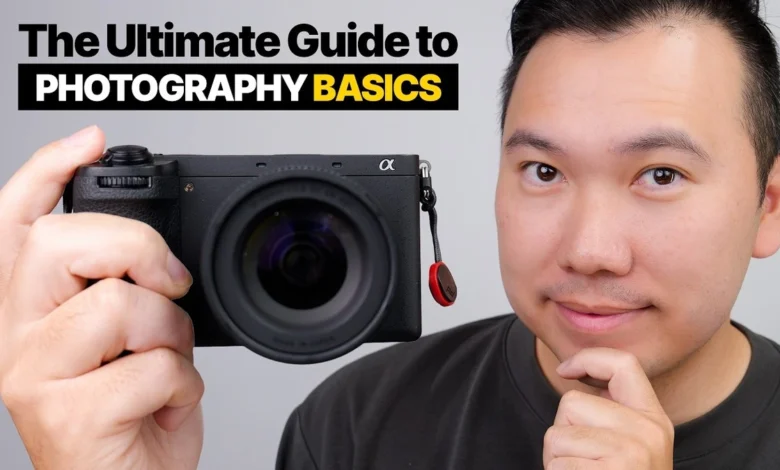
The holy trinity of manual photography—aperture, shutter speed, and ISO—form the foundational curriculum for every individual picking up an interchangeable-lens camera for the first time. Generations of photographers have committed to memory a rigid set of prescriptive dogmas regarding these three settings: wide apertures are mandatory for background separation, the reciprocal rule of shutter speed is an absolute barrier against motion blur, and ISO increases must be avoided at all costs to preserve dynamic range. However, as photographic technology has evolved from the forgiving margins of 35mm film emulsions to ultra-dense, high-resolution digital sensors, these traditional rules require significant recalibration. Understanding the mechanics behind these parameters, and more importantly, knowing when and how to purposefully violate standard operating procedures, separates the reactive shooter from the deliberate visual artist.
Deconstructing the Myth of the Ultra-Fast Prime Lens
For decades, photographic discourse has propagated the belief that achieving a shallow depth of field—characterized by a sharp subject set against a creamy, blurred background—is exclusively the domain of expensive, ultra-fast prime lenses featuring maximum apertures of f/1.8, f/1.4, or f/1.2. In a recent educational breakdown distributed across digital platforms, prominent content creator and educator Jason Vong systematically dismantles this notion by demonstrating that optical physics offers far more flexibility than retail marketing suggests.
Utilizing an entry-level APS-C mirrorless camera body paired with a modest 18mm kit lens—a setup routinely dismissed as too slow or basic for professional portraiture—Vong illustrated that background compression and bokeh are functions of spatial relationships rather than aperture value alone. By shooting a subject at an aperture of f/3.5 while positioning the camera into closer physical proximity to the subject, the background naturally dissolves into a soft blur.
To further prove the point, Vong zoomed the kit lens to its maximum focal length of 50mm, which naturally forced the maximum aperture to narrow to f/5.6. By stepping backward to maintain an identical full-body composition, the resulting image retained a remarkably smooth background transition. This practical demonstration clarifies a frequently misunderstood optical phenomenon: telephoto lenses operating at narrower apertures like f/6.3 or f/8 frequently yield superior background isolation compared to wide-angle lenses running at f/1.8, provided the spatial separation between the subject and the background is adequately managed.
Furthermore, the environmental context plays an immutable role in depth perception. A flat, uniform brick wall positioned three feet behind a subject will resolutely refuse to blur out, regardless of whether the lens is locked at f/1.2 or f/16. Conversely, a deep, open architectural space or a dense canopy of distant foliage will yield magnificent bokeh even at moderate f-stops. By leveraging an accessible APS-C sensor configuration—such as the Sony a6700—alongside standard consumer glass, photographers can achieve professional-grade aesthetic results without investing heavily in exotic, specialized prime lenses.
The Hidden Pitfalls of Shooting Wide Open
While operating a lens at its widest possible aperture is often treated as a default setting for low-light performance and maximum background blur, this practice introduces distinct technical complications that frequently degrade image quality. Vong categorizes these complications into two primary categories: optical imperfections and hyper-sensitive depth of field tolerances.
Budget-conscious modern lenses and vintage glass resurrected via mount adapters frequently suffer from severe optical softness, chromatic aberration, and loss of contrast when pushed to their widest limits, particularly at the periphery of the frame. Stopping down the aperture diaphragm by just one or two stops—typically landing in the sweet spot between f/2.8 and f/4—virtually eliminates these structural aberrations, resulting in vastly superior edge-to-edge sharpness and micro-contrast.
The second, and perhaps more insidious, complication of wide-aperture shooting is the microscopic margin of error inherent in ultra-thin planes of focus. When capturing a portrait at f/1.8, the acceptable zone of sharp focus may measure only a few millimeters in depth. In practical field conditions, the natural, involuntary postural sway of a human subject—or the slight leaning motion of the photographer—is enough to push the eyes completely out of the focal plane, even when the camera’s autofocus system registers a confirmed lock.
To mitigate these systemic issues, professionals recommend an active field strategy: initiate handheld portrait sequences at a minimum shutter speed of 1/125th of a second, engage continuous high-speed burst mode, maintain a grounded stance, and fire a rapid succession of frames to guarantee at least one tack-sharp capture.
Moreover, shooting wide open universally is an artistic liability depending on the narrative goals of the image. For instance, capturing an 85mm environmental portrait against the intricate geometry of a glowing city skyline at f/1.8 reduces the urban context to an unidentifiable wash of colored blobs, robbing the photograph of its geographical identity. Stopping down to f/5.6 or f/8 preserves the narrative integrity of the location. Similarly, when photographing a high-speed subject crossing a dynamic background—such as a commuter train passing through blooming cherry blossoms—relying on autofocus at wide apertures is an unnecessary gamble. Experienced practitioners routinely stop down a standard 24-70mm zoom lens to f/4 and pre-focus manually on the physical tracks, ensuring absolute sharpness the exact microsecond the subject enters the frame.
Recalibrating the Reciprocal Rule for High-Resolution Sensors
The traditional handheld shutter speed guideline—colloquially known as the reciprocal rule, which dictates that shutter speed should never drop below one over the focal length of the lens (e.g., 1/50th of a second for a 50mm lens)—has governed field photography since the era of chemical 35mm film. However, this historic heuristic was formulated primarily for small-format silver halide negatives evaluated at modest print dimensions, such as standard 4×6 inch consumer proofs.
In the contemporary digital landscape, sensor technology has evolved dramatically. Modern full-frame and crop-sensor cameras routinely pack 45 to 60 megapixels into the exact same physical area previously occupied by 12 or 24 megapixels. Consequently, microscopic amounts of physical camera shake—imperceptible on an analog print viewed from a distance—become glaringly obvious when scrutinizing a high-resolution digital file at 100% pixel magnification on a high-definition monitor.
Consequently, professional shooters utilizing ultra-high-megapixel bodies frequently treat the classic reciprocal rule merely as an absolute minimum threshold, purposefully elevating their shutter speeds when pixel-level sharpness is paramount. Conversely, the widespread integration of advanced In-Body Image Stabilization (IBIS) and sophisticated optical stabilization systems within both lenses and camera bodies pulls in the opposite direction. These technological safeguards enable photographers to handhold static subjects at shutter speeds well below traditional safety margins without incurring motion blur.
Ultimately, stabilization technologies and pixel densities mean the reciprocal rule functions best as a personalized baseline. Photographers are advised to conduct empirical testing with their specific hardware combinations to determine their individual physiological tremor limits before embarking on critical assignments.
Practical Baseline Shutter Speeds and Low-Light Workflows
Translating theoretical shutter speed metrics into field applications requires a systematic understanding of subject velocity. Vong outlines clear, practical operational baselines designed to freeze various levels of movement:
- 1/125th of a second: The minimum operational threshold for stationary or minimally animated portrait subjects.
- 1/250th of a second: Adequate for capturing walking pedestrians and slow-moving subjects without motion drag.
- 1/500th of a second: Recommended for containing the unpredictable, erratic movements of children and domestic pets.
- 1/1,000th of a second and faster: Mandatory for high-speed athletics, motorsports, and dynamic wildlife photography.
Pushing these boundaries yields distinct operational insights. For example, photographing a cat navigating a domestic interior at the baseline recommended speed will yield a mixed yield of sharp keepers and motion-blurred frames; elevating the shutter speed marginally guarantees a 100% success rate.
Conversely, the pursuit of excessive shutter speeds can occasionally prove counterproductive. Freezing a completely static architectural structure at an ultra-fast 1/8,000th of a second is fundamentally sound only if ambient light permits a low ISO value. If an excessively fast shutter speed forces the camera’s processing engine to drive the ISO into extreme amplification territory—introducing severe digital noise and destroying dynamic range—the shutter speed must be dialed back in favor of sensor preservation.
In unpredictable lighting environments, such as live musical performances or dimly lit events, professionals lean heavily on Auto ISO parameters capped with a strict ceiling—typically ISO 6,400—to balance exposure safety.
Furthermore, the logical sequence in which a photographer adjusts their exposure triangle depends entirely on physical support mechanics. When shooting completely handheld, where camera stability is perpetually vulnerable, the adjustment hierarchy prioritizes aperture first to control depth of field, followed by shutter speed to eliminate motion blur, and finally ISO to balance overall luminance. Conversely, when the camera is locked securely onto a heavy professional tripod, the workflow inverts: ISO is anchored at its native base value (typically ISO 100) to maximize dynamic range and color depth, aperture is selected for optimal optical sharpness, and shutter speed is left to absorb whatever duration is required to achieve correct exposure, as demonstrated in demanding night photography environments such as long-exposure cityscapes of Shinjuku captured on compact systems like the Sony RX100 VII.
Broader Industry Implications and Technological Evolution
The ongoing deconstruction of traditional photographic rules reflects a maturing digital imaging industry. As computational photography, artificial intelligence-assisted autofocus, and hyper-stabilized sensors redefine the boundaries of what is technically achievable in adverse conditions, the reliance on rigid, analog-era rules of thumb is steadily diminishing.
Industry analysts note that modern consumer cameras possess capabilities that surpass the professional gear of twenty years ago. This democratization of high-performance hardware places greater emphasis on conceptual execution and spatial awareness rather than technical gatekeeping. By encouraging creators to look beyond dogmatic settings like wide-open apertures and rigid shutter speed formulas, contemporary educational paradigms empower a new generation of visual storytellers to command their equipment with technical mastery and creative liberation.
Related posts: