Pixieset Unveils All-In-One AI Photo Editor to Bridge the Gap Between Culling, Editing, and Gallery Delivery

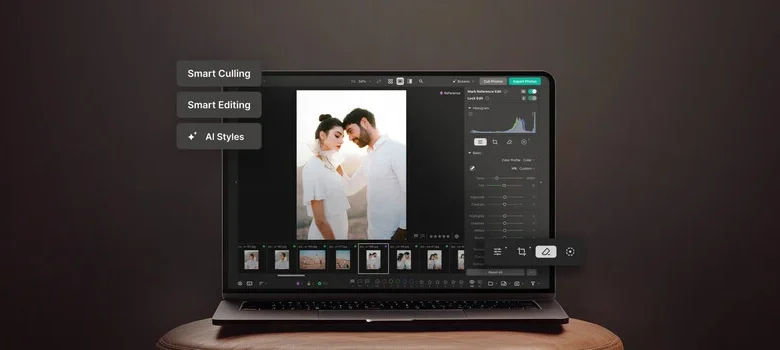
The photography software landscape is undergoing a significant consolidation phase as Pixieset, a prominent digital platform for professional photographers, officially launches Pixieset Photo Editor. Designed to eliminate the fragmented post-production workflows that have long defined the industry, the new application combines AI-assisted culling, raw editing, batch processing, and direct client gallery publishing into a single, unified ecosystem. For over a decade, Pixieset has built its reputation on reliable gallery hosting, subsequently expanding into administrative business management through its Studio Manager suite—which handles client bookings, contracts, invoicing, and payments. With the introduction of Photo Editor, the company now targets the critical operational gap that exists between capturing an image in the field and delivering the final product to a client.
Historically, the post-production lifecycle required photographers to export raw files from storage cards, import them into dedicated third-party cataloging software like Adobe Lightroom, execute manual or semi-automated culling, apply editing presets, export high-resolution JPEGs, and finally upload those files to a separate platform for client delivery. This multi-app process often created bottlenecks, redundancy, and unnecessary friction for high-volume studios specializing in weddings, portraits, and large-scale commercial events. By incorporating a desktop-based raw editor directly connected to its web-hosted infrastructure, Pixieset seeks to streamline the entire operational pipeline, allowing professionals to manage administrative, creative, and delivery tasks from a single dashboard without ever leaving the platform.
The Evolution of the Pixieset Ecosystem: A Chronological Overview
To understand the strategic significance of the Photo Editor launch, industry analysts point to Pixieset’s methodical expansion over the past twelve years. Founded primarily as a sleek, client-facing gallery hosting provider, the company steadily evolved to meet the broader economic needs of freelance photographers and small studio owners.
In its early years, the platform focused exclusively on digital proofing, downloads, and print sales. However, as independent photography businesses grew more complex, operators demanded integrated solutions to handle client management systems (CMS). Pixieset responded by rolling out Studio Manager, a comprehensive administrative suite that digitized booking proposals, contract signatures, automated questionnaires, and financial transactions.
Despite these advancements, the creative phase of photography—specifically raw processing and image selection—remained an external dependency. Photographers were forced to divide their time between business management software and heavy desktop editing suites. The introduction of Photo Editor represents the culmination of this decade-long expansion, effectively merging business administration with raw asset management and delivery. Industry observers note that this holistic approach mirrors a broader software-as-a-service (SaaS) trend toward platform consolidation, where users increasingly favor all-in-one ecosystems over fragmented toolsets.
Anatomy of Pixieset Photo Editor: AI-Assisted Culling and Local Processing
At the core of the new application is an AI-assisted culling engine engineered to tackle one of the most time-consuming phases of professional photography. Large commercial and wedding shoots frequently yield thousands of raw frames, requiring hours of repetitive sorting to isolate technical flaws and redundant poses.
Pixieset’s culling algorithm conducts an automated preliminary sweep of a shoot, filtering images based on objective photographic criteria such as sharpness, motion blur, closed eyes, and compositional framing. According to early testing and technical demonstrations, the system allows users to adjust sensitivity parameters to match their specific quality thresholds.
Crucially, developers have designed the culling tool to augment, rather than replace, human artistic judgment. While automated systems excel at identifying technical rejections, they are inherently limited in recognizing narrative nuance—such as an unconventional documentary frame or an emotionally resonant expression that defies standard compositional rules. Consequently, the software employs a hybrid workflow: the AI handles the heavy lifting of initial data reduction, while the photographer executes the final curatorial review.
Furthermore, privacy and data security have emerged as central pillars of the application’s architecture. Unlike cloud-centric artificial intelligence tools that upload high-resolution RAW files to remote servers for processing, Pixieset Photo Editor executes all AI culling, style analysis, and raw adjustments locally on the photographer’s personal computer. This local-processing model ensures that sensitive client imagery—particularly family portraits and private commissions—remains entirely confidential, satisfying strict data privacy expectations for professional studios.
Personal AI Styles and Advanced Raw Editing Capabilities
Beyond automated culling, Pixieset Photo Editor introduces a proprietary batch-processing methodology known as Personal AI Styles. Rather than forcing photographers to rely on generic, one-click presets that require extensive manual correction, the software analyzes previously edited and delivered galleries hosted on Pixieset.
By evaluating a photographer’s historical body of work, the AI constructs a customized editing signature that mirrors their established aesthetic, accounting for subtle variations in exposure, color grading, tone curves, and contrast. Building a Personal AI Style requires minimal setup time; users simply select an archived Pixieset gallery, and the application’s local engine maps the stylistic parameters without requiring manual exports or reference file management.
Once the AI style is applied across a new batch of images, photographers retain access to a robust suite of professional raw adjustments. The editing panel includes tools for localized AI masking, exposure correction, white balance tuning, perspective straightening, lens profile corrections, and advanced healing and erasing brushes. Users can also designate reference frames to ensure visual consistency across large sequences, bridging the gap between automated efficiency and granular creative control.
Market Implications: Can Pixieset Photo Editor Replace Traditional Software?
The launch of Pixieset Photo Editor has sparked widespread discussion regarding its viability as a direct alternative to industry-standard applications like Adobe Lightroom. For photographers operating within tight margins, the software presents a compelling financial and operational value proposition.
By consolidating culling, raw processing, and gallery publishing into a single environment, the application eliminates the friction of file exporting and reimporting. Furthermore, the platform’s integration with client proofing workflows allows photographers to seamlessly synchronize client favorites lists directly with the editing timeline, streamlining final retouching passes prior to final delivery.
Industry analysts emphasize that while traditional editing suites retain deeply specialized asset management and tethered shooting capabilities tailored for high-end studio environments, Pixieset’s integrated model addresses the core functional requirements of the vast majority of portrait, wedding, and event photographers. By embedding editing directly into the distribution pipeline, Pixieset reduces the number of disparate software subscriptions required to run a modern photography business.
Pricing Model and Accessibility
Pixieset has adopted a hybrid freemium business model designed to lower the barrier to entry for prospective users. The Photo Editor application is free to download and use for unlimited culling and local raw editing, with every registered Pixieset account receiving 100 complimentary export credits.
For high-volume professionals requiring unrestricted operational capacity, unlimited exports are available via a flat-rate subscription priced at $12 per month when billed annually, or $18 per month on a month-to-month basis. This fee operates independently of existing Pixieset Suite or Client Gallery subscriptions. Market commentators note that this pricing structure positions the tool as a cost-effective alternative within the professional software market, particularly when weighed against the cumulative subscription costs of managing separate business management and post-production utilities.
Broader Industry Impact and Future Outlook
The introduction of Pixieset Photo Editor underscores a broader paradigm shift in the digital photography sector: the transition from isolated, single-purpose software to interconnected, vertical ecosystems. As independent creators face increasing economic pressure to optimize operational efficiency, technology providers are responding by dismantling traditional barriers between business administration, creative execution, and client delivery.
For Pixieset, the successful deployment of Photo Editor transforms the company from a specialized gallery host into a comprehensive operating system for photography businesses. Early user reception indicates strong enthusiasm for the time-saving implications of unified culling and local AI styling, though long-term adoption rates will depend on the platform’s ability to scale performance across massive raw file libraries and complex studio workflows.
As the software matures, industry stakeholders will be monitoring how legacy editing giants respond to the rise of vertically integrated distribution platforms. For now, Pixieset Photo Editor provides a clear glimpse into the future of digital post-production—one where the distance between capturing a moment and delivering it to a client is measured in clicks rather than applications.