The Polish expedition to the unclimbed peak of Gasherbrum VI has concluded, with the team retreating from the mountain without completing the first ascent of the 6,979-meter summit. Despite the unsuccessful attempt to reach the peak, expedition leader Pawel Czech has characterized the team’s progress as the establishment of a "new route," a claim that has sparked immediate debate within the international mountaineering community regarding the definition of a new route on an unclimbed mountain.
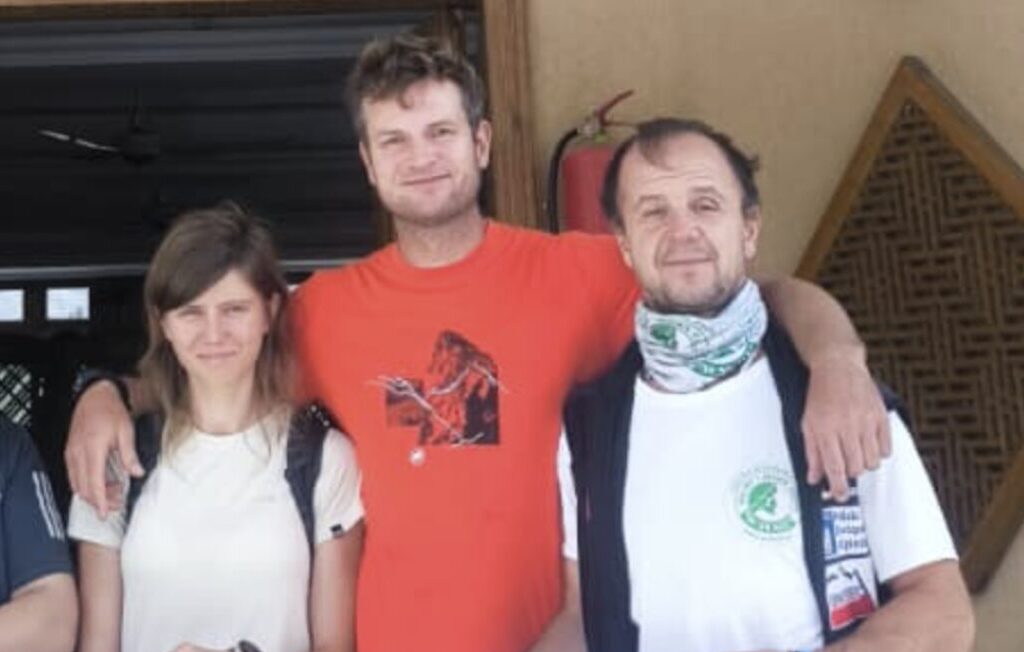
The expedition, which included Pawel Czech, Szymon Kita, and Aleksandra Kita, returned to base camp on September 12 following a final, arduous summit push. While the physical exertion and the logistical success of returning safely are widely acknowledged, the assertion that the team opened a new route has been met with skepticism from veteran mountaineers who have previously navigated the same terrain.
Chronology of the Expedition and the Final Push
The journey to Gasherbrum VI, situated in the Karakoram range of Pakistan, began with the objective of securing the first-ever ascent of this elusive peak. Throughout the summer season, the Polish team focused on assessing the viability of various lines of ascent.
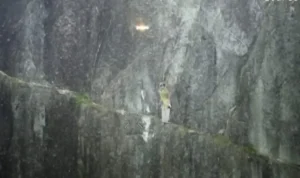
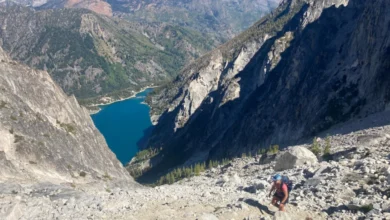
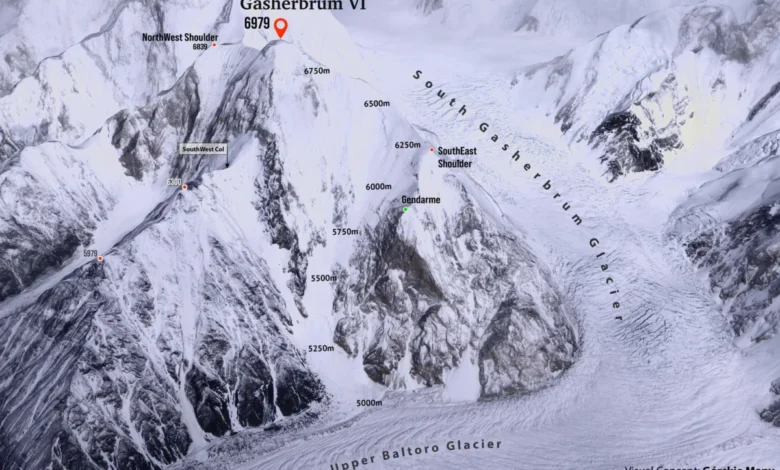
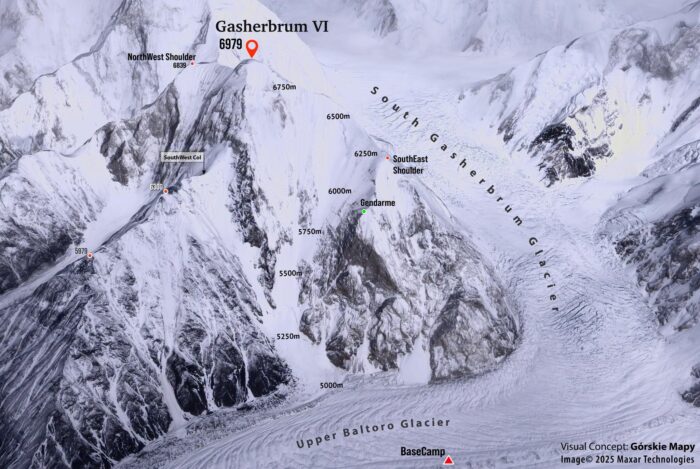
The initial summit push encountered significant technical challenges, forcing the team to pivot. Following this initial setback, Czech indicated that the team would attempt an alternative path to the left of their original trajectory. On September 12, the final attempt was launched. However, the team was unable to overcome the upper sections of the mountain, eventually reaching a gendarme at approximately 6,200 meters. This formation, which Czech identified as the final rock buttress before the snow ridge leading to the east peak, became the high point of their expedition.
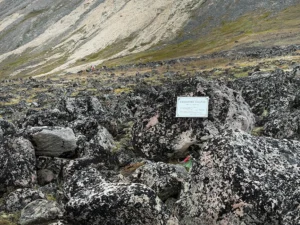
In an effort to honor the legacy of Polish climbing, the team dubbed this line In Memory of Artur Hajzer. Hajzer, a seminal figure in Polish winter mountaineering, was a mentor to Czech and many others in the community before his death on Gasherbrum I in 2013. The naming of the route was intended as a tribute, though it has become a focal point for the discussion regarding the legitimacy of the "new route" classification.
The Debate Over "New Route" Definitions
The core of the current controversy lies in the terminology used to describe a partial ascent. In traditional mountaineering ethics, a "new route" is generally defined as an original path to the summit of a mountain that has already been successfully climbed. For virgin peaks, the objective is the first ascent.
Nancy Hansen and Ralf Dujmovits, two of the most experienced high-altitude climbers in the world, have weighed in on the claim. The pair, who famously attempted Gasherbrum VI in 2016, expressed both relief at the safe return of the Polish team and disagreement with the terminology used in the team’s report.
"First of all, we want to say that we are really happy that the Poles made a good effort and that they came down safely," Hansen stated. "However, Ralf and I find it difficult to accept a claim of a new route on a summit that has never had a successful ascent."
Hansen elaborated on the distinction, noting that on established peaks—such as the Eiger—climbers frequently open new routes that provide technical variety. On a virgin peak, however, the primary objective is the summit. If that objective is not reached, the climb is historically categorized as an "attempt" rather than a "new route." According to historical records, multiple expeditions, including those involving Walter Hoelzler and the aforementioned French team, have reached higher elevations on Gasherbrum VI than the current Polish team. By the standards established by previous parties, these were considered attempts rather than route completions.
Geographical Context and Previous Attempts
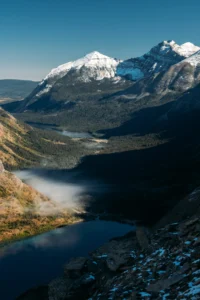
Gasherbrum VI remains one of the most formidable unclimbed targets in the Karakoram. Its complex topography, characterized by steep rock buttresses and precarious snow ridges, has thwarted numerous attempts over the past three decades.
Analysis of the images provided by the Polish team suggests that the line they pursued coincides with, or closely mirrors, previous efforts launched by other international teams. Mapping data, including 3D visualizations provided by Gorskie Mapie, illustrates the complexity of the mountain’s structure. The area labeled as the "new route" by Czech occupies the same corridor where previous expeditions have tested their luck, only to be turned back by hazardous conditions, lack of protection, or the sheer technical difficulty of the upper rock faces.
For the international climbing community, the distinction between a "new line" and a "new route" is critical. If a team explores a variation on a mountain face, it is often documented as a "variation" or an "attempt on the face." By labeling it a "new route," the Polish team has inadvertently challenged the linguistic and ethical consensus of high-altitude mountaineering.
The Legacy of Artur Hajzer and Polish Mountaineering
The Polish mountaineering tradition is characterized by a fierce, often uncompromising approach to high-altitude exploration, particularly during the winter months. Artur Hajzer was instrumental in fostering this culture. By naming their path in his honor, the team sought to connect their efforts to a historical lineage of Polish excellence.
However, the scrutiny surrounding the claim highlights a shift in modern mountaineering, where the accessibility of information—through satellite imagery, GPS tracking, and social media reporting—makes it easier than ever to cross-reference claims against historical archives. The lack of a summit, coupled with the fact that other parties have previously reached the same altitude on similar lines, suggests that the "In Memory of Artur Hajzer" line may be more accurately described as a failed attempt on the mountain’s southern or eastern aspects.
Broader Implications for High-Altitude Exploration
The incident at Gasherbrum VI serves as a case study for the evolving standards of alpinism. As the number of unclimbed peaks decreases globally, the pressure on modern expeditions to secure "firsts" has intensified. This pressure can sometimes lead to an inflation of accomplishments to justify the significant financial and physical costs of these expeditions.
From a journalistic and historical perspective, the implications are two-fold:
- Documentation Standards: There is an increasing need for standardized reporting in mountaineering. Organizations such as the American Alpine Club (AAC) and the Alpine Journal serve as arbiters of record, and they require rigorous evidence for first ascents. The Polish team’s report, while visually documented, lacks the objective evidence of a summit, which is the only metric that traditionally validates a new route on an unclimbed peak.
- Safety vs. Achievement: The most important success of the 2026 Gasherbrum VI expedition remains the safe return of the climbers. The Karakoram is notoriously unforgiving, and the decision to turn back at 6,200 meters, while disappointing from a summit perspective, was a sound tactical decision given the conditions. The debate over the terminology of the route should not overshadow the reality that mountaineering is inherently dangerous, and survival is a success in its own right.
Conclusion
The Polish team’s expedition to Gasherbrum VI has closed with a mixture of professional pride and external critique. While the expedition demonstrated technical skill and a deep respect for the history of their sport, the claim of a "new route" remains contentious.
As the climbing community continues to debate the definition of success on unclimbed peaks, the incident highlights the necessity of transparent, accurate, and historically grounded reporting. Gasherbrum VI stands as a testament to the challenges of the high Karakoram, remaining—for the time being—an unconquered summit. The efforts of Pawel, Szymon, and Aleksandra will undoubtedly contribute to the collective knowledge of the mountain, even if their attempt did not result in the historic first ascent they had hoped for. For future expeditions, the data gathered by the Polish team—and the lessons learned from their route—will serve as a vital, if cautionary, resource for the next generation of climbers aiming for the top of Gasherbrum VI.