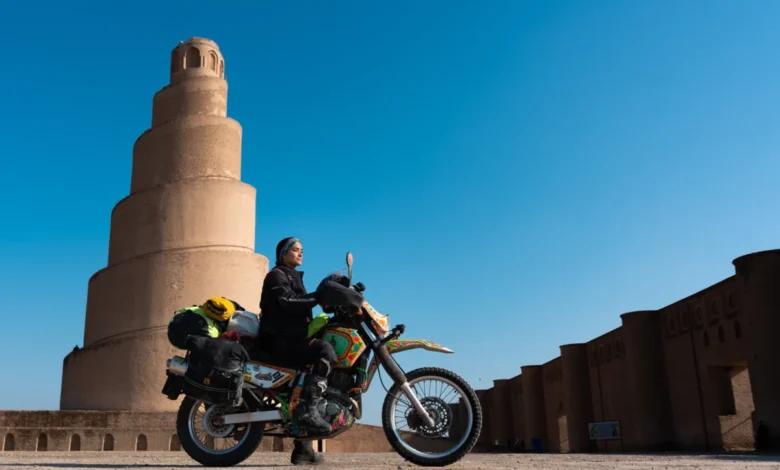
Iraq, a nation long associated with the volatility of conflict and geopolitical instability, is undergoing a quiet transformation as an emerging destination for global motorcycle enthusiasts. While the country’s modern history has been defined by the echoes of war, recent years have seen a stabilization of security in several key provinces, allowing for the re-emergence of tourism. For the intrepid motorcyclist, navigating the diverse landscapes of Iraq—from the ancient, flat river deltas of the south to the rugged, towering peaks of the Kurdistan region—offers a rare opportunity to witness the cradle of civilization from a unique vantage point. However, successful exploration of this territory requires meticulous planning, a deep understanding of the country’s bifurcated administrative structure, and a pragmatic approach to logistics.
The Geopolitical Divide: Federal Iraq and Iraqi Kurdistan
To effectively plan an expedition, a traveler must recognize that Iraq is functionally divided into two distinct administrative zones. Federal Iraq, or the central and southern regions, is home to major historical landmarks, including the ruins of Babylon, the Ziggurat of Ur, and the sprawling metropolitan areas of Baghdad and Basra. Infrastructure in this region reflects the long-term impacts of conflict and economic struggle; travelers will encounter varying road conditions, from well-paved highways to stretches of neglected tarmac punctuated by potholes and heavy truck traffic.
In contrast, the Kurdistan Region of Iraq (KRI) in the north operates as an autonomous entity with its own military force, the Peshmerga. Due to its relative stability during the height of the war against the Islamic State, the KRI has developed a more robust tourism infrastructure. Road quality here is generally superior, and the topography shifts from the flat plains to the mountainous terrain of the Zagros range, providing excellent opportunities for off-road adventure.
It is vital for international travelers to understand the visa implications of this divide. A visa issued for the Kurdistan Region is not recognized by the federal government in Baghdad. Consequently, those attempting to traverse the country from north to south often find themselves in a bureaucratic impasse. Standard procedure for long-distance riders involves entering via one of the internationally recognized border points—such as the Trebil crossing from Jordan or the Safwan crossing from Kuwait—to obtain a visa that covers the entire nation, rather than relying on the regional permit granted at the northern border.
Security and Risk Management
Safety remains the primary concern for any traveler in Iraq. While the country is increasingly accessible, it is not without hazards. The most significant risks are not typically related to terrorism, which is concentrated in isolated pockets inaccessible to the general public, but rather to the inherent dangers of the road. Iraqi driving culture is characterized by high-speed maneuvers and a disregard for lane discipline, necessitating extreme vigilance.
Furthermore, remnants of past conflicts pose a lingering threat in specific rural areas. In the Kurdistan region, landmines remain a concern, particularly near the Turkish border. Travelers are strongly advised to adhere strictly to established roads and marked trails. Venturing off-road into unmapped wilderness carries a documented risk of accidental detonation.
The security apparatus in Iraq also impacts travel through the frequent use of military and police checkpoints. These are ubiquitous on major thoroughfares. While usually a formality, these stops can cause significant delays. Riders should carry multiple copies of their passport, visa, and vehicle documentation, and be prepared to engage with officials in a respectful and patient manner.
Logistical Requirements for Two-Wheeled Exploration
The administrative requirements for motorcycles are significant. The Carnet de Passages en Douane (CPD) is the standard document required for temporary vehicle importation. While some riders have successfully crossed into Iraq without one, relying on this is ill-advised, as local customs regulations can shift without notice. Upon entry, travelers should anticipate a temporary import fee, typically around $100 USD, payable in cash.
Fuel logistics present a unique challenge. Motorcycles are frequently prohibited from entering petrol stations due to fire safety regulations. This necessitates the use of a jerrycan to transport fuel from the pumps to the bike parked at a safe distance. While petrol is inexpensive—often costing as little as $0.25 per liter—quality is inconsistent. Riders are advised to use fuel filters to prevent engine damage caused by impurities.
Chronology of Travel and Seasonal Considerations
The timing of an expedition is critical to both safety and comfort. Iraq experiences extreme climatic shifts, with summer temperatures regularly exceeding 50°C (122°F). During these months, even the northern mountains can reach dangerous heat levels, making mid-year travel inadvisable. Conversely, winter can bring freezing temperatures to the highlands. The optimal windows for motorcycle travel are during the spring (March to April) and autumn (October to November). During these periods, the weather is mild, and the landscape is more conducive to long-distance riding.
A standard itinerary for a comprehensive tour requires a minimum of three weeks. This timeframe allows for a measured pace, including stops at major cultural sites such as the ancient Sumerian city of Uruk, the marshes of Chibayish, and the historic monasteries of the north.
The Role of Infrastructure and Navigation
Digital navigation tools, such as Google Maps, are useful for general orientation but lack accurate real-time routing capabilities within Iraq. Navigation often relies on a combination of offline maps, such as Maps.me or Gaia GPS, and the ability to adapt to changing local conditions.
Maintenance support is surprisingly accessible due to the high density of small-displacement motorcycles in urban centers. Every major city hosts a community of local riders and mechanics who are often willing to assist foreign travelers. However, the supply chain for high-performance or specialized parts is limited. Most major components are sourced through Baghdad; thus, any significant mechanical work should be planned around a stay in the capital.
Broader Implications and Cultural Exchange
The resurgence of motorcycle travel in Iraq serves as a conduit for cultural exchange. The hospitality of the Iraqi people is a recurring theme among those who have completed the journey. In a country where the narrative has long been dominated by headlines of violence, the personal, face-to-face interactions facilitated by the curiosity and warmth of the locals provide a necessary counterbalance.
From a policy perspective, the increase in adventurous tourism is seen by some local stakeholders as a sign of normalization. The Iraqi Ministry of Tourism has expressed interest in diversifying the nation’s appeal beyond religious pilgrimage, which currently constitutes the vast majority of inbound travel. While the infrastructure for adventure tourism is in its infancy, the potential for growth remains high if security continues to improve.
Ultimately, motorcycle travel in Iraq is a complex undertaking that is not suitable for the inexperienced rider. It demands high levels of self-sufficiency, an ability to manage bureaucratic hurdles, and a commitment to rigorous safety protocols. For those who possess the requisite skills and preparation, it offers an unparalleled, albeit challenging, window into one of the world’s most historically significant and resilient regions.
Related posts: