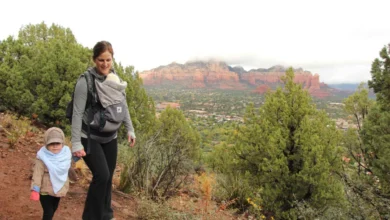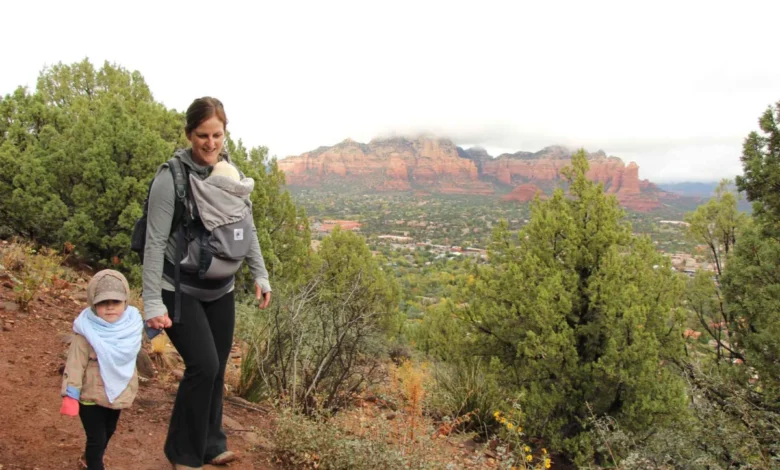
Sedona, Arizona, has long been recognized as a premier destination for outdoor enthusiasts, characterized by its towering red sandstone formations and expansive desert landscapes. While the region is frequently associated with advanced trekking and endurance sports, recent travel data indicates a significant shift in demographics, with a growing number of families visiting the area with children under the age of five. This demographic shift has necessitated a more nuanced understanding of trail accessibility, safety protocols, and the logistical challenges inherent in traversing rugged terrain with infants and toddlers.

The Rise of Family-Oriented Adventure Travel
The surge in family travel to Coconino National Forest and the surrounding Red Rock Secret Mountain Wilderness aligns with broader national trends in outdoor recreation. According to the Outdoor Industry Association’s participation reports, families are increasingly seeking "nature-based" experiences to foster child development and mental well-being. Sedona, with its high density of short-distance trails, provides a unique environment for parents to introduce young children to wilderness hiking without the risks associated with high-altitude or multi-day expeditions.

However, the geographical reality of the region requires careful planning. The combination of high UV exposure, unpredictable temperature fluctuations, and variable trail surfaces—ranging from packed gravel to loose, jagged shale—demands that parents prioritize equipment selection and site-specific knowledge.

Strategic Trail Selection for Families
To facilitate safe navigation, experts recommend that families categorize their excursions based on three primary criteria: stroller accessibility, shade availability, and trail elevation.

Bell Rock Pathway: A Stroller-Accessible Landmark
The Bell Rock Pathway stands as a hallmark for accessibility in the region. Spanning approximately 2.7 miles, this route provides a consistent grade that is largely navigable for high-clearance, all-terrain strollers. The pathway offers direct views of Bell Rock and Courthouse Butte, two of the most iconic geological features in the state. From a logistical standpoint, the path is primarily composed of crushed gravel. While it is technically "stroller-friendly," the presence of loose shale and occasional larger rocks suggests that standard urban strollers may face mechanical failure. Parents are advised to utilize units with air-filled rubber tires.

The West Fork Trail: Managing Environmental Constraints
In contrast to the open terrain of Bell Rock, the West Fork Trail provides a more sheltered, riparian environment. Situated within the Oak Creek Canyon, the trail features a canopy of pine and deciduous trees, offering significant respite from the intense Arizona sun. Data from local environmental agencies confirms that ambient temperatures within the canyon can be significantly lower than in exposed areas, making it a preferred choice for mid-day hikes. Nevertheless, the trail involves multiple crossings of Oak Creek. These crossings require manual transport of infants or the use of secure child-carrying backpacks, as the terrain is unsuitable for wheels.

Baldwin and Fay Canyon: Specialized Terrain
The Baldwin Trail, situated near the Village of Oak Creek, is favored for its moderate length and loop configuration. It offers a circuitous route that minimizes elevation gain while providing panoramic views of Cathedral Rock. Conversely, the Fay Canyon Trail is often cited for its efficiency. It provides a direct, low-effort path into a secluded canyon, ending at a natural stone arch. The trail’s layout is specifically noted for being less prone to overcrowding than the West Fork, allowing for a more controlled pace when managing toddlers.

Logistical Requirements and Safety Protocols
The successful integration of young children into Sedona’s hiking culture is heavily dependent on preparation. The following factors are critical for any family planning a excursion:
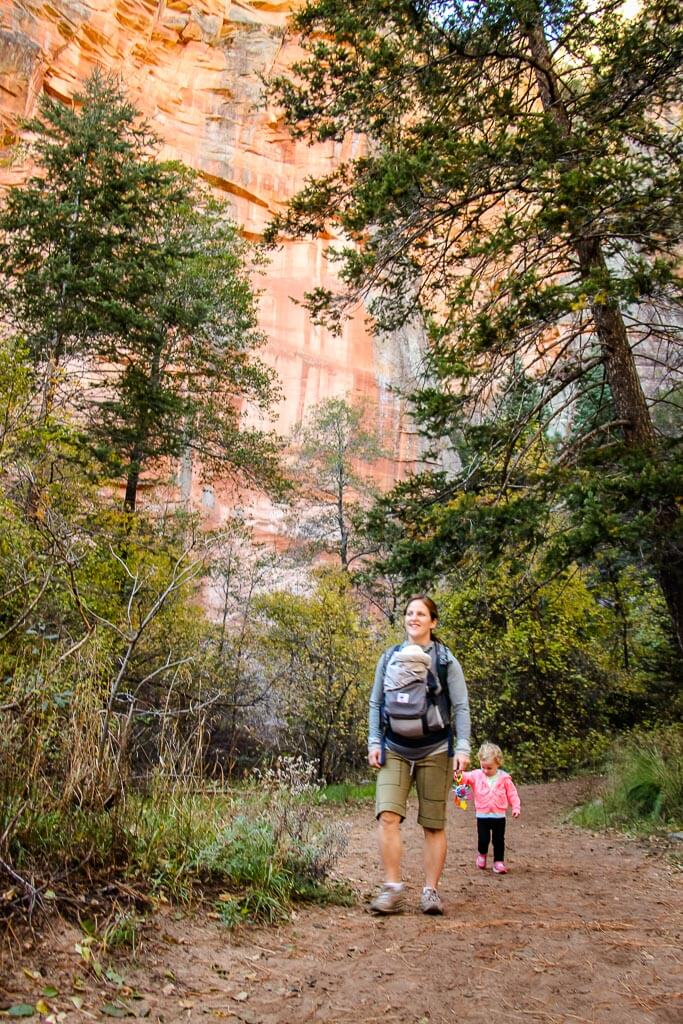
- Thermal Regulation: The high desert environment is prone to rapid heat loss after sunset and extreme solar intensity during peak daylight hours. Medical experts emphasize the importance of broad-spectrum sun protection, hydration systems, and moisture-wicking clothing for children, whose surface-area-to-mass ratio makes them more susceptible to temperature stress.
- Navigation and Connectivity: Cell phone service in the Coconino National Forest is famously inconsistent. Reliance on cloud-based mapping is discouraged. The standard recommendation is the use of offline-capable GPS applications, such as AllTrails, which allow users to download topographical maps prior to departure.
- Equipment Calibration: The distinction between a stroller-accessible trail and a carrier-mandatory trail is essential. A "stroller-friendly" trail in Sedona is rarely paved; it is simply a path where a high-end, off-road stroller can be pushed without significant obstruction. Trails requiring a baby carrier are those that involve rock steps, creek beds, or narrow cliff-side traverses.
Economic and Environmental Impact
The increase in foot traffic on these trails has led to a coordinated response from local land managers. The Coconino National Forest service has implemented several initiatives to preserve the integrity of the ecosystem while accommodating the influx of visitors. These include the implementation of "Leave No Trace" educational signage and the reinforcement of trail boundaries to prevent erosion caused by off-path exploration.

From an economic perspective, the rise in family travel has prompted local hospitality sectors to adapt. Hotels and resorts in the Sedona area have increasingly marketed themselves as "family-centric," providing amenities such as child-safe room configurations and curated lists of local services for parents.

Comparative Analysis of Hiking Risks
| Trail | Difficulty | Stroller Access | Primary Challenge |
|---|---|---|---|
| Bell Rock Pathway | Easy | High | Solar Exposure |
| West Fork Trail | Moderate | None | Creek Crossings |
| Baldwin Trail | Easy | Low | Rocky Footing |
| Fay Canyon | Easy | Low | Uneven Rock Steps |
| Huckaby Trail | Moderate | None | Sharp Elevation Changes |
| Airport View | Moderate | Low | Narrow, Rocky Paths |
Expert Guidance for Long-Term Engagement
The consensus among pediatric outdoor experts is that early exposure to nature through controlled hiking environments significantly benefits early childhood development, particularly in sensory processing and physical coordination. However, the "Devil’s Bridge" trail serves as a cautionary tale for families. Despite its fame, the final approach to the arch involves steep, high-traffic rock stairs that are fundamentally unsafe for toddlers walking unassisted or for parents carrying infants without significant, professional-grade support equipment.

As Sedona continues to evolve as a family-friendly destination, the emphasis remains on the "responsible hiker" model. This involves not only the safety of the individual child but the preservation of the delicate red rock ecosystem. For parents, the primary takeaway is the necessity of adaptability. If a trail condition exceeds the physical capability of the child or the equipment on hand, the ability to turn back is not a failure, but a fundamental component of safe wilderness navigation.

In summary, the red rock landscape of Sedona provides a robust, accessible, and educationally rich environment for families. By selecting trails that align with specific age-appropriate physical capabilities and maintaining a rigorous focus on environmental protection, families can ensure that their time in the Coconino National Forest is both safe and memorable. As the region navigates the balance between its status as a tourist destination and a fragile ecological zone, the role of the informed parent becomes the most vital factor in the longevity of these natural resources.