Access to high-speed mobile data while traversing Europe has become an indispensable requirement for modern travelers, facilitating navigation, communication, and real-time information access. However, utilizing personal smartphones, whether iPhone or Android, across the continent can prove to be both perplexing and economically burdensome if not approached with foresight and a clear understanding of available options. This comprehensive guide aims to demystify smartphone usage in Europe, detailing strategies for acquiring cost-effective high-speed data plans, navigating SIM card and eSIM purchases, and optimizing mobile connectivity for a seamless travel experience.
The Evolving Landscape of European Connectivity for Travelers
The era of exorbitant international roaming charges in Europe has largely receded, thanks to significant regulatory interventions and technological advancements. Historically, travelers faced steep bills for data, calls, and texts when using their home country’s mobile plans abroad. This landscape began to shift dramatically with the European Union’s "Roam Like At Home" initiative, fully implemented in June 2017, which effectively abolished retail roaming charges within the EU and European Economic Area (EEA). This landmark regulation mandated that mobile operators charge the same price for calls, texts, and mobile data used abroad in the EU as they do at home, marking a pivotal moment for consumer freedom and connectivity within the bloc.
Beyond regulatory changes, the evolution of smartphone technology has also played a crucial role. Modern smartphones, particularly models manufactured post-2016 (e.g., iPhone 7 and newer), are overwhelmingly compatible with Europe’s advanced mobile infrastructure, including 4G LTE and increasingly 5G networks. This broad compatibility eliminates a primary technical barrier that once complicated international phone usage. Furthermore, the advent and widespread adoption of eSIM technology, allowing digital activation of mobile plans without a physical SIM card, represents another significant leap forward in convenience and flexibility for international travelers.
Understanding Smartphone Compatibility in Europe

The question of whether a personal smartphone will function in Europe is now largely academic for most contemporary devices. The vast majority of smartphones produced in recent years are designed to operate on the global standard GSM networks prevalent across Europe. This ensures that physical hardware compatibility is rarely an issue. Major U.S. carriers maintain roaming agreements with European counterparts, meaning that upon arrival, a traveler’s phone will typically connect to a local network automatically, though users may need to enable international data roaming in their device settings.
However, the ease of connection often belies the underlying cost structure. While seamless, relying solely on U.S. carrier international roaming plans can quickly accumulate substantial charges, often for limited data allowances and potentially throttled speeds. This dichotomy underscores the importance of informed decision-making: convenience versus cost-effectiveness and performance.
Navigating U.S. Carrier International Plans
For many travelers, the simplest approach to maintaining connectivity is to utilize their existing U.S. mobile carrier’s international data plan. Nearly all major providers, including Verizon, T-Mobile, and AT&T, offer add-on services for international travel. These plans typically allow for automatic network connection upon arrival, streamlining the initial setup.
However, the primary drawbacks of these plans are their cost, data limitations, and often suboptimal data speeds. Daily charges for international data plans can start at approximately $10-$15, frequently offering a mere 100MB to 500MB of high-speed data before throttling to significantly slower 3G or even 2G speeds. Call rates can remain high, sometimes around $1 per minute, with text messages costing upwards of $0.25 each. While carriers often advertise 4G/LTE speeds, actual user experiences frequently report slower performance, making even basic tasks like using Google Maps or web browsing challenging.
- T-Mobile: Distinctively, T-Mobile has differentiated itself by offering complimentary international data and texting, alongside affordable international calls, with many of its plans. Customers on Magenta and Magenta MAX plans typically receive unlimited texting and data in over 210 countries, with a substantial allowance of up to 5GB of 4G LTE data before reverting to unlimited 2G speeds. While 5GB suffices for general browsing, email, and social media for shorter trips, extended travel may necessitate purchasing additional high-speed data passes.
- Verizon: Verizon’s international offerings are generally perceived as less favorable for budget-conscious travelers due to higher costs and comparatively limited data allowances. Their daily international plans can be among the more expensive options, often providing a restrictive data cap for the price.
- AT&T: AT&T’s international plans fall into a middle ground, offering a decent but not outstanding value proposition. Similar to other carriers, their international add-ons typically come with daily fees and predefined data allocations, which can be quickly consumed by modern smartphone usage patterns.
Despite carrier claims of robust international speeds, the practical reality for many users is a noticeable degradation in performance compared to domestic service. This underscores a critical point: while U.S. carrier plans offer unparalleled convenience, they often come at a premium and may not deliver the high-speed, generous data allowances increasingly expected by travelers.
The Rise of European eSIMs and Physical SIM Cards
A more economical and often higher-performing alternative for smartphone usage in Europe involves acquiring a prepaid European eSIM or physical SIM card from a local or regional mobile carrier. Europe’s competitive telecommunications market, further intensified by the "Roam Like At Home" regulation, fosters lower prices, faster data speeds, and more generous data allowances compared to many international roaming plans from non-EU carriers. For instance, it is common to find prepaid plans offering 20GB of high-speed data for approximately €20 per month, with service typically valid across all EU countries without additional roaming charges. These plans frequently bundle talk and text services as well.
The transition to an eSIM or physical SIM card from a European provider offers several advantages:
- Cost-Effectiveness: Significantly lower per-gigabyte data costs.
- Enhanced Speed: Access to local high-speed 4G LTE and 5G networks.
- Generous Data Allowances: Plans often include tens of gigabytes of data, far exceeding typical U.S. international roaming allocations.
- EU Roaming Benefits: The "Roam Like At Home" policy ensures that a SIM or eSIM purchased in one EU country will function seamlessly across the entire EU/EEA without extra fees.
eSIM Technology: A Paradigm Shift for Travelers
The emergence of eSIM technology has revolutionized the process of acquiring mobile data abroad. Unlike traditional physical SIM cards, an eSIM is embedded directly into a compatible smartphone and can be digitally provisioned with a mobile plan. This eliminates the need to physically swap SIM cards, offering unparalleled convenience. Key benefits of eSIMs include:
- Instant Activation: Plans can be purchased and activated online, often before departure, meaning immediate connectivity upon landing.
- Dual SIM Functionality: Most eSIM-compatible phones allow users to retain their original physical SIM card (and thus their home number) while simultaneously using an eSIM for data in Europe. This enables receiving calls/texts to the home number while using the European eSIM for data.
- Environmental Impact: Reduces plastic waste associated with physical SIM cards.
Providers like SimOptions and Holafly have emerged as popular platforms for purchasing European eSIM plans, acting as resellers for major European carriers.
Key Providers and Their Offerings (Illustrative Examples):
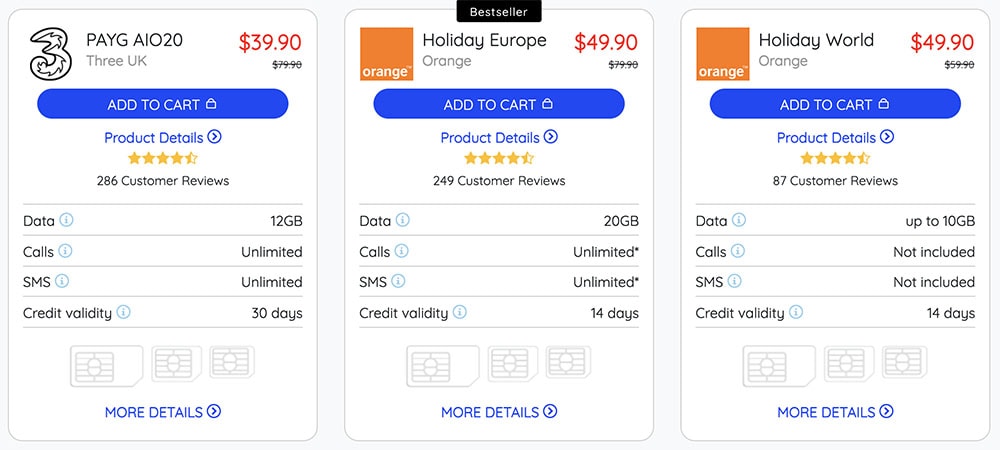
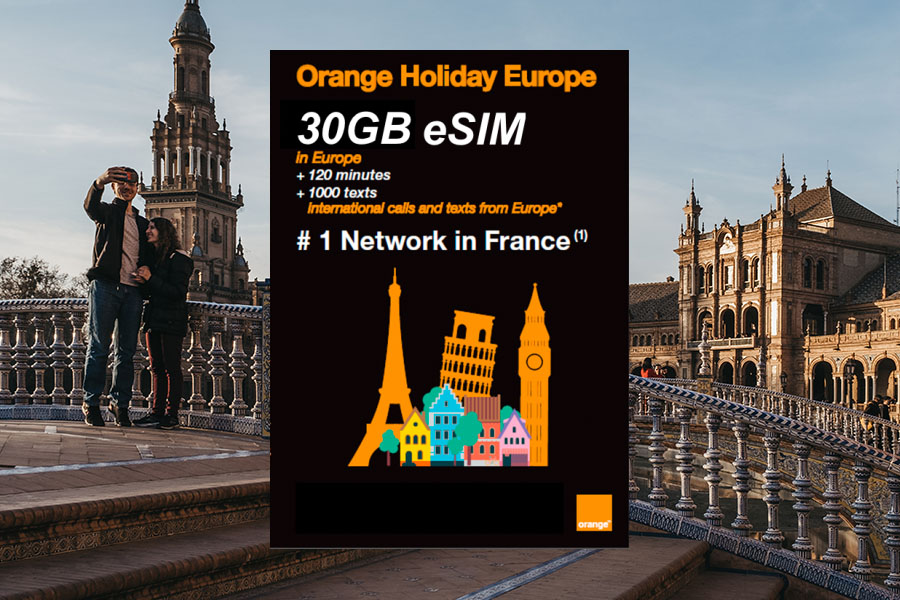
- Orange Holiday Europe Prepaid SIM Card/eSIM: A highly favored option, Orange Holiday Europe offers substantial data, extensive worldwide calls, and texts. Orange, a major European carrier, provides broad coverage. The plan often includes 20GB-30GB of data, 120 minutes of international calls, and 1000 international texts, typically valid for 14-30 days. Its availability as an eSIM further enhances convenience, allowing for instant digital delivery.
- Bouygues Telecom Vacation Prepaid Plan: Similar to Orange, Bouygues Telecom offers competitive prepaid plans. While some physical SIM versions might require activation in France, their eSIM offerings, such as the Bouygues My European eSIM, provide substantial data (e.g., 30GB for 30 days) and are available for digital purchase, mitigating geographical activation restrictions.
- Holafly Unlimited Data eSIM: Holafly specializes in eSIMs with a unique proposition: "unlimited" data plans for various durations (5 to 90 days). While often marketed as unlimited, fair usage policies may apply, potentially leading to data throttling after excessive consumption. Holafly eSIMs also frequently include an Austrian phone number with a limited allowance for calls to and from European numbers, though SMS is generally not included, encouraging the use of VoIP apps like WhatsApp.
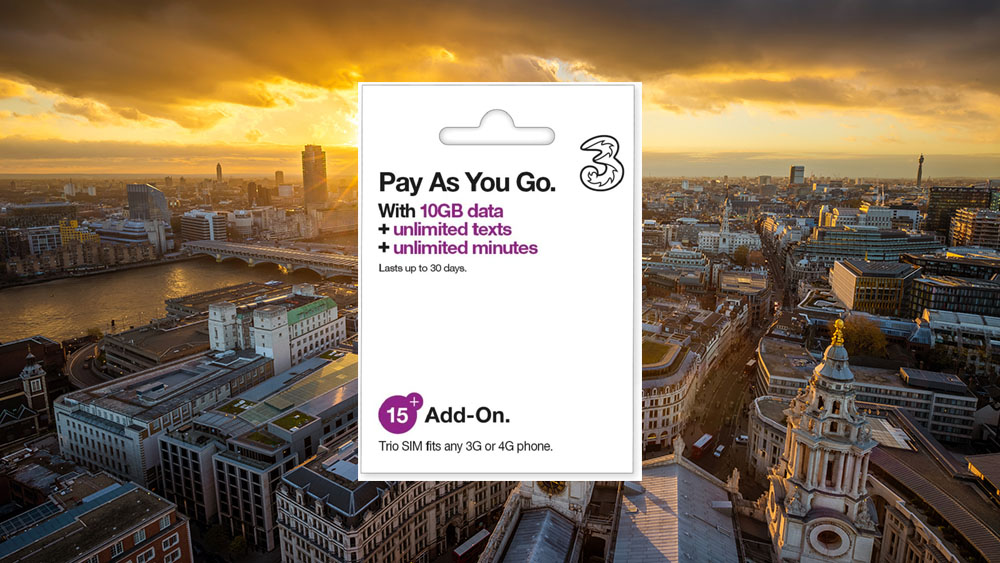
- Three UK PAYG AIO15: Three UK, another significant European mobile carrier, offers plans like the PAYG AIO15, providing a balance of data (e.g., 10GB-12GB) for a 30-day validity period. This option is suitable for travelers needing a decent data allowance over a longer duration without the higher data volumes of some other plans.
Acquiring and Activating European SIM/eSIMs
The process of obtaining and activating a European SIM or eSIM can be done either before travel or upon arrival.

- Pre-Travel Purchase: Buying a prepaid European SIM card or eSIM online from authorized resellers like SimOptions or Holafly prior to departure is often the most convenient method. Physical SIMs are mailed to the home address, while eSIMs are delivered instantly via email. This ensures immediate connectivity upon arrival, eliminating the need to search for a store after a long journey.
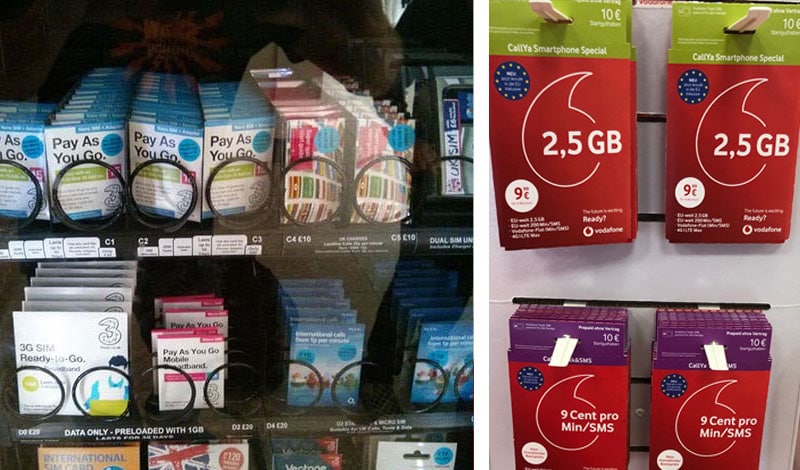
- On-Arrival Purchase: Physical SIM cards are widely available across Europe at airports, train stations, mobile carrier stores, supermarkets, and convenience stores. While often slightly cheaper than pre-purchased options, this method requires navigating local stores, potentially dealing with language barriers, and physically installing the SIM.
Unlocking Your Smartphone: A crucial prerequisite for using a European SIM card is ensuring your smartphone is "unlocked." Many U.S. carriers initially lock phones to their network, preventing the use of SIM cards from other providers. Travelers should contact their carrier before departure to request an unlock, citing international travel as the reason. While some carriers may impose eligibility criteria (e.g., contract completion), they are generally obligated to unlock devices. For phones that cannot be unlocked, using an older, factory-unlocked device or relying on the U.S. carrier’s international plan remains an option.
Installation and Activation: Installing a physical SIM card is straightforward: remove the existing SIM and insert the new European one. eSIM activation typically involves scanning a QR code or entering activation details provided by the vendor. Upon installation or activation, the phone should automatically connect to the new network. Some countries may require SIM card registration, necessitating a passport or a local address (a hotel address often suffices). Instructions for topping up credit or purchasing bundles are usually provided with the SIM/eSIM.
Optimizing Data Usage and Staying Connected
Regardless of the chosen connectivity method, prudent data management is key to avoiding unexpected charges or running out of data prematurely.
- Portable Battery Chargers: GPS navigation, photography, and constant app usage are significant battery drains. A portable power bank (e.g., Anker PowerCore) is an essential accessory for extended use.
- Leveraging Free Wi-Fi: While not a complete substitute for mobile data, free Wi-Fi in cafes, hotels, hostels, and public hotspots can supplement data plans. However, relying exclusively on public Wi-Fi can be inconvenient and less secure.
- Lowering Mobile Data Usage:
- App Data Restrictions: Many apps consume data in the background. Disabling cellular data access for non-essential apps in smartphone settings can significantly conserve data.
- Offline Maps: Google Maps and similar applications allow users to download entire city or region maps for offline use. GPS functionality works without data, making offline maps highly effective for navigation.
- VoIP for Calls/Texts: Apps like WhatsApp are widely used in Europe for free calls and text messages over Wi-Fi or mobile data, often preferred over traditional SMS and expensive international calls.
The Broader Implications for Global Travel and Telecommunications
The evolution of smartphone connectivity in Europe carries significant implications for both travelers and the global telecommunications industry. For travelers, it translates to enhanced autonomy, reduced travel costs, and improved safety through constant access to information and emergency services. This fosters greater exploration and contributes positively to the tourism economy.
For the telecommunications sector, the "Roam Like At Home" regulation within the EU has forced carriers to innovate and compete more aggressively on price and service quality for international offerings. The rise of eSIM technology further democratizes access to mobile data, allowing smaller, agile providers to offer global or regional plans without the complexities of physical SIM distribution. This competitive landscape ultimately benefits the consumer, driving down costs and improving service.
As technology continues to advance, including the expansion of 5G networks and further integration of eSIM capabilities, the future of international mobile connectivity promises even greater efficiency and affordability, solidifying the smartphone’s role as the quintessential travel companion.
In conclusion, while the prospect of using a smartphone abroad once presented a financial minefield, informed choices and leveraging modern technological solutions like European eSIMs and local SIM cards now empower travelers to remain connected affordably and efficiently throughout their European adventures. A careful assessment of travel duration, data needs, and device compatibility will guide travelers toward the most suitable and economical connectivity solution, ensuring a truly savvier journey.