Jordan Tourism Revenue Climbs Despite Shifts in Visitor Demographics and Regional Security Volatility

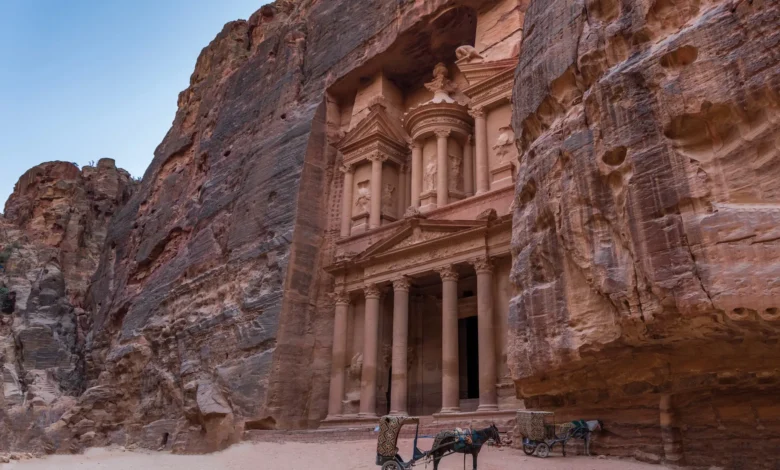
Jordan’s tourism sector has demonstrated unexpected financial resilience during the first nine months of 2026, recording a 4.9% increase in total tourism income to $6.35 billion, despite significant geopolitical friction that has reshaped the national visitor profile. Data released by the Central Bank of Jordan confirms a distinct pivot in the country’s economic dependency, as the traditional reliance on Western travelers has been supplanted by a surge in regional and Asian tourism. This shift underscores a complex narrative of economic adaptation amidst the backdrop of the ongoing U.S.-Iran conflict, which has cast a long shadow over the Hashemite Kingdom’s stability and tourism infrastructure.
The divergence in expenditure patterns is striking. While the broader tourism industry has managed to post growth, the underlying metrics reveal a fractured landscape. Spending by Arab visitors surged by 18.8% during this period, while revenue derived from Asian markets expanded by 12.3%. In stark contrast, the traditional bedrock of Jordan’s luxury tourism sector—visitors from Europe and the United States—has retreated significantly. Income from European tourists plummeted by 23.7%, while revenue from U.S. citizens fell by 16.3%, reflecting a widespread perception of risk associated with the regional escalation.
A Chronology of Conflict and Its Impact on Regional Stability
The volatility currently impacting Jordan is intrinsically linked to the broader regional conflagration that ignited in late February 2026. The escalation between the United States and Iran has turned Jordan, a key U.S. regional ally, into a frontline state. The impact on the tourism sector did not occur in a vacuum but followed a specific timeline of security challenges.
In late February 2026, the outbreak of direct hostilities between Washington and Tehran sent shockwaves through the Levant. Jordan, due to its strategic geography and the presence of U.S. military installations, became an immediate point of friction. By mid-March, reports of intercepted drones and localized skirmishes near the border began to dominate international news cycles, triggering immediate travel advisories from major Western governments.
The Jordanian Armed Forces provided a sobering assessment in April, disclosing that the nation had been the target of 281 missiles and drones launched by Iranian-aligned forces since the conflict’s inception. These incidents, while largely contained by Jordan’s sophisticated air defense systems and regional cooperation, created a narrative of insecurity that proved toxic to the luxury travel market. For the average American or European tourist, the proximity of these events to world-renowned sites like Petra and Wadi Rum outweighed the reality of the kingdom’s internal stability.
Geographic Disparities in Hospitality Performance
The economic health of the hospitality sector is currently defined by a sharp divide between urban business travel and the historical site-seeing circuit. According to the latest data from the Jordan Hotels Association, average hotel occupancy across the kingdom sat at 38% in September. This figure masks the extreme variability between the capital and the cultural heritage sites.
Amman, acting as the primary hub for regional business, diplomatic activity, and internal tourism, has maintained a relatively robust occupancy rate of 59%. The city’s infrastructure—hotels catering to corporate travelers, NGO workers, and regional trade—has proven insulated from the decline in leisure tourism. Conversely, the "tourist circuit," encompassing the southern regions of Petra, Wadi Musa, and the desert landscapes of Wadi Rum, has entered a period of stagnation.
These sites are disproportionately dependent on Western tour groups, who typically book months in advance and are highly sensitive to travel insurance premiums and government-issued "Level 3" or "Level 4" security warnings. As these groups canceled bookings in the wake of regional instability, the local economies of southern Jordan, which rely almost entirely on international heritage tourism, have faced a severe liquidity crisis.
Economic Analysis: A Shift in Revenue Streams
The rise in revenue despite the drop in Western volume can be attributed to the "substitution effect" in the tourism market. The influx of visitors from neighboring Arab nations and parts of Asia has filled the fiscal gap, though the spending patterns of these groups differ from those of traditional Western tourists.
Historically, Western tourists in Jordan have spent heavily on high-end guided tours, multi-day excursions to remote archaeological sites, and luxury desert camps. Regional tourists, while numerous, often prioritize shorter stays, family-oriented travel, and urban shopping or cultural experiences in Amman and the Dead Sea resorts. The 18.8% increase in spending from Arab visitors reflects a robust regional interest in Jordan as a "safe harbor" for tourism, even as the kingdom faces the periphery of regional conflict.
Economists note that while the gross revenue figures are positive, the structural health of the tourism industry may be at risk. The shift toward regional tourism, while beneficial in the short term for sustaining local businesses, does not fully replace the high-margin, long-haul tourism model that Jordan spent decades cultivating. The long-term challenge for the Jordanian Ministry of Tourism will be to stabilize the sector while the regional security environment remains unpredictable.
Official Responses and Strategic Adjustments
The Jordanian government, led by the Ministry of Tourism and Antiquities, has been working in tandem with the Jordan Tourism Board to recalibrate marketing efforts. By shifting promotional budgets toward markets that have shown less sensitivity to the regional security narrative—namely the Gulf Cooperation Council (GCC) countries and emerging East Asian markets—the government has successfully mitigated the impact of the Western retreat.
"Our objective is to maintain the visibility of Jordan as a premier global destination while acknowledging the complexities of our regional environment," a ministry official noted in a recent, non-public briefing. The strategy includes a focus on "staycations" for local residents and increased marketing of the Dead Sea as a wellness destination for regional travelers.
Furthermore, the government has attempted to bolster confidence by emphasizing the continuity of operations at Queen Alia International Airport and the rigorous security measures in place to protect tourist routes. However, travel industry experts suggest that until the broader U.S.-Iran conflict reaches a diplomatic resolution or a significant de-escalation, the "Western-dependent" portion of the market will remain in a state of suppressed demand.
Implications for the Future of Jordan’s Tourism Sector
The trajectory of Jordan’s tourism economy for the remainder of 2026 will likely depend on three factors: the intensity of the regional conflict, the ability to maintain current levels of regional visitor growth, and the government’s capacity to subsidize or support the struggling southern hospitality circuit.
If the conflict persists, the hospitality sector may see further consolidation. Smaller, family-run operations in Petra and Wadi Rum, which have no buffer against extended periods of low occupancy, may face bankruptcy or acquisition. Conversely, large hotel chains in Amman and the Dead Sea area are better positioned to absorb the volatility, provided they continue to cater to the evolving demographics of their clientele.
The reliance on regional and Asian markets is not merely a temporary fix but may represent a permanent shift in Jordan’s tourism strategy. The kingdom has long sought to diversify its visitor base to prevent over-reliance on any single region. Ironically, the current geopolitical crisis has accelerated this diversification, albeit under painful circumstances.
Ultimately, Jordan remains a resilient player in the Middle Eastern tourism landscape. The fact that it has recorded growth during a period of such profound regional instability is a testament to the kingdom’s structural reforms and the enduring appeal of its cultural and historical assets. However, the path forward is fraught with uncertainty. As long as the shadow of the U.S.-Iran conflict hangs over the Hashemite Kingdom, the tourism sector will remain a barometer for regional peace, reflecting not only the beauty of its landscape but the fragility of the political order that sustains it.
The upcoming winter season, which typically sees an uptick in European travel, will be the next major test for the industry. If the current security situation holds, the government may look to launch targeted "value-driven" campaigns to recapture the mid-market Western traveler who is less concerned with geopolitical headlines and more focused on seasonal travel deals. Regardless of the outcome, the data from the first three quarters of 2026 serves as a clear indicator: Jordan’s tourism industry is learning to navigate a new, more localized, and more volatile global reality.