How Much Does a Trip to Croatia Actually Cost in 2026? A Destination-by-Destination Breakdown

When travelers ask about the financial investment required for a holiday in Croatia, the singular response they usually receive is fundamentally misleading. Because there is no single destination known simply as "Croatia," quoting a generalized national daily average obscures a stark economic reality. A vacation spent navigating the historic, walled alleys of Dubrovnik bears almost no financial resemblance to a trip exploring the continental capital of Zagreb, the bustling port city of Split, or the sun-drenched island of Hvar.
As the country solidifies its position within the Eurozone—having officially phased out the Croatian kuna on January 1, 2023—cost structures have standardized into Euros, yet regional disparities remain remarkably wide. Understanding these variations is essential for travelers charting an itinerary for 2026, particularly as seasonal surges fundamentally alter the cost of accommodation, transportation, and natural landmark admissions.
Regional Cost Disparities: Accommodation as the Primary Budget Driver
Where a traveler chooses to sleep dictates the trajectory of their overall holiday expenditure more than any other single factor. The economic chasm between Croatia’s primary tourist hubs is vast, driven primarily by physical constraints, historical popularity, and local infrastructure.
Consider the baseline cost of a hostel dormitory bed. In Split—a vibrant, working coastal city of roughly 160,000 residents—a dorm bed can be secured for as little as €10 to €19 per night. This affordability stems from Split’s status as a functional metropolitan area with a robust year-round housing market, rather than a constrained seasonal resort. Conversely, traveling just a couple of hours down the coast to Dubrovnik in August sees hostel prices skyrocket to between €60 and €120 per night.
Dubrovnik’s extreme pricing is a byproduct of its geography. The city’s historic Old Town is entirely enclosed by medieval stone walls, creating a hard physical limit on the number of available lodging units. When combined with thousands of daily cruise ship passengers during peak summer, basic supply and demand dynamics drive prices upward.
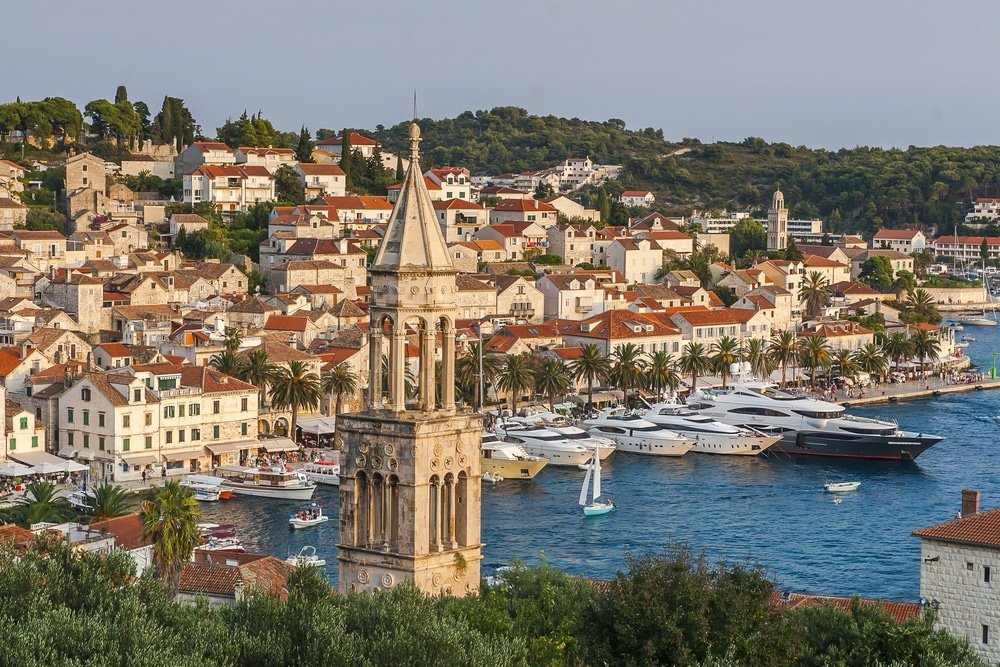
Similarly, island destinations command a significant premium. On Hvar, hostel dorms regularly fetch €40 to €70 during the peak summer months, easing only slightly to €25 to €45 in the shoulder season. Private apartments and Airbnb rentals follow a parallel trajectory: while an apartment in Split outside the historic center may cost between €80 and €150 per night, properties situated inside Split’s Old Town or the adjacent Varoš neighborhood routinely command €180 to €320, mirroring the high rates found in Dubrovnik and Hvar.
Continental destinations offer a stark financial reprieve. In Zagreb, hostel dorm beds generally range from €20 to €35, with budget options starting as low as €9. Three-star hotel doubles in the capital hover comfortably between €80 and €120 per night, offering travelers a high-value alternative to the expensive Adriatic coastline.
Dining Out and Daily Expenses: The Myth of the Island Tax
While accommodation costs feature extreme four-to-one variations across regions, the cost of eating and drinking exhibits a much narrower spread. A standard meal at a traditional local tavern, known locally as a konoba, ranges from €9 to €15 in Zagreb, moves to roughly €17.50 in Dubrovnik, and spans €10 to €20 on Hvar.

Mid-range dining—characterized by a three-course meal for two—averages around €52.50 in Zagreb, while climbing to approximately €70 in both Dubrovnik and Hvar. Consequently, travelers cannot effectively rescue a strained holiday budget simply by modifying their dining habits; the primary savings must be found in the timing and location of their lodging.
However, smaller daily indulgences reveal telling economic indicators. A 0.5-liter draft beer typically costs €3 to €4 in Zagreb, compared to €5 to €8 inside Dubrovnik’s Old Town. More emblematic of local culture is the ubiquitous cappuccino. Sitting over coffee for an hour is a national ritual deeply embedded in Croatian daily life. In Zagreb, a cappuccino can be enjoyed for €1.70 to €3.00, whereas the identical beverage in Dubrovnik commands €3.70. Over a two-week holiday for multiple travelers, this seemingly minor discrepancy accumulates into a noticeable expense.
Transportation: Navigating Extremes in Public Transit and Maritime Fares
Transportation costs across Croatia present a dichotomy between remarkably subsidized municipal transit and highly variable commercial travel networks.
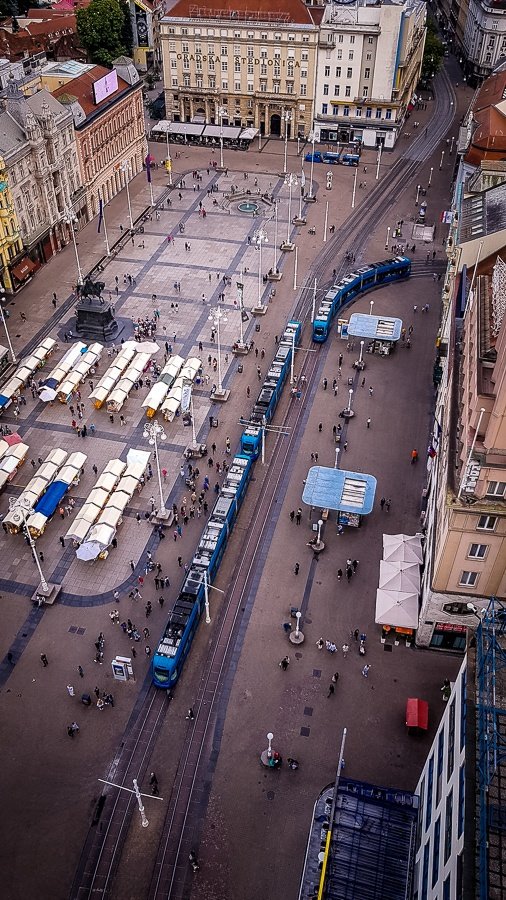
Zagreb’s public transport system, operated by ZET, remains exceptionally economical by broader European standards. A pre-purchased ticket valid for 30 minutes on the city’s extensive tram network costs just €53 cents, while a full-day unlimited travel pass is priced at €3.98. The city’s historic funicular, which reopened following modernization efforts, charges a modest €0.66 per ride.
In contrast, coastal and island transit involves careful navigation of competing private and state-operated lines. For travelers journeying from Split to Hvar, high-speed catamarans present varying pricing structures depending on the operator. Fast-boat services provided by private lines like Krilo can cost as low as €8.50, whereas Jadrolinija’s direct passenger and baggage-inclusive lines run up to €25 for the exact same hour-long stretch of sea. Failing to compare operators ahead of time can inadvertently triple a traveler’s transit expenditures over the course of an island-hopping itinerary.
Seasonal Pricing Structures at Natural Landmarks
Beyond geography, the single most powerful lever governing a Croatian travel budget is chronology. National parks and historical sites implement aggressive tier-pricing models designed to manage massive tourist influxes during peak summer months while incentivizing off-season visitation.

Krka National Park illustrates this structural shift vividly. Adult admission fees are categorized across three distinct seasonal brackets on the park’s official tariff schedules:
- January–March & November–December: €7.00
- April, May & October: €20.00
- June–September: €40.00
This represents a nearly six-fold price increase for access to the identical waterfalls and wooden boardwalks, depending entirely on the calendar month. A family consisting of two adults and two teenagers visiting Krka during the peak summer window faces an entry fee of €110 before parking costs are factored in.
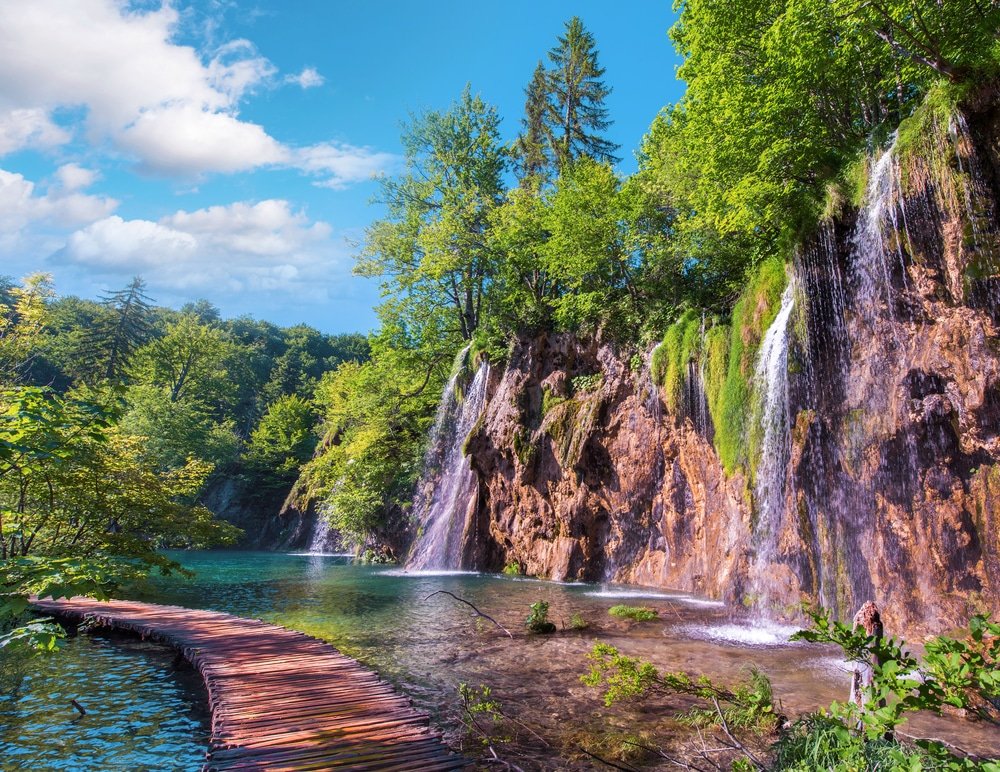
A comparable structure governs Plitvice Lakes National Park, where adult tickets cost €10 during the deep winter months, rise to €23 in the shoulder shoulder months, and reach €40 during the peak summer window of June through September. Plitvice administration, however, offsets this cost by bundling essential transit infrastructure into the ticket price—including electric boat transfers across Lake Kozjak, panoramic park shuttle trains, visitor insurance, and access to 22 kilometers of lake trails alongside 36 kilometers of wider hiking paths. Furthermore, Plitvice offers a discounted late-entry rate of €25 for visitors entering after 4:00 PM during the peak summer months, allowing travelers to capitalize on prolonged daylight hours while avoiding midday crowds and peak temperatures.
Dubrovnik’s iconic city walls follow a similarly steep seasonal curve, managed by the Society of Friends of Dubrovnik Antiquities. Adult tickets cost €40 between March and October, dropping by more than 60% to €15 from November through February.
Broader Implications and Strategic Travel Planning
Industry analysts and local tourism experts emphasize that conventional budgeting advice—which traditionally focuses solely on selecting cheaper destinations—misses the broader financial picture. While choosing Split over Dubrovnik or Zagreb over the coast yields significant savings on accommodation, shifting the timing of a holiday from the stifling heat and peak prices of August to the shoulder months of May or October alters every line item simultaneously.
Off-season and shoulder-season travel slashes lodging rates, reduces national park admissions by half or more, eliminates long queues, and provides a markedly more authentic cultural experience without sacrificing favorable swimming weather along the Adriatic coast.

For travelers whose schedules are strictly bound to July and August, financial strategy requires targeted curation: spending a brief, deliberate window in premium locations like Dubrovnik before relocating to more economical coastal cities. Conversely, for budget-conscious travelers willing to forgo swimming in favor of cultural exploration, visiting continental hubs like Zagreb during the winter months offers a European capital experience at a fraction of the cost. By aligning itineraries with seasonal realities rather than arbitrary calendar dates, travelers can navigate Croatia’s diverse economic landscape efficiently and transparently.