The debate surrounding the optimal mode of transportation for tourists navigating Iceland’s dramatic terrain has intensified as annual visitor arrivals continue to surge past pre-pandemic milestones. According to data from the Icelandic Tourist Board, the nation of roughly 400,000 residents routinely welcomes over two million international travelers annually, placing unprecedented demands on both municipal infrastructure and regional transit networks. At the heart of this logistical dilemma for incoming visitors is a fundamental choice: whether to commit to the financial and navigational responsibilities of a rental vehicle or to rely on the country’s network of public buses and structured excursion operators.
This transportation decision fundamentally dictates the nature of an Icelandic holiday. The country’s geography is characterized by extreme meteorological volatility and sprawling, remote topography where major attractions are separated by vast expanses of uninhabited wilderness. Consequently, transportation policy analysts and tourism boards advise that travel planning should prioritize transit logistics even before securing accommodations or dining reservations.

The Evolution of Icelandic Tourism and Infrastructure
To understand the current transportation landscape in Iceland, one must examine the rapid transformation of the nation’s tourism sector over the past two decades. Historically, travel across the rugged interior and coastal peripheries was the domain of specialized four-wheel-drive expeditions and locals intimately familiar with unpaved F-roads. Following the 2008 financial crisis and subsequent promotional campaigns, Iceland emerged as a global bucket-list destination.
To accommodate this influx, the government and private enterprises expanded the Ring Road (Route 1), paving the primary 1,332-kilometer loop that encircles the island. However, secondary roads, particularly those leading into the central Highlands or coastal fjords, remain unpaved, prone to sudden weather-related closures, and largely underserved by scheduled public transit. This infrastructural reality has created a distinct divide between urban-centric itineraries and exploratory rural travel.
Transportation industry experts note that public transit in Iceland—primarily coordinated by regional public service providers and private long-distance coach companies—is engineered primarily to connect population centers and service daily commuter needs. While these networks offer reliable service along primary arterial corridors during peak summer months, their frequency and geographical reach diminish significantly during the shoulder and winter seasons.

Flexibility Versus Structured Reliability
The primary trade-off between renting a car and utilizing public transit centers on operational flexibility versus structured convenience.
Travelers opting for public buses or organized day tours from capital hubs like Reykjavík trade spontaneity for stress-free logistics. Industry data indicates that a significant percentage of solo travelers and budget-conscious visitors prefer guided excursions because they eliminate the burdens of navigating foreign road signs, managing high fuel prices, and assuming liability for gravel damage—a common and costly insurance claim for rental vehicles in Iceland. Furthermore, winter driving in Iceland presents severe hazards, including sudden whiteout blizzards, black ice, and high-velocity winds capable of tearing doors off hinges. For visitors unaccustomed to arctic conditions, relinquishing control to a professional coach driver is widely considered the safer, more prudent choice.
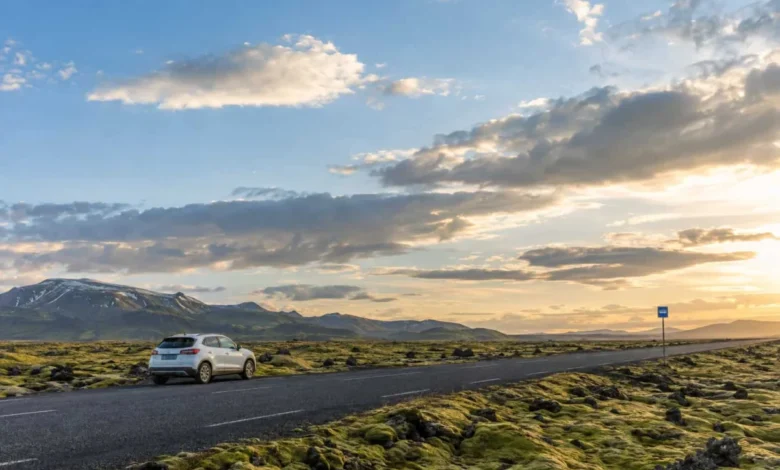
Conversely, statistical surveys conducted by travel trade organizations reveal that self-drive tourists report a higher degree of itinerary satisfaction regarding serendipitous discoveries. Iceland’s weather is notoriously mercurial; it is common to experience rain, gale-force winds, and brilliant sunshine within a single hour. Motorists possess the autonomy to instantly pivot their travel plans—diverting inland when coastal weather sours, lingering indefinitely at a remote glacial lagoon, or accessing trailheads that lack commercial bus stops.
Economic Analysis: Weighing the Financial Implications
When evaluating the cost-effectiveness of renting a vehicle versus relying on public transportation, financial analysts urge travelers to look beyond the initial booking prices.
Rental car expenditures in Iceland are multifaceted. Beyond the base daily rate, motorists must budget for collision damage waiver (CDW) insurance, gravel protection, sand and ash insurance—specific to Iceland’s volcanic terrain—and notoriously high fuel or electric vehicle charging costs. Parking fees at major national parks, such as Þingvellir and Skaftafell, have also been introduced in recent years to manage visitor congestion and fund conservation efforts.
However, for families and groups of three or more, a rental car frequently proves more economical than purchasing individual tickets for regional buses and multiple day tours. Group bookings on commercial excursions scale linearly with the number of passengers, whereas vehicle rental and fuel costs remain largely static regardless of occupancy.

Conversely, solo travelers or couples limiting their stay to the capital region and immediate southwestern peninsula (the Golden Circle) often find that public transit passes and localized excursion packages yield a lower total trip expenditure while completely avoiding the financial risks associated with vehicle wear and tear.
Seasonal Constraints and Safety Regulations
Seasonality remains the single most critical variable in determining whether a rental car is necessary.
During the peak summer window—stretching from June through August—extended daylight hours and stable road conditions make self-driving accessible to almost any competent motorist. Regional bus networks operate at their maximum capacity, providing viable alternatives for car-free travelers willing to adhere to strict timetables.

The calculus changes dramatically during the winter season, which spans from October to April. The Icelandic Road and Coastal Administration (IRCA) actively monitors road conditions, frequently issuing orange and red weather alerts that mandate four-wheel-drive vehicles equipped with specialized winter tires, or close routes entirely. Public buses continue to operate on major routes but are similarly subject to weather delays and cancellations. Travelers relying exclusively on public transit during winter must build substantial buffer days into their itineraries to account for potential strandings, whereas motorists face the psychological and physical demands of driving in total darkness for up to 20 hours a day in mid-winter.
Broader Socio-Economic and Environmental Impact
The heavy reliance on rental vehicles has also sparked local policy discussions regarding sustainable tourism management. The Icelandic government and environmental agencies have expressed concern over "over-tourism" at honey-pot sites accessible by paved roads, leading to accelerated wear on fragile moss-covered landscapes when motorists occasionally drive off-road—an illegal and heavily fined offense.
In response, regional authorities have invested in expanding parking infrastructure, upgrading restroom facilities at remote trailheads, and encouraging the use of regional shuttle services in heavily congested areas like the Þórsmörk nature reserve. These measures aim to balance the economic benefits of independent self-drive tourism with the imperative of preserving Iceland’s delicate sub-arctic ecosystem.

Conclusion: Making the Informed Choice
Ultimately, deciding whether to rent a car in Iceland depends on the traveler’s core objectives. For those seeking an urban-based holiday anchored by structured sightseeing, museum visits, and pre-scheduled day tours from Reykjavík, public transportation and organized excursions offer a seamless, low-stress experience.
Yet, for visitors whose primary motivation is deep immersion in the country’s remote landscapes—chasing shifting weather patterns, exploring unpaved coastal roads, and accessing isolated farm stays—a rental vehicle remains an indispensable tool. As Iceland continues to adapt to the realities of modern mass tourism, careful advance research into seasonal road regulations, transit timetables, and comprehensive budgeting will remain the foundation of a successful and safe Icelandic journey.