Time Is Running Out to Claim a Record-Breaking 200,000 Marriott Bonvoy Points Offer from Chase

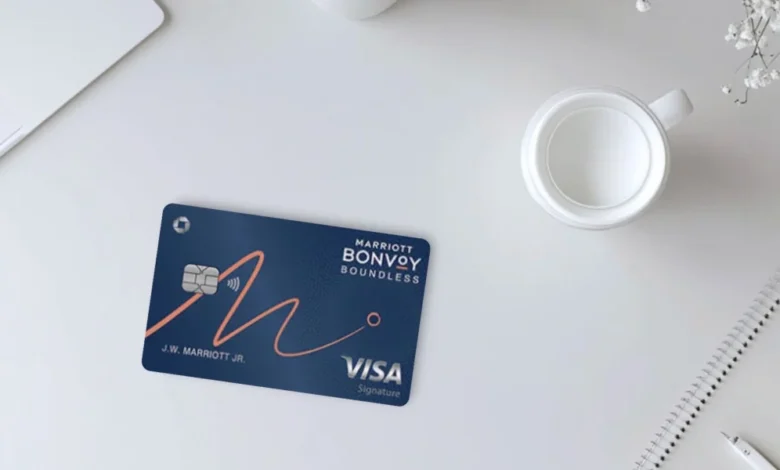
Time is rapidly running out for travel enthusiasts looking to capitalize on what financial analysts are calling one of the most lucrative hotel credit card promotions in recent years. The Marriott Bonvoy Boundless® Credit Card, issued by JPMorgan Chase in partnership with Marriott International, is currently offering a historic welcome bonus of 200,000 Marriott Bonvoy points. However, prospective cardholders face a strict deadline, as this unprecedented promotional window is scheduled to close permanently next Wednesday, November 11.
To secure the massive influx of points, applicants must meet a relatively modest minimum spending requirement of $3,000 within the first three months of account opening. Additionally, the promotional package includes an extra incentive for air travelers: new cardmembers can earn up to $100 in statement credits on eligible airline purchases.
While co-branded hotel credit card bonuses frequently rotate throughout the year, industry observers note that a point-based welcome offer of this magnitude is a significant departure from standard bank marketing strategies, presenting unique opportunities and strict limitations for consumers navigating the travel rewards landscape.
Background Context and Promotional Chronology
Historically, the Marriott Bonvoy Boundless® Credit Card relies on welcome offers structured around Free Night Awards rather than lump-sum point allocations. Earlier in the product cycle, standard promotions typically featured three to four free night certificates, each capped at a maximum redemption value of 50,000 points. While those prior offers were marketed under aggregate headline figures mirroring the current promotion, the underlying mechanics restricted flexibility for cardholders.
The temporary introduction of 200,000 flexible Marriott Bonvoy points completely replaces the standard free night certificate model for the duration of the campaign. According to internal program data from Chase and Marriott, this targeted promotion represents the single largest point-based welcome bonus ever attached to the Boundless portfolio since the card’s inception.
The timeline for prospective applicants is compressed. With the application window closing on November 11, consumers have only days to evaluate their credit profiles, review eligibility restrictions, and submit applications. Furthermore, the accompanying airline statement credit operates on a split-timeline mechanism: cardholders who spend $250 on direct airline bookings by December 31, 2026, receive an automatic $50 rebate, followed by a potential second $50 credit for an additional $250 spent between January 1 and June 30, 2027.
Analysis of Points Versus Free Night Certificates
A core point of discussion among travel rewards analysts is the structural advantage of receiving flexible points over static certificate awards. Free Night Certificates come with strict operational boundaries. They are bound by strict expiration dates—typically valid for only 12 months from the date of issuance—and mandate that the chosen hotel property fall at or just below the certificate’s maximum redemption ceiling.
For example, if a cardholder redeems a 50,000-point certificate at a property costing 30,000 points per night, the remaining 20,000 points of potential value are entirely forfeited. While Marriott permits members to "top off" certificates with up to 15,000 personal points from their balances, the fundamental restriction of single-night confinement remains.
Conversely, a lump sum of 200,000 Marriott Bonvoy points grants absolute versatility. Cardholders can allocate the currency across various redemption strategies, ranging from extended stays at mid-tier properties to luxury resort bookings. Furthermore, Marriott’s standard loyalty program features a "Stay for 5, Pay for 4" benefit on award stays, meaning guests booking five consecutive award nights receive the lowest-priced night free. Consequently, a traveler utilizing the 200,000-point bonus at a 40,000-point-per-night hotel could effectively secure a five-night stay requiring only 160,000 points, leaving a residual balance of 40,000 points for future travel.

Financial Implications and Card Value Proposition
Beyond the initial welcome bonus, financial analysts evaluate the long-term utility of the Marriott Bonvoy Boundless® Credit Card against its $95 annual fee. The card features several ongoing perks designed to offset this recurring cost for frequent travelers.
Beginning in the second year of cardmembership, account holders receive an annual Free Night Award valid for properties requiring up to 35,000 points, with options to top off the certificate using personal points. For the vast majority of consumers who travel at least once a year, the utility of this annual certificate easily surpasses the $95 annual fee.
Moreover, the Boundless card holds a strategic position within the broader Chase and Marriott ecosystem due to its upgrade potential. It serves as the exclusive gateway product for consumers seeking the discontinued Marriott Bonvoy Brilliant® American Express® Card equivalent, or more notably, the prestigious Ritz-Carlton™ Credit Card from Chase. While Chase no longer accepts direct applications for the Ritz-Carlton card, existing cardholders of the Boundless product can request a product change after holding the account for one full year, provided their credit limit meets or exceeds $10,000. The Ritz-Carlton card carries a $450 annual fee but includes an 85,000-point annual free night award, a $300 annual travel credit, and comprehensive airport lounge access benefits.
Eligibility Rules and Banking Restrictions
Navigating the application process requires careful attention to institutional restrictions enforced by both Chase and American Express.
The primary hurdle for any Chase credit card application is the bank’s infamous 5/24 rule. Under this internal policy, Chase will automatically deny any credit card application if the individual has opened five or more personal credit cards from any financial institution within the preceding 24 months.
In addition to the 5/24 rule, co-branded Marriott card eligibility is governed by an intricate matrix of brand-specific restrictions designed to prevent churners from repeatedly harvesting welcome bonuses across different card tiers. Generally, an applicant is eligible for the Marriott Bonvoy Boundless® card bonus if they do not currently hold the Boundless card or the entry-level Marriott Bonvoy Bold® card (including older legacy versions such as the Marriott Bonvoy Premier), and have not received a welcome bonus on either product within the previous 24 months.
Furthermore, holding specific co-branded Marriott cards issued by American Express can impact eligibility, depending on the timing of previous bonuses earned across the combined Chase and Amex Marriott portfolios. Financial advisors recommend consulting comprehensive eligibility matrices before submitting an application to avoid unnecessary hard inquiries on credit reports.
Consumer Responsibility and Risk Management
Financial advisors and consumer advocates consistently emphasize that lucrative travel rewards promotions carry inherent financial risks if not managed with discipline. The baseline requirement to earn the 200,000-point bonus—spending $3,000 within the first three months—is comparatively accessible when measured against competing luxury travel cards that frequently demand $5,000 to $8,000 in initial spending. Holiday shopping cycles and routine household expenditures can frequently absorb this volume organically.
However, industry experts issue a universal warning regarding credit card interest rates. Carrying a revolving balance on the Marriott Bonvoy Boundless® Credit Card subjects the consumer to double-digit Annual Percentage Rates (APRs). Financial analysts point out that accumulating interest charges over even a brief period can entirely negate the monetary value of 200,000 Marriott points. Consequently, responsible credit management—defined as paying statement balances in full and on time each month—remains an absolute prerequisite for anyone considering participation in the offer before the November 11 deadline.
Related posts: