Singapore Airlines Unveils Next-Generation Business and First Class Cabins Amid Rising Luxury Aviation Standards

Singapore Airlines has officially pulled back the curtain on its highly anticipated next-generation premium cabin designs, marking a significant milestone in the ongoing luxury arms race among international carriers. Known globally for its consistent top-tier rankings by aviation rating agencies like Skytrax, the carrier’s latest hardware update is engineered for integration into its existing Airbus A350 fleet as well as the upcoming, highly delayed Boeing 777-9 widebody aircraft. While the newly revealed first class suites have drawn widespread praise for their sophisticated understated elegance and expansive double-bed configurations, the corresponding business class product has generated a mixed reception among industry observers due to its minimalist, utilitarian aesthetic choices.
This latest cabin refresh arrives at a time when legacy carriers are aggressively investing in passenger comfort to capture high-yielding corporate travelers and affluent leisure flyers. As airlines continuously strive to outdo one another with enhanced privacy partitions, gourmet dining options, and custom lighting, Singapore Airlines’ rollout signals the carrier’s intent to maintain its competitive edge on ultra-long-haul and key fifth-freedom routes, such as the popular New York (JFK) to Frankfurt (FRA) connection.
Evolution of Luxury: The First Class Experience
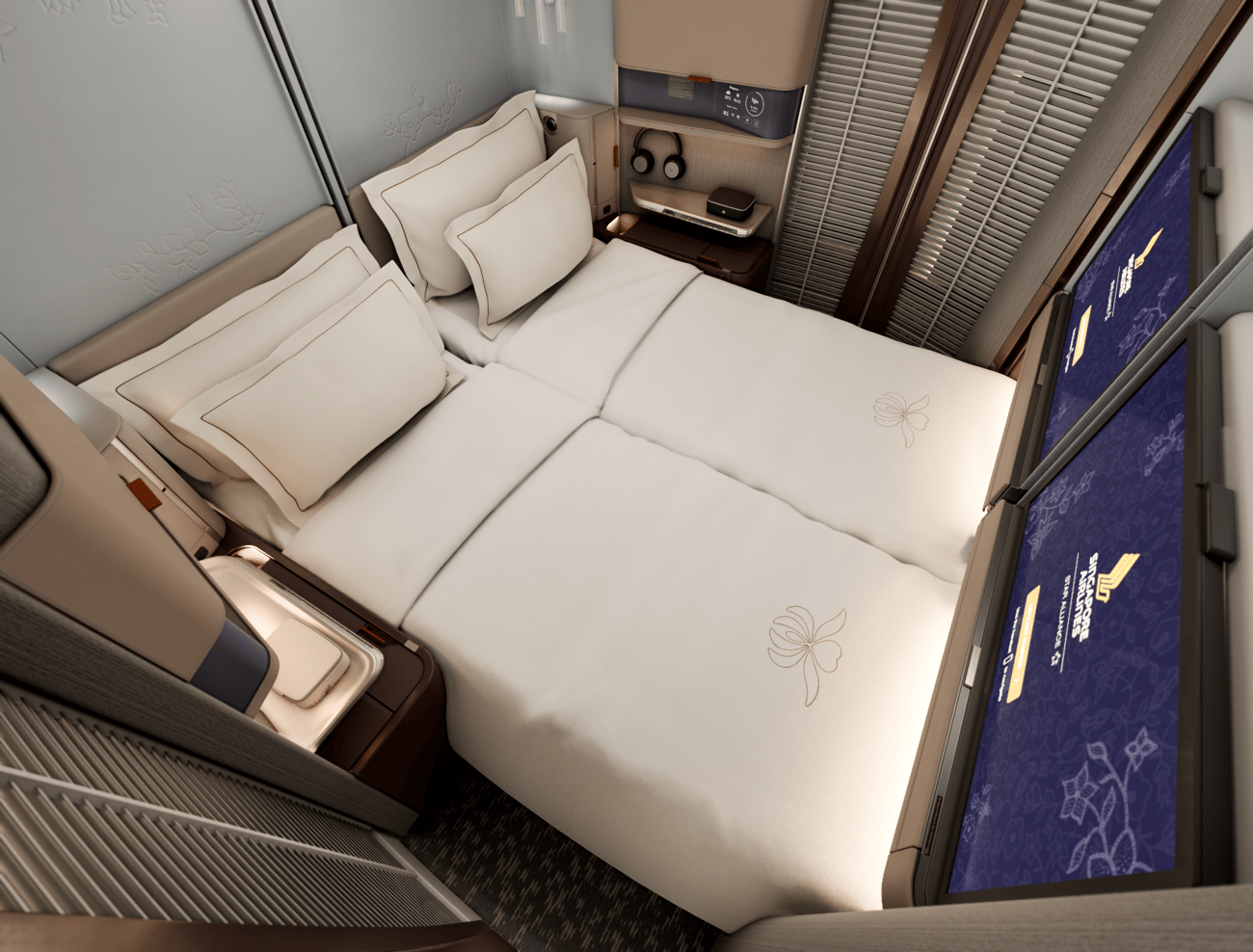
The crown jewel of Singapore Airlines’ new interior design philosophy is undoubtedly its reimagined first class suite. Moving away from the flashier, gold-accented designs popular with Middle Eastern carriers, the new suites emphasize understated sophistication, warmth, and residential comfort. The layout incorporates floor-to-ceiling privacy doors, ambient mood lighting, and high-grade acoustic dampening materials to insulate passengers from cabin noise.
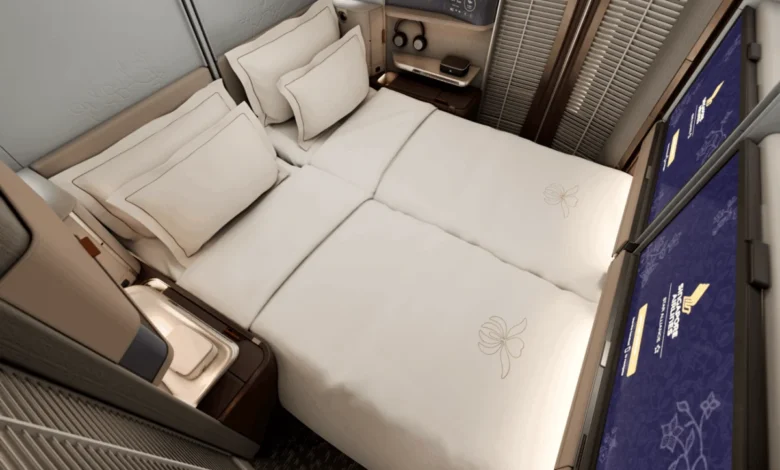
The most notable engineering achievement within the first class cabin is the center-section double suite. By lowering or completely retracting the central partition wall between the two middle suites, passengers traveling together can combine their spaces to form what the airline claims is the largest double bed currently available in commercial aviation. This design responds directly to the growing demand for shared premium spaces among couples and high-net-worth families traveling long-haul.
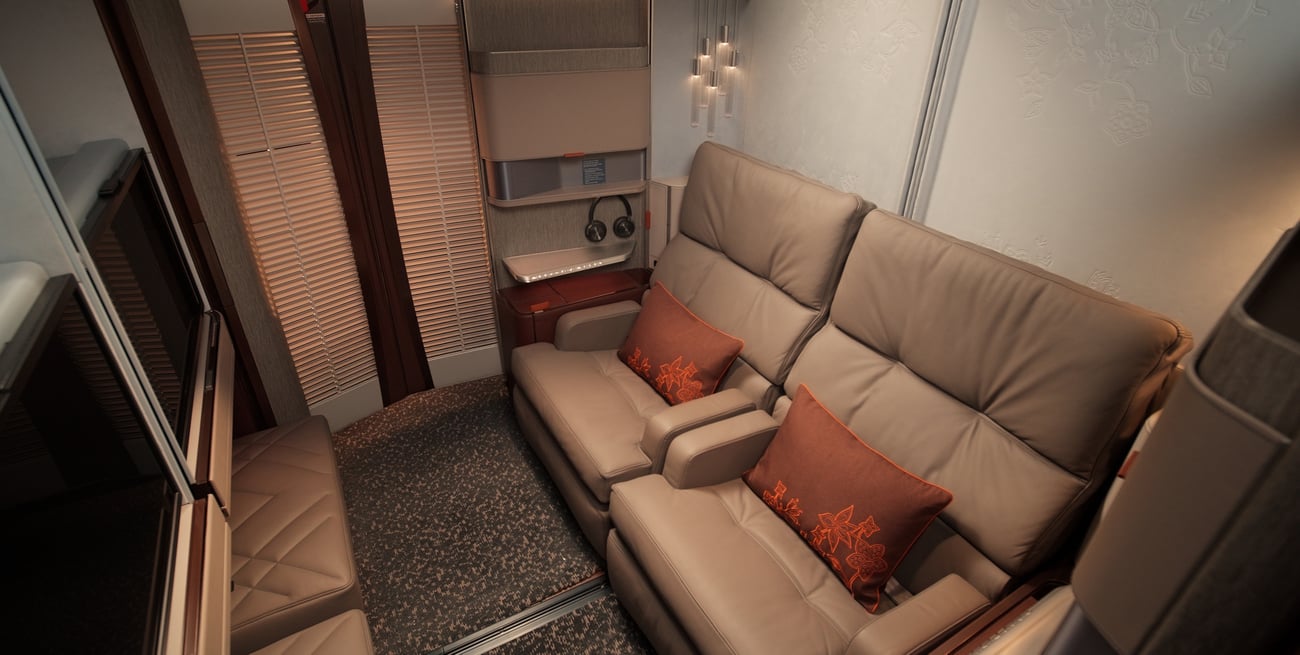
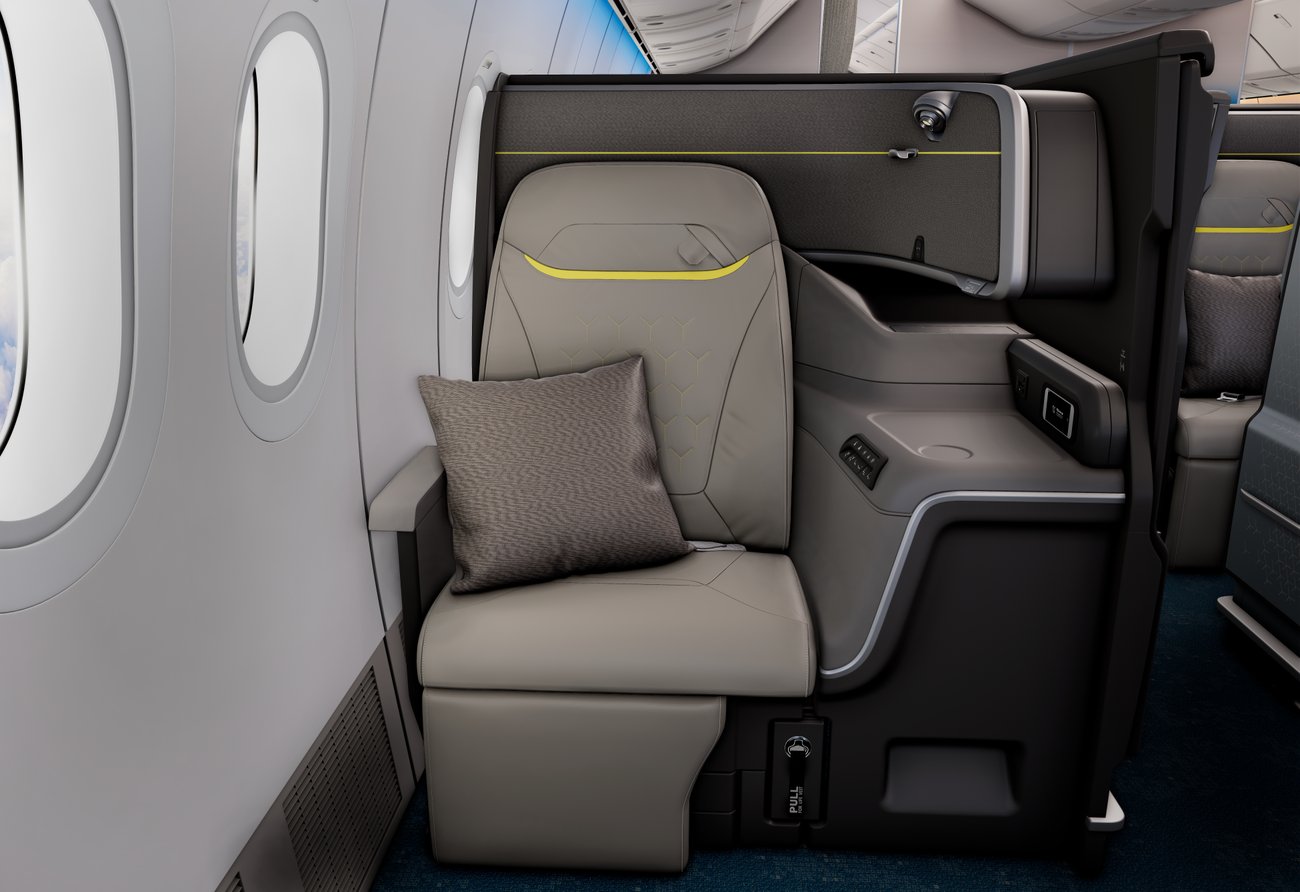
In contrast, the new business class product has sparked debate regarding its visual identity. While the seat itself functions as a fully enclosed suite featuring a sliding privacy door and converts into a generous lie-flat bed—amenities that typically command ticket prices exceeding $5,000—the color palette has drawn scrutiny. Utilizing a stark combination of matte blacks, cool grays, and minimal yellow accents, the aesthetic marks a sharp departure from the warm, earthy tones and rich leather finishes of the airline’s legacy business class cabins. Industry analysts note that while the physical ergonomics and technological integrations are expected to meet the highest standards of modern aviation, the minimalist color scheme risks appearing overly austere compared to competitors investing in residential warmth.
The Boeing 777-9 Integration Timeline
The operational rollout of these new cabins is closely tied to fleet modernization plans, centered primarily around the Airbus A350 and the long-delayed Boeing 777-9. The introduction of the 777-9 has faced a cascade of regulatory hurdles and manufacturing setbacks, leaving airlines like Singapore Airlines waiting roughly five years past their original delivery targets.
As Boeing works toward final certification of its flagship widebody aircraft, launch customers have had to adjust their retrofitting and fleet deployment strategies. Singapore Airlines plans to retrofit select existing Airbus A350 aircraft with the new products to bridge the gap, ensuring that premium flyers can experience the upgraded hardware before the full 777-9 fleet finally enters commercial service. This phased implementation highlights the logistical complexities modern airlines face when synchronizing interior product launches with aircraft delivery schedules.
Shifting Industry Demographics: The Decline of Tulum International Airport
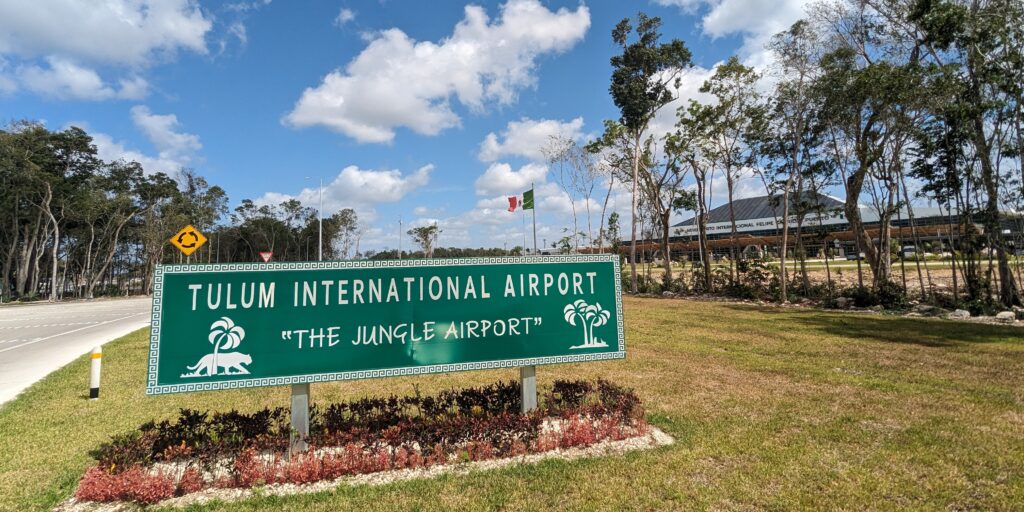
While legacy long-haul carriers focus their capital expenditure on front-of-plane luxury, the broader aviation market continues to experience significant regional volatility. A prime example of this fluctuating demand is the rapid rise and subsequent cooling of international interest in Tulum International Airport (TQO) in Mexico.
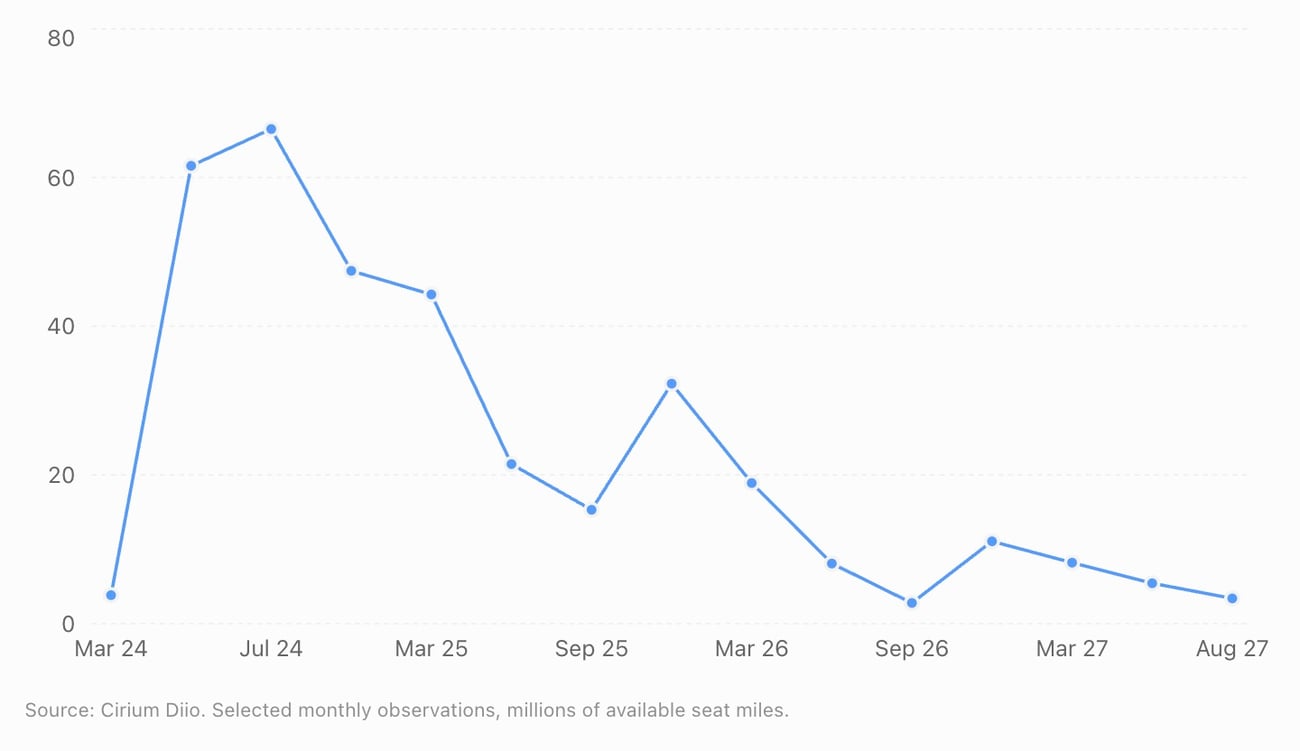
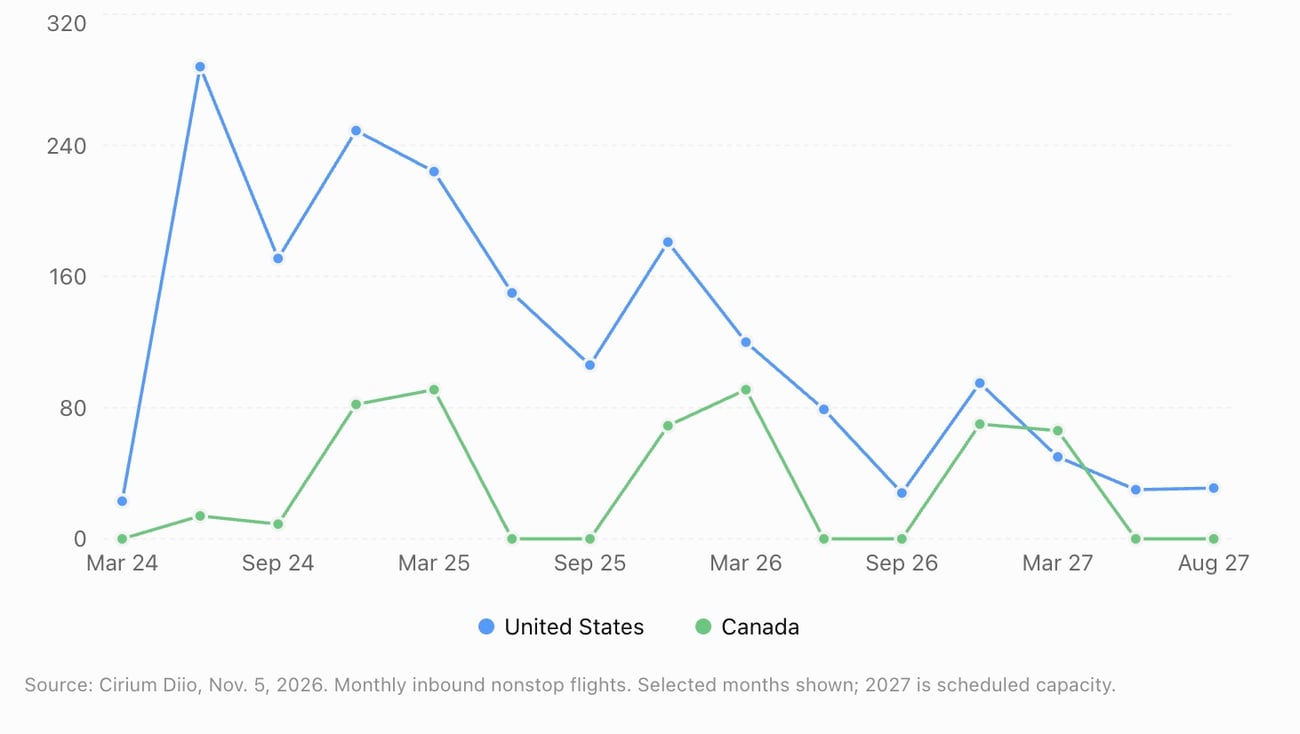
When Tulum’s international airport opened to global traffic, it was greeted with an immediate surge of carrier interest. By July 2024, the facility was handling over 300 international flights per month from the United States and Canada, as airlines rushed to capitalize on the region’s booming tourism market. However, the enthusiasm proved unsustainable. By the autumn following its peak, monthly U.S. and Canadian frequencies had plummeted dramatically.
Data indicates that U.S. capacity to Tulum, measured in available seat miles, is projected to drop by 90% compared to its July 2024 highs. The downturn was punctuated by United Airlines announcing the complete cancellation of all its routes to the Mexican destination after January. This retreat stands in stark contrast to the airline’s operating schedule just two years prior, when it maintained 28 weekly flights to Tulum across four domestic hubs.
Following these contractions, the airport’s route map has contracted significantly. American Airlines will maintain a scaled-back schedule from Dallas-Fort Worth (DFW), while eliminating its Miami (MIA) service. Delta Air Lines will operate limited seasonal frequencies from Atlanta (ATL) through May. Notably, even Aeromexico has scaled back its domestic and international footprint at the facility, leaving the airport with a much quieter operational profile than initially projected. Conversely, Canadian carriers have shown greater resilience; while Canadian capacity to Tulum has fallen roughly 30% from its peak, services operated by Air Canada, WestJet, and Air Transat will ensure that Canadian gateways supply a significant share of the airport’s international traffic during the winter season.

Co-Branded Credit Cards and the Rising Cost of Air Travel
Against a backdrop of fluctuating route networks, domestic air travelers are facing continuous increases in ancillary fees, most notably for baggage. Recent announcements by carriers such as JetBlue—which raised checked bag fees to a minimum of $50 each way—reinforce an industry-wide trend where basic travel services carry increasingly steep price tags. With major U.S. carriers like American, Delta, and United establishing a baseline of roughly $45 per checked bag in each direction, standard baggage costs can rapidly inflate the total expense of a family vacation. For a family of four, round-trip baggage fees can easily surpass $360.
This financial friction has driven a surge in the value proposition of co-branded airline credit cards. Annual fees for entry-level airline cards typically hover around $150—often with the first year waived—and routinely include a free checked bag benefit for the primary cardholder and travel companions. For frequent flyers, a single round-trip journey is often sufficient to offset the card’s annual fee entirely through baggage savings alone.

Beyond fee waivers, loyalty program integrations have enhanced the utility of co-branded cards. Delta Air Lines’ "TakeOff 15" benefit grants cardholders a permanent 15% discount on award travel booked using SkyMiles. Similarly, United Airlines recently revamped its credit card portfolio to offer primary cardholders at least 10% off award tickets on United-operated flights, with discounts scaling up to 15% for elite status holders. Furthermore, these cards frequently grant access to exclusive saver-level award inventory, potentially reducing redemption rates for long-haul business class travel from exorbitant standard pricing down to highly competitive mileage thresholds.
Credit Card Rewards Market: The Marriott Bonvoy Boundless Offer
The broader travel rewards ecosystem continues to see aggressive customer acquisition campaigns from major hotel chains and financial institutions. Chase and Marriott recently introduced a limited-time welcome bonus for the Marriott Bonvoy Boundless Credit Card, offering 200,000 bonus points after a qualifying spend of $3,000 within the first three months of account opening.
Unlike previous promotional structures that relied on static free-night certificates capped at specific point thresholds—which often forced cardholders to find eligible properties matching the exact valuation cap—this offer provides flexible points directly into the consumer’s account. This liquidity allows cardholders to allocate points toward high-end luxury resorts or multiple nights at lower-category properties worldwide.
Industry analysts emphasize that while the bonus represents one of the largest point offerings in the card’s history, applicants remain subject to strict issuer policies, including Chase’s well-known 5/24 rule, which generally denies approvals to applicants who have opened five or more personal credit cards across any bank within a rolling 24-month period. Carrying a standard $95 annual fee that is not waived in the first year, the card targets consumers capable of meeting the spending threshold organically while maximizing hotel loyalty benefits.
Broader Implications for the Aviation Industry
The concurrent trends of multi-million-dollar cabin overhauls at the top end of the market and aggressive ancillary fee increases in the economy sector illustrate a widening bifurcation in commercial aviation. Airlines are increasingly relying on high-margin premium products and co-branded financial partnerships to insulate themselves against fuel price volatility and operational supply chain delays. As manufacturers like Boeing and Airbus continue to navigate production backlogs, airlines will rely heavily on interior product refreshes and strategic route adjustments to capture the shifting demographics of global travelers.