Breathing New Life Into Vintage Glass: A Comprehensive Review of the Megadap M2RF Autofocus Adapter for Canon EOS R

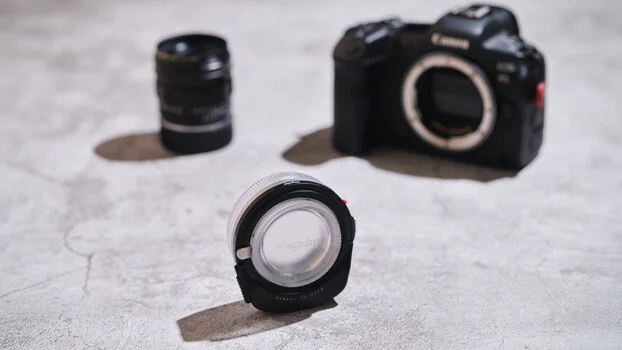
The intersection of classic optical engineering and modern sensor technology has long represented a fascinating frontier for contemporary photographers. For decades, enthusiasts of manual-focus rangefinder lenses—particularly iconic Leica M-mount optics—faced a distinct limitation when adapting their favorite vintage glass to modern mirrorless camera bodies: the total absence of automated focusing capabilities. While manual focusing remains a deeply cherished discipline for purists, the shift toward fast-paced digital workflows and the ergonomic realities of high-resolution sensors have amplified the demand for seamless electronic integration. Enter the Megadap M2RF, an innovative electronic helicoid adapter designed to bridge this hardware divide. By introducing full autofocus functionality to manual M-mount lenses mounted on Canon RF-mount camera bodies, this $399 accessory fundamentally alters how photographers interact with heritage glass.
Main Facts and Hardware Engineering
At its core, the Megadap M2RF is a motorized helicoid adapter constructed primarily from machined black anodized aluminum, complemented by a rear half finished with silver matte pearl nickel electroplating. Weighing approximately 183 grams with both caps attached and measuring roughly 3 inches by 2.7 inches, the unit features a distinctive thicker lower housing. This pronounced base accommodates the internal electronic brains, custom coreless motor, and dual Hall effect sensor detection systems responsible for driving the autofocus mechanism.
The adapter achieves focus by mechanically extending the bayonet M-mount outward by a maximum of 4.5 millimeters. In its default resting state, the mount sits recessed by roughly 2 millimeters. Communication between the adapter and the camera body is facilitated through gold-plated, corrosion-resistant electronic contacts on the rear Canon RF mount. However, the front M-mount side lacks electronic contacts, meaning that data transmission relies exclusively on the adapter-to-camera interface rather than native lens-to-camera communication.
While the physical build tolerances ensure a precise planar focal plane and seamless infinity focus, the lower housing’s dimensions introduce certain physical constraints. Notably, the adapter lacks clearance for low-profile camera cages, such as SmallRig’s rotatable horizontal-to-vertical mounts. Furthermore, lenses featuring exceptionally short barrels paired with thick focusing tabs—such as the Thypoch Ksana 35mm f/2 Asph—cannot be physically mounted because the adapter’s lower housing obstructs the focusing tab.
Integration with Canon’s Ecosystem and Autofocus Performance
The primary value proposition of the Megadap M2RF lies in its ability to harness the advanced processing architecture of Canon EOS R-mount cameras, such as the Canon R5. When mounted, the adapter seamlessly integrates with Canon’s native Dual Pixel Autofocus (DPAF) system. This grants users access to continuous autofocus (AF-C), advanced subject detection, eye-detection algorithms, face priority, and sophisticated tracking modes.
Real-world testing reveals that the autofocus execution is remarkably agile, largely bypassing the frustrating hunting behaviors historically associated with early-generation third-party electronic adapters. Wider-angle lenses benefit particularly well from the system, as their inherently deeper depth of field requires minimal physical barrel displacement to achieve critical focus. Continuous autofocus performance operates reliably, though operators must contend with audible mechanical whirring generated by the internal coreless motor. Consequently, videographers recording in sound-sensitive environments may find the motor noise problematic for internal microphone pickup.
Tactile operation behaves similarly to legacy Canon STM (Stepping Motor) lenses. Unlike older adapter designs that necessitated manual pre-focusing before the autofocus motor could engage, the M2RF allows users to simply park the lens focus ring at infinity, leaving the adapter to manage all subsequent adjustments. Should the autofocus system encounter a difficult low-contrast scenario, a physical AF/MF toggle button on the side of the adapter instantly reverts control to manual focusing.
Macro Capabilities and Optical Considerations
Beyond automating standard focus ranges, the M2RF doubles as a functional macro extension tube. By double-tapping the AF/MF control button while in manual focus mode, the adapter extends to its maximum 4.5 mm displacement. This mechanical shift dramatically reduces the typical 0.7-meter minimum focus distance of most rangefinder lenses down to approximately 0.3 meters, opening new creative avenues for close-up photography.
However, technical considerations must be acknowledged regarding optical performance. Traditional manual lenses utilize either unit-focus designs—where the entire optical block moves as a single rigid unit—or floating lens elements (FLE) designed to correct spherical aberrations and field curvature at close ranges. Because the M2RF drives the entire lens barrel outward while the optical focus ring remains locked at infinity, high-end M-mount lenses equipped with FLE systems cannot execute their internal near-field corrections. While this trade-off remains imperceptible during everyday landscape and street photography, critical close-up shooters may notice a slight reduction in absolute edge sharpness compared to manual operation.
Firmware, Metadata Management, and Software Workflow
Data logging represents another sophisticated dimension of the Megadap M2RF. The adapter supports comprehensive EXIF data recording, saving focal length, lens profile names, and aperture values directly into raw image files. To achieve this, users must utilize Megadap’s dedicated desktop software—compatible with both macOS and Windows—to program up to four distinct lens profiles into the adapter’s internal memory.
The physical 4-step aperture lever located on the lower left of the housing syncs preset aperture values with the camera’s metering system. Adjusting this lever shifts the camera’s ISO values to maintain constant exposure under auto-ISO settings. However, switching between saved profiles in the field involves a somewhat convoluted sequence: users must hold the AF/MF button for three seconds, adjust the aperture lever, capture a dummy image, restart the camera body, and capture a second image to register the profile change. Additionally, the software’s default interface language is Mandarin, requiring users to manually navigate to the top-left panel to switch to English.
Broader Industry Implications and Market Impact
The introduction of the Megadap M2RF marks a significant milestone in mirrorless lens adaptation. By bridging the gap between historical optical craftsmanship and contemporary autofocus algorithms, the device offers a compelling economic and practical alternative to native mirrorless lens lineups. For photographers with diminished eyesight or those deeply invested in the unique rendering characteristics of vintage glass, the adapter breathes new life into dormant equipment cabinets.
Priced at $399, the Megadap M2RF addresses a highly specific market niche with considerable engineering ambition. While first-generation hardware quirks—such as standby power draw, software configuration hurdles, and motor noise—highlight areas ripe for future refinement, the device successfully delivers on its core promise. As mirrorless systems continue to dominate the photographic landscape, accessories of this caliber underscore a growing industry trend toward universal system interoperability, paving the way for expanded cross-mount innovations in the years to come.