Beyond the Headlines: A Comprehensive Analysis of the Evolving Tourism Landscape in Post-Conflict Syria

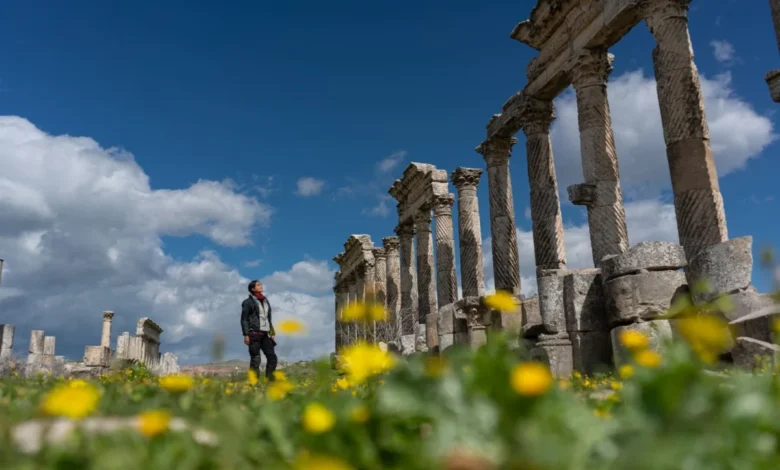
The Syrian Arab Republic, a nation historically synonymous with the cradle of civilization and a crossroads of ancient trade routes, is currently witnessing a tentative and highly complex revival of its international tourism sector. While global media outlets have spent over a decade depicting the country primarily through the lens of civil war, displacement, and geopolitical proxy maneuvering, a quiet shift is occurring on the ground. For the intrepid traveler, Syria is no longer a closed-off fortress but a destination operating under stringent administrative requirements, where the remnants of a devastating conflict coexist with a society striving to normalize daily life.
A Chronology of Conflict and Cultural Preservation
To understand the current state of tourism in Syria, one must first acknowledge the precipitous decline that began in 2011. Prior to the onset of the Syrian civil war, the country was a burgeoning destination for cultural tourism, drawing millions of international visitors annually to sites like the Umayyad Mosque in Damascus, the ancient city of Aleppo, and the Roman-era ruins of Palmyra.
The subsequent decade saw a catastrophic collapse of infrastructure and cultural heritage. UNESCO designated all six of Syria’s World Heritage sites as "in danger" due to the destruction caused by shelling, looting, and military activity. The 2015 occupation of Palmyra by extremist groups and the subsequent damage to its monumental architecture served as a focal point for global concern regarding the loss of human history.
However, since 2019, the stabilization of central government control over significant portions of the country has led to a gradual, if fragile, transition. The tourism sector, which once accounted for roughly 12% of the national GDP before the conflict, is now being courted by the Ministry of Tourism as a vital instrument for economic recovery and national branding.
The Administrative Reality: Navigating Syrian Travel
Travel to Syria in the current climate is not a spontaneous endeavor. It is a highly regulated process defined by state-mandated security protocols. Unlike neighboring nations, foreign nationals—particularly those from Western countries—cannot independently navigate the country.
The primary requirement for entry is a government-approved tour. This system mandates that tourists be accompanied by a state-certified guide throughout their stay. This policy serves a dual purpose: it provides the state with oversight of foreign movements and ensures that tourists are shielded from high-risk zones that remain volatile. From an operational perspective, this has given rise to a new generation of local boutique tour agencies. These firms act as intermediaries, handling the complex visa-sponsorship processes and providing the logistical support necessary to move between governorates.
Statistical Context and Economic Implications
The economic impact of the war on Syria has been absolute. The Syrian pound has suffered hyperinflation, and the destruction of the nation’s industrial base has left a significant portion of the population reliant on remittances and local subsistence economies. In this context, tourism serves as a rare source of hard currency.
According to data from the Syrian Ministry of Tourism, the country has seen a steady increase in "non-traditional" arrivals—travelers from Russia, Iran, China, and, increasingly, European and North American niche travelers seeking "extreme" or "dark tourism" experiences. While these numbers remain a fraction of the 8.5 million arrivals recorded in 2010, the trend indicates a burgeoning demand for managed, high-security travel.
The implications of this are twofold. Economically, the infusion of foreign capital provides a lifeline for the hospitality sector, specifically in Damascus and Aleppo, where traditional hotels and restored courtyard houses are being refurbished. Politically, the promotion of tourism is a calculated effort by the state to signal to the international community that the war is over and that the country is returning to a state of normalcy.
The Ethical Dilemma of "Dark Tourism"
The resurgence of interest in Syria has sparked a fierce debate among travel ethicists and human rights observers regarding the phenomenon of "dark tourism." This refers to travel to sites associated with death, disaster, or suffering.
Syria presents a unique challenge in this regard. While the ruins of the Al-Madinah souq in Aleppo or the pockmarked facades of buildings in Homs are undeniable testaments to the conflict, they are also active, living spaces where residents are attempting to rebuild their livelihoods. Experts argue that there is a fine line between "grief tourism"—which can be exploitative—and "empathetic travel," which seeks to understand the reality of a country beyond the news cycle.
The consensus among those advocating for responsible tourism is that the intent of the visitor matters. Traveling to Syria to photograph the rubble for social media clout is widely condemned as insensitive to the ongoing trauma of the displaced. Conversely, engaging with the local economy, respecting local customs, and maintaining an awareness of the political sensitivities are viewed as ways to support the resilience of the local population.
Security Assessment and Regional Stability
The question of safety remains the primary deterrent for potential visitors. The security environment in Syria is not uniform. While the central corridors—Damascus, Homs, Hama, and the coastal cities of Tartus and Latakia—are currently considered stable, the periphery remains prone to sudden escalations.
The ongoing conflict in Gaza has brought renewed attention to Syria’s vulnerability. There have been repeated reports of airstrikes targeting infrastructure, including the international airports in Damascus and Aleppo. These incidents, while strategically focused on supply lines and military assets rather than civilian centers, highlight the unpredictable nature of the region.
The consensus among travel security analysts is that the primary risks for tourists in Syria are not traditional street crime, but rather the potential for sudden geopolitical shifts. Visitors are strongly advised to adhere to the following:
- Compliance with Local Regulations: Deviating from an established itinerary or attempting to visit restricted areas can result in detention by security services.
- Contextual Awareness: The Syrian political climate is highly sensitive. Public discussion of state politics or military matters can pose significant risks to both the traveler and their local hosts.
- Infrastructure Limitations: Outside of the major cities, electricity, internet connectivity, and medical facilities remain severely compromised. Travelers must be self-sufficient and prepared for significant delays.
The Future of the Syrian Narrative
Syria stands at a crossroads. The government’s attempt to reopen the country to the world is an attempt to break the diplomatic isolation that has defined the last decade. For the traveler, the experience is one of profound contrast: one may find oneself sipping coffee in an exquisitely preserved 17th-century courtyard in the Old City of Damascus, only to witness a military checkpoint or the ruins of a residential block minutes later.
The decision to travel to Syria is an individual one that carries inherent ethical and security considerations. It requires an acknowledgment that the country is not merely a historical site, but a nation in the midst of a painful, protracted recovery. As the global community continues to debate the ethics of engagement, the individuals who choose to visit will serve as the primary conduits for a more nuanced, albeit complicated, understanding of the Syrian experience.
The state of tourism in Syria is a mirror of the country itself: resilient, complex, and deeply scarred, yet undeniably persistent in its desire to be seen for something other than the conflict that has defined its modern history. Whether this nascent industry can mature into a sustainable sector remains to be seen, but for now, the gates remain open, guarded by the weight of a decade of history and the uncertain promise of a post-conflict future.
Related posts: