Trapped by the Tempest: How 29 Hikers Survived a Himalayan Blizzard and a Massive Multi-Agency Rescue Operation

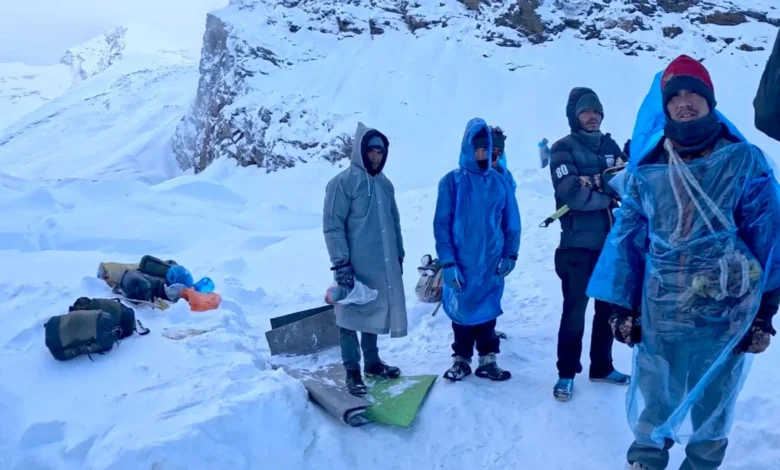
The jagged peaks of the Garhwal Himalayas in India’s northern Uttarakhand state have long beckoned alpine adventurers from across the globe. Among the region’s most formidable tests is Auden’s Col, a high-altitude mountain pass perched at an intimidating 18,010 feet. Known for its complex glacial terrain, steep vertical drops, and treacherous moraines, the pass connects two of the region’s major glaciers and demands absolute precision from anyone attempting to cross it. On September 25, 2026, a 29-member commercial expedition organized by the premier Indian adventure outfitter Aquaterra Adventures arrived at base camp, situated at roughly 16,400 feet, feeling optimistic. The afternoon sun shone brightly through a clear sky, casting a deceptively tranquil glow over the snow-capped expanse. The team intended to rest overnight and make their push across the notoriously difficult pass the following morning.
What the expedition members could not know was that a meteorological anomaly was rapidly developing hundreds of miles away over the Bay of Bengal. A fast-moving depression swept swiftly across the Indian subcontinent, on a direct collision course with the massive mountain barrier of the Himalayas. The unfolding disaster caught regional forecasting networks off guard, and the Indian government’s formal red alert was issued only after the Aquaterra team had already settled into their high-altitude base camp. Between the evening of September 25 and September 27, the region was battered by a catastrophic weather event that dropped more than six feet of fresh snow in less than 48 hours. Winds whipped across the exposed camp at speeds reaching approximately 62 miles per hour, while temperatures plummeted to a life-threatening minus 4 degrees Fahrenheit (-20 degrees Celsius).
The expedition group comprised six paying clients, three professional guides, and 20 local porters and support staff. At the helm was Jetendra Singh Rana, a veteran mountaineering guide with a staggering 22 years of experience in the Himalayas, including nine previous successful crossings of Auden’s Col. Aquaterra Adventures had played a foundational role in opening the demanding 10-day route to commercial departures nearly two decades prior, establishing strict safety protocols that would ultimately prove vital. Despite the vast experience onboard, the sheer velocity and ferocity of the sudden storm threatened to overwhelm the entire contingent.
The Anatomy of a Preemptive Decision
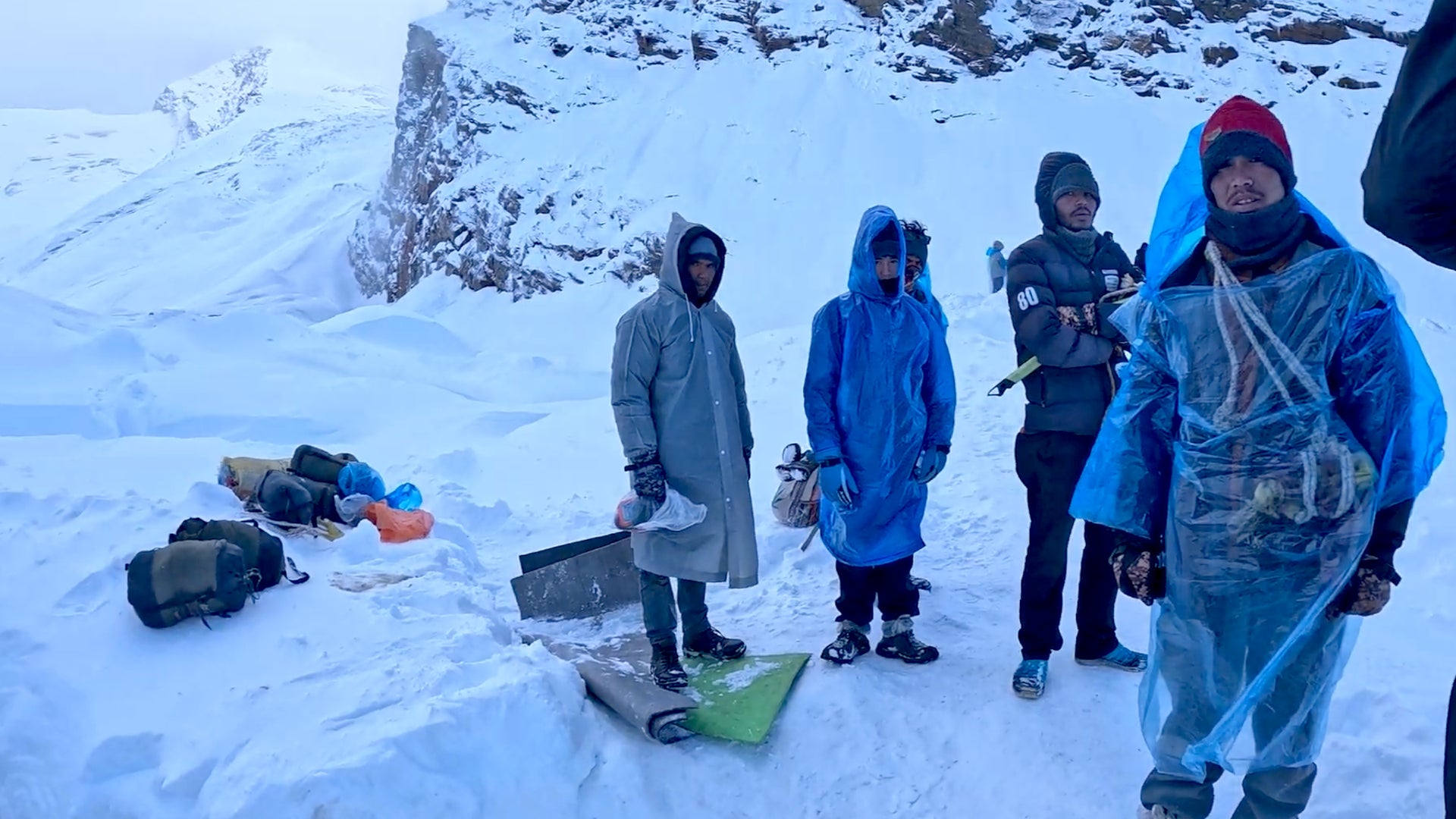
The crisis began to unfold at midnight on September 25, when Rana stepped out of his tent into the freezing air. Trained eyes instantly recognized atmospheric signs that defied the calm afternoon that had preceded it; thick, roiling clouds were stacking up over the col, formations that had been absent just hours earlier. "Something just did not feel right," Rana recalled. Driven by decades of mountain instincts, he monitored the deteriorating conditions closely. By 2:00 a.m. on September 26, the skies had darkened further, prompting Rana to make the most critical call of the expedition: he officially canceled the scheduled morning ascent to Auden’s Col.
By 3:30 a.m., heavy snow began to fall, validating the guide’s preemptive judgment. Expedition participants later credited this exact moment with saving their lives. Preeti and Raj Chauhan, clients from Bangalore, noted that no one questioned Rana’s authoritative decision. Had the team adhered to their original itinerary, they would have been fully exposed on the steep, unforgiving face of the col when the blizzard struck, likely resulting in catastrophic casualties.
Rana’s pragmatic leadership underscored a fundamental philosophy of high-altitude mountaineering: confidence is not about ignoring danger, but rather about objectively assessing the environment, trusting rigorous preparation, and executing responsible, timely decisions. However, calling off the climb was only the first hurdle. As the storm intensified throughout the day on September 26, the team faced an immediate threat to their physical shelter.
One Tent, 29 Lives: Battling the Blizzard
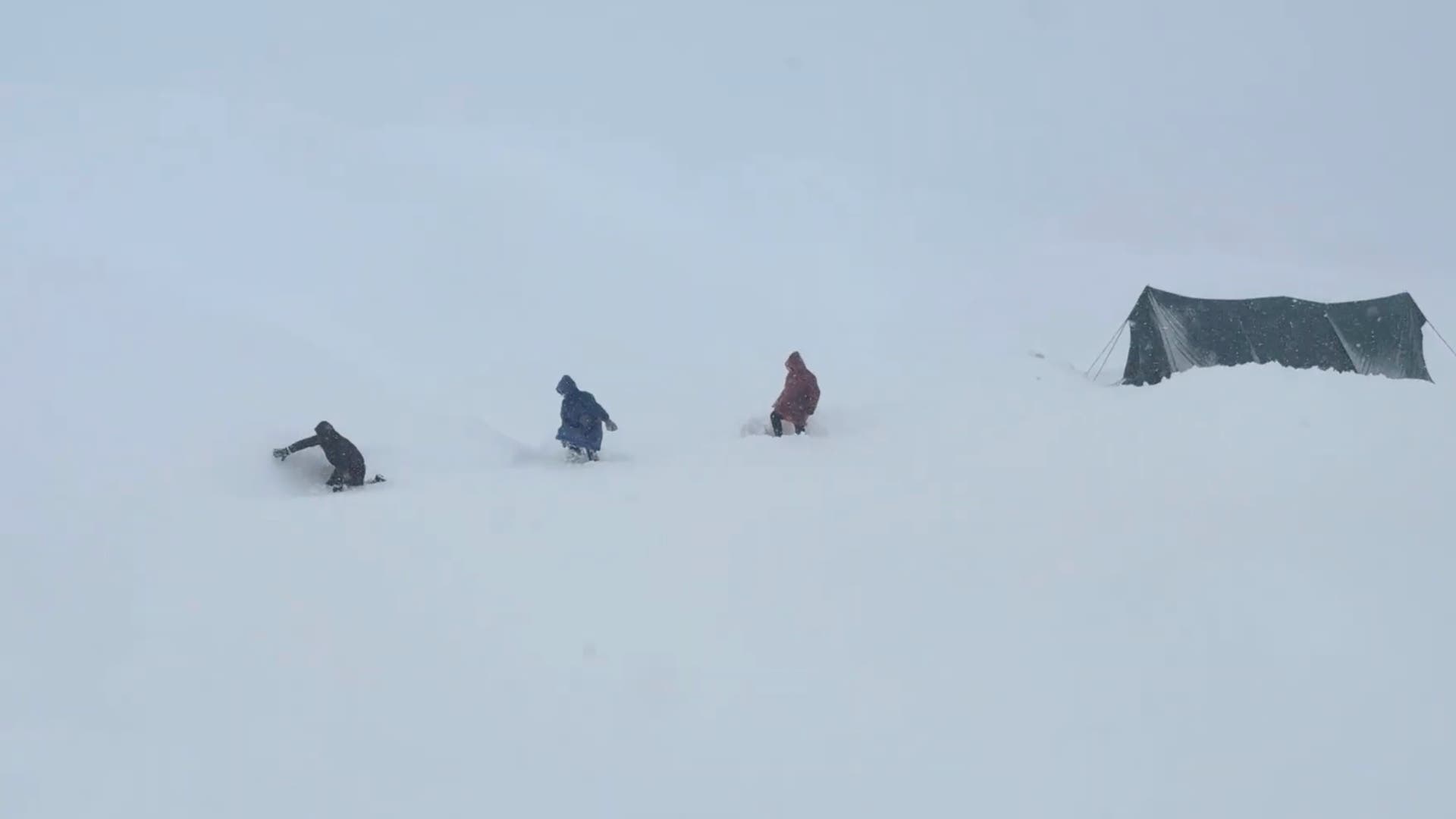
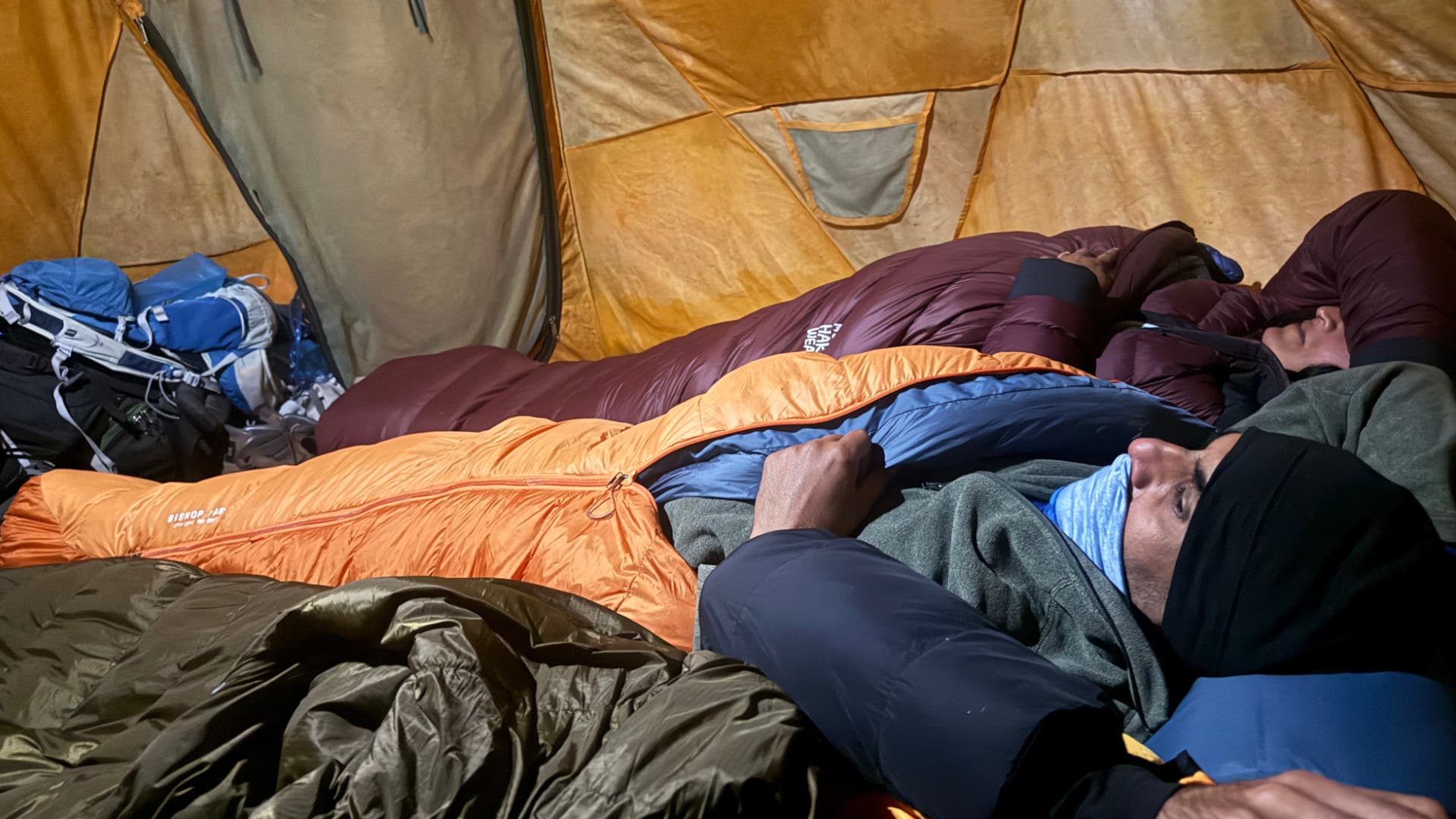
By late afternoon, the relentless accumulation of snow rendered the expedition’s individual sleeping tents structurally unsafe, threatening to collapse under the immense weight. At approximately 4:00 p.m., in whiteout conditions, Rana orchestrated a massive logistical shift, moving all 29 individuals into a single communal structure: a heavy-duty The North Face 2-Meter Dome Tent that had previously served as the group’s dining hall.
Inside the dome, conditions were cramped, chaotic, and intensely stressful as the storm escalated to near-blizzard proportions through the night. The structural integrity of the tent was severely tested as winds battered the exterior, causing the heavy metal poles to visibly strain under the pressure. In a remarkable display of collective resilience, the hikers took turns every two hours standing in the center and pressing upward against the framing poles from the inside to prevent the accumulating snow load from snapping the metal framework.
While the clients worked collaboratively inside—sharing jokes, maintaining morale, and silently praying for rescue—the local porters and support staff exhibited extraordinary bravery outside. Equipped with minimal heavy gear, these local workers labored tirelessly through the night in sub-zero temperatures, shoveling tons of snow away from the dome and carving a protective perimeter around its base to prevent the rapidly rising snow walls from crushing the shelter entirely.
Lifeline to Civilization: Satellite Communication and Coordination
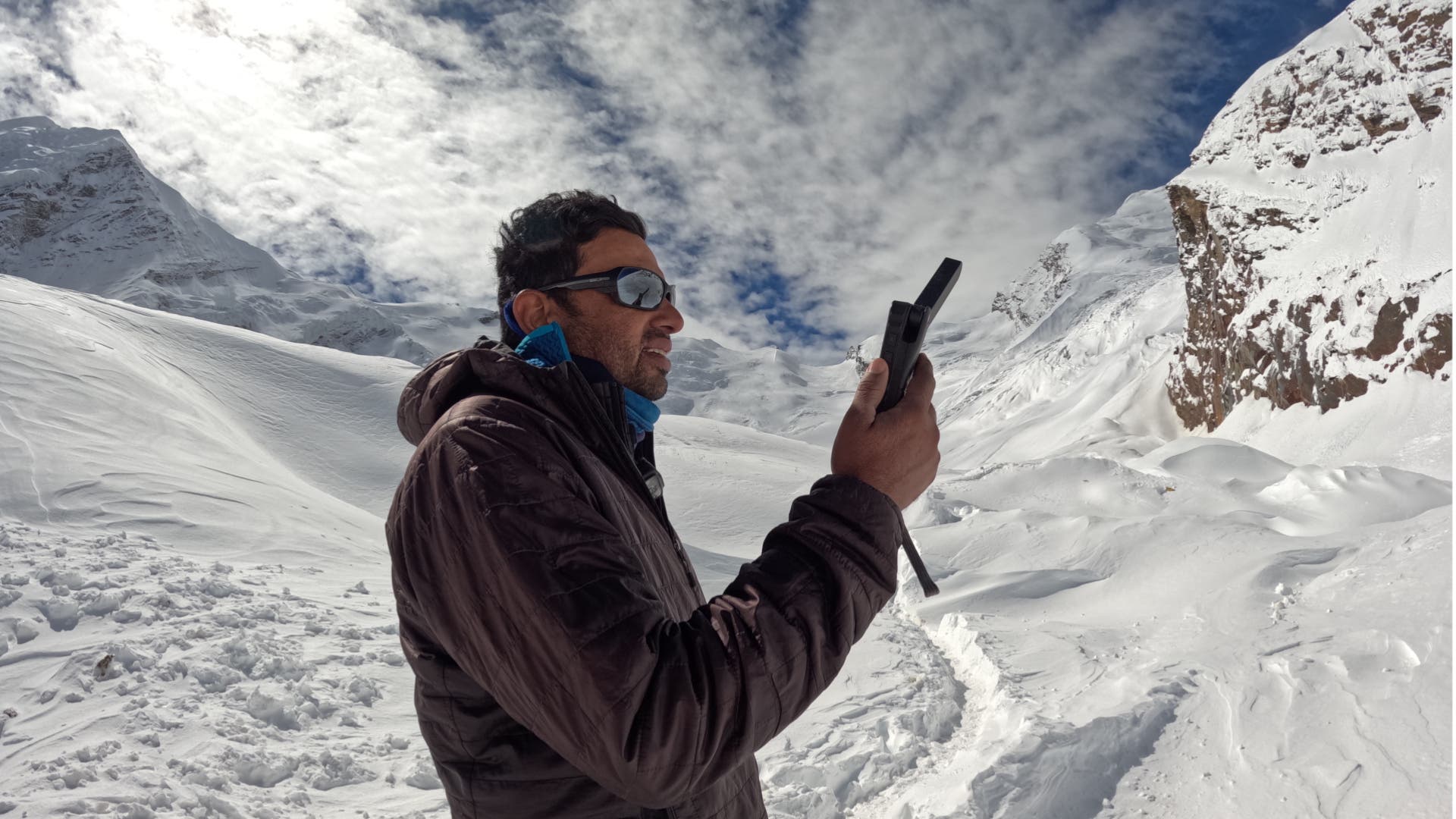
Amid the howling winds and encroaching snowbanks, the expedition’s sole tether to the outside world was a satellite phone, a mandatory piece of safety equipment required by Aquaterra for all its remote excursions. Rana utilized the device to transmit continuous status reports to company headquarters in New Delhi, officially confirming the cancellation of the climb and detailing the rapidly deteriorating conditions at base camp.
Upon receiving these distress updates, Aquaterra founder Vaibhav Kala initiated a high-level emergency response. Recognizing that a manual trek back down the valley had become completely impossible due to deep drifts and avalanche risks, Kala escalated the situation directly to the Uttarakhand tourism secretary. This triggered a massive chain of bureaucratic and military action involving the Uttarakhand Disaster Management Authority, the additional district magistrate, the divisional forest officer, the Civil Aviation Department, and the Indian Army.
The gravity of the situation extended far beyond the Aquaterra party. In total, 136 trekkers were stranded across various valleys in the region due to the unseasonal storm. In response, six distinct government and military agencies collaborated to requisition a fleet of nine helicopters capable of executing high-altitude rescue sorties once the weather broke. During a crucial eight-minute satellite phone check-in on the morning of September 27, Kala briefed Rana on the multi-agency rescue plan, instructing the ground team to clear a strict 10-by-10-meter zone to serve as a makeshift helicopter landing pad.
The Four-Hour Window: Execution of a Complex Airlift
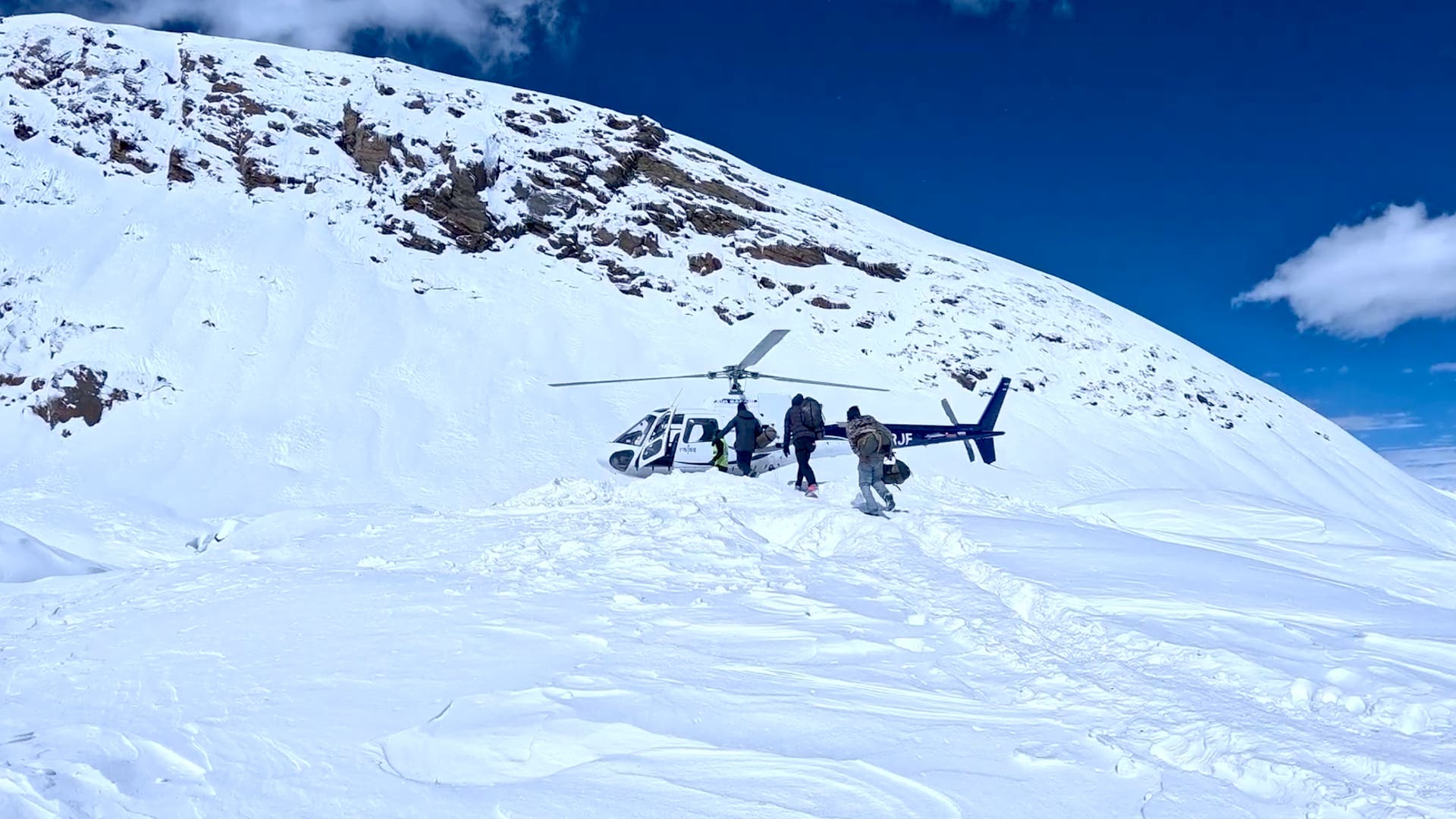
September 28 brought a brief, highly volatile window of clear weather lasting barely four hours. Seizing the opportunity, Rana and his crew dismantled their safety dome tent, utilizing the flat, stable floor space underneath as the core of the landing zone. Because visibility remained patchy and surrounding peaks were shrouded in lingering clouds, Kala played a direct navigational role from his Delhi office, guiding the incoming rescue pilots over the base camp terrain using real-time Google Earth imagery.
At approximately 8:45 a.m., the first helicopter sortie touched down, taking on two passengers. To prevent panic or a dangerous rush for the aircraft, Rana had pre-established a strict departure order among the clients. Thanks to the precise GPS coordinates and meticulously cleared landing zone provided exclusively by the Aquaterra team, the operation proceeded with military precision. By 11:00 a.m., all 29 hikers had been safely lifted out of the danger zone.
The successful morning sortie ultimately evacuated 38 total individuals from the valley before the storm clouds closed in once more. Over the subsequent days, emergency services utilized remaining weather windows to rescue the rest of the stranded hikers across the region, resulting in zero fatalities—a remarkably fortunate outcome for a disaster of this magnitude.
Broader Implications and Industry Takeaways
In the aftermath of the successful operation, regional authorities and industry experts hailed the mission as one of the most effective mountain rescues in Uttarakhand in recent years. The seamless cooperation between private adventure operators, municipal entities, state leadership, and military aviation units demonstrated how modern emergency response frameworks can mitigate the unpredictable hazards of climate-driven extreme weather.
Following the incident, Vaibhav Kala compiled a comprehensive riven-action report for the Uttarakhand state government, detailing the chronology of events, evaluating the performance of the guides, and outlining critical safety recommendations for future high-altitude expeditions. Key takeaways from the report emphasize the absolute necessity of carrying robust central shelters, durable snow shovels, portable power banks, and backup satellite-communication charging equipment on every technical trek. Furthermore, the report stresses the importance of conditioning clients to view rescue preparedness as an integral part of mountaineering.
Reflecting on the harrowing ordeal, Jetendra Singh Rana emphasized that the core mission of any reputable expedition leader transcends the pursuit of summits. "Our objective was to cross Auden’s Col, but our responsibility was much bigger than reaching a mountain pass," he reflected. "The mountains will always be there, and there will always be another opportunity to try again. But the safety of every person on an expedition comes first."