

Checking a suitcase into the belly of an aircraft has historically involved a calculated leap of faith. Passengers routinely watch their personal belongings disappear behind airline check-in counters, hoping that both traveler and luggage ultimately arrive at the same geographical destination. However, the integration of Bluetooth-enabled item-tracking technology into everyday travel has fundamentally shifted the dynamic between airlines, airports, and passengers. What began nearly a decade ago as a rudimentary tool for passive location awareness has evolved into a sophisticated, interoperable ecosystem capable of actively assisting international carriers in baggage recovery.
As global aviation enters 2026, the utility of luggage trackers extends far beyond personal peace of mind. With major tech manufacturers and aviation software providers upgrading their infrastructure, location-sharing protocols have transformed from a passenger novelty into an official mechanism for lost bag retrieval. For travelers navigating busy international hubs, equipping a checked bag with a tracking device has transitioned from a clever travel hack into an essential component of modern journey preparation.
Technological Evolution and the 2026 Landscape
The current landscape of luggage tracking is defined by major hardware and software upgrades introduced by industry giants Apple and Google. These updates address historical limitations in Bluetooth range, battery longevity, and, most importantly, communication barriers between passenger devices and airline baggage handling systems.
Apple introduced its second-generation AirTag, which expands Precision Finding capabilities by up to 50% compared to its predecessor. The upgraded hardware features a significantly extended Bluetooth range and an onboard speaker that is 50% louder, making it audible from twice the distance of the original model. For Android users, the ecosystem has matured via Google’s Find Hub network, closing the historical gap in device density and location reporting speeds that once heavily favored iOS users.
Concurrently, a major breakthrough occurred in early 2026 when Google, alongside major aviation technology providers SITA and Reunitus, announced direct integrations with foundational baggage-tracing platforms such as WorldTracer and NetTracer. This integration allows Android-based Find Hub location data to interface with the backend systems airlines use to trace missing property.

Direct Airline Integration: Bridging the Passenger-Carrier Divide
Historically, a primary frustration for travelers utilizing luggage trackers was the operational disconnect with airline staff. Passengers frequently found themselves standing in baggage reclaim areas, viewing precise real-time coordinates of their missing property on a smartphone, while airline customer service agents remained tethered to legacy tracking systems that showed no immediate update.
This operational silo has officially begun to dissolve. Major international airlines have adopted secure location-sharing protocols, allowing passengers to generate temporary, secure links through their device’s tracking network.
Under Apple’s updated Find My framework, users can generate a secure link that grants an authorized third party—such as an airline’s baggage service office—access to an updating map view of the AirTag. This sharing feature is strictly controlled by the owner, can be revoked at any time, and automatically expires after seven days to ensure data privacy. Participating carriers now include Air Canada, British Airways, Delta Air Lines, Lufthansa, Qantas, Singapore Airlines, Turkish Airlines, United Airlines, and Virgin Atlantic.

Similarly, Google’s "Share Item Location" feature allows Android users to securely transmit location coordinates to participating carriers, which currently include Ajet, Air India, China Airlines, Lufthansa Group, Saudia Airlines, Scandinavian Airlines, and Turkish Airlines. Aviation analysts note that these lists are dynamic, with additional carriers integrating the software systems into their ground operations on a rolling basis.
Comparative Analysis: Apple AirTag versus Tile Mate
Choosing the appropriate tracking device largely depends on the user’s primary mobile ecosystem, hardware preferences, and tolerance for maintenance.
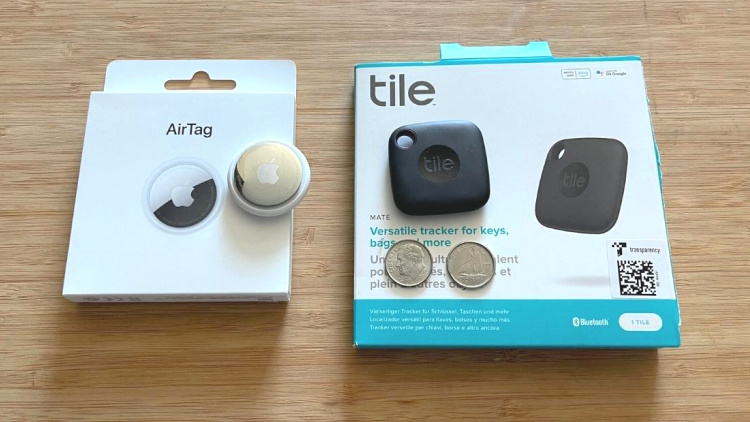
The Apple AirTag operates exclusively within the iOS ecosystem, utilizing Apple’s vast network of iPhones, iPads, and Mac computers to relay location data globally via Bluetooth. Its setup is virtually frictionless, requiring no secondary application downloads or account registrations. The device is compact, roughly the size of a quarter, and features a user-replaceable CR2032 coin cell battery.

Conversely, the Tile Mate caters to both Android and iOS users, operating through the Tile application network and Google’s broader Find Hub infrastructure. Setup requires downloading the dedicated application and completing an account registration process, taking approximately ten minutes. Unlike the AirTag, the standard Tile Mate features a non-replaceable battery designed to last up to two years, alongside a built-in physical slot that allows the tracker to be attached directly to keychains or luggage loops without requiring an aftermarket holder. While Tile offers premium subscription tiers that provide historical location logs, aviation experts note these added services are largely unnecessary for standard luggage tracking.
Real-World Testing and Empirical Observations
Field testing conducted across busy international transit hubs, including Toronto Pearson International Airport and Istanbul Airport, underscores the practical performance differences between the two device ecosystems.
During baseline tracking evaluations in high-density urban environments, Apple’s AirTag consistently registered its location nearly instantaneously due to the high saturation of iOS devices within proximity. The Tile Mate, relying on the Android network, demonstrated a marginally slower initial reporting time in less dense areas, reflecting the historical disparity in device density between the two operating systems. However, in major metropolitan centers, both devices successfully communicated their positions within minutes.

In a documented international transit test from Istanbul to Toronto during peak post-pandemic airport congestion, tracking devices provided vital operational awareness. While transiting Istanbul Airport, the AirTag continuously updated its geographical progress across the airfield, tracking accurately through baggage sorting facilities—with a brief, anomalous stationary period near an airport terminal food court.
Upon arrival in Toronto, where thousands of pieces of checked luggage were temporarily displaced and piled haphazardly across terminal floors outside standard conveyor belts, onboard trackers proved indispensable. Without the directional guidance provided by the tracking applications, passengers faced hours of manual searching through unorganized property piles or extended waits for automated carousel sorting. Utilizing Bluetooth proximity scanning within close range allowed travelers to pinpoint the exact physical location of their belongings beneath layers of mixed luggage, reducing airport recovery times from hours to mere minutes.
Industry Implications and Strategic Recommendations
The integration of consumer tracking devices into commercial aviation infrastructure marks a permanent evolution in passenger rights and baggage management. Industry data consistently indicates that while checking luggage inherently carries a risk of delay or misrouting, the widespread adoption of Bluetooth trackers has measurably mitigated the anxiety and prolonged uncertainty historically associated with lost bags.

Aviation consumer advocates maintain that preventative measures remain paramount. Travelers are consistently advised to prioritize carry-on luggage whenever feasible to bypass the checked baggage system entirely. However, for journeys requiring checked baggage, outfitting suitcases with a verified tracking device—whether an Apple AirTag for iOS users or a Tile Mate or Android-compatible alternative for Android users—is strongly recommended.
As airlines continue to refine their ground handling software and expand compatibility with consumer tracking networks, the gap between passenger-held data and airline logistical operations continues to narrow. For the modern traveler, investing in a compact luggage tracker offers a practical, highly effective safeguard against the systemic vulnerabilities of global air travel.