A Revolutionary Look at the Lippmann Process: The Dawn of True Color Photography Revealed

In a captivating new video that challenges our very perception of photographic reality, science educator Steve Mould embarks on a deep dive into an almost forgotten yet profoundly significant color photography process: the Lippmann process. Titled "You’ve Never Seen a Real Photo," Mould’s work, embedded within the article, offers a compelling exploration of a technique that, while historically groundbreaking, remains largely unknown to the public. This exploration unveils not just a method of capturing color but a fundamental understanding of light and its interaction with matter, a concept that continues to resonate in scientific research today.
The Genesis of True Color: Gabriel Lippmann’s Vision
The story of true color photography begins in 1891 with Gabriel Lippmann, a Luxembourg-born French physicist and inventor. His eponymous Lippmann process, developed at the turn of the 20th century, was a revolutionary departure from additive or subtractive color systems that would later dominate the photographic landscape. Lippmann’s method was not about mixing pigments or light sources; it was a direct, physical recording of the light spectrum itself, achieved through a phenomenon known as optical interference. This pioneering work earned Lippmann the Nobel Prize in Physics in 1908, a testament to its scientific magnitude.
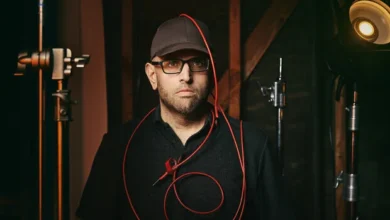
The core principle of the Lippmann process lies in its ingenious use of interference patterns. As explained by Jon Hilty, a contemporary master of alternative photographic processes and a leading authority on the Lippmann method, the technique involves placing a fine-grained, panchromatic black and white photographic emulsion in direct contact with a mirror. When light strikes the emulsion, it is reflected back by the mirror. This reflected light then interferes with the incoming light waves, creating a complex, three-dimensional interference pattern within the emulsion.
Decoding the Interference: How Color is Formed
"The maxima of this pattern activate the silver halides in the emulsion," Hilty elaborates in his detailed explanations. "When developed, the silver in the emulsion reconstructs this pattern when exposed to white light, giving us a color image." Essentially, the emulsion captures a microscopic record of the light’s wavelengths. The distance between the silver halide deposits, or the microscopic "mirrors" formed, directly corresponds to the wavelength of the light that created it. This is a fundamental concept of structural color, where color is not produced by pigments but by the physical structure of the material itself, dictating how light waves interact.
What sets Lippmann plates apart, and why they are described as the "only known way to permanently reproduce a full spectrum of color," is their direct capture of spectral information. Unlike modern digital displays or pigment-based printing, which approximate color using red, green, and blue (RGB) components, Lippmann plates record the entire visible spectrum as it exists. This means that the color perceived is not an interpretation but a direct physical manifestation of the light.
The Spectrometer’s Revelation: Unveiling the "Real" Photo
The limitations of viewing a Lippmann plate on a conventional screen become immediately apparent when discussing Mould’s video. Digital displays, by their very nature, rely on the RGB additive color model. This means that any color displayed is a combination of red, green, and blue light emitted by pixels. Therefore, a video of a Lippmann plate, viewed on a typical monitor, cannot truly convey the process’s unique color reproduction.
To bridge this gap, Mould utilizes a spectrometer, a scientific instrument that measures the intensity of light at different wavelengths. By examining typical photographs and Lippmann plates provided by Hilty through a spectrometer, the stark difference becomes undeniable. The spectrometer reveals how Lippmann plates capture and reproduce the actual spectral data of light, a level of fidelity that current display technologies cannot replicate. This direct spectral recording is what leads to the claim that one has "never seen a real photo" – because the photos we commonly see are, in a sense, interpretations, not direct spectral recordings.
A Legacy of Scientific Inquiry and Modern Relevance
The significance of Lippmann’s invention extends far beyond its historical context. Even today, the Lippmann process continues to attract serious scientific attention and research. Lippmann plates are recognized as "the earliest multi-spectral light measurements on record." This makes them invaluable historical artifacts for understanding the spectral properties of light in the late 19th and early 20th centuries.
Researchers are exploring how the principles behind the Lippmann process can be applied to modern technologies. The ability to record and reproduce spectral information directly has potential applications in fields such as advanced optics, material science, and even in the development of new forms of data storage. The intricate microstructures created by the interference patterns could inspire new ways to manipulate light at the nanoscale.
The Practical Hurdles: Why Lippmann Faded
Despite its scientific brilliance and unparalleled color fidelity, the Lippmann process never achieved widespread commercial success. Steve Mould outlines several key drawbacks that contributed to its decline:
- Irreproducibility: Each Lippmann plate is a unique, one-off creation. Making copies is virtually impossible, a significant limitation for commercial photography where duplication is essential.
- Extended Exposure Times: The process requires very long exposure times, often stretching into minutes. This made it impractical for capturing moving subjects or for quick portraiture.
- Restricted Viewing Angle: The interference patterns are angle-dependent. This means that the colors can shift or appear washed out when viewed from certain angles, limiting the viewing experience.
- Technical Precision: Achieving perfect results demanded extreme precision in exposure and development. Even minor deviations could lead to compromised color rendition.
These practical limitations ultimately paved the way for alternative color photography processes that, while perhaps not as spectrally accurate, offered greater ease of use and commercial viability.
The Rise of Autochrome and the Echoes of the Past
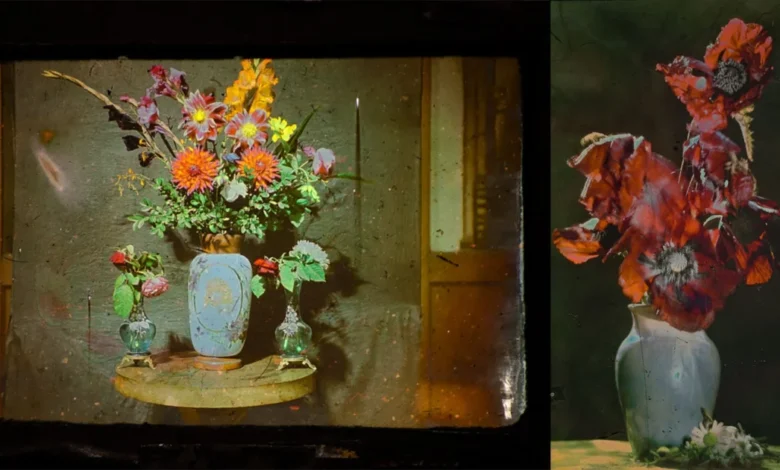
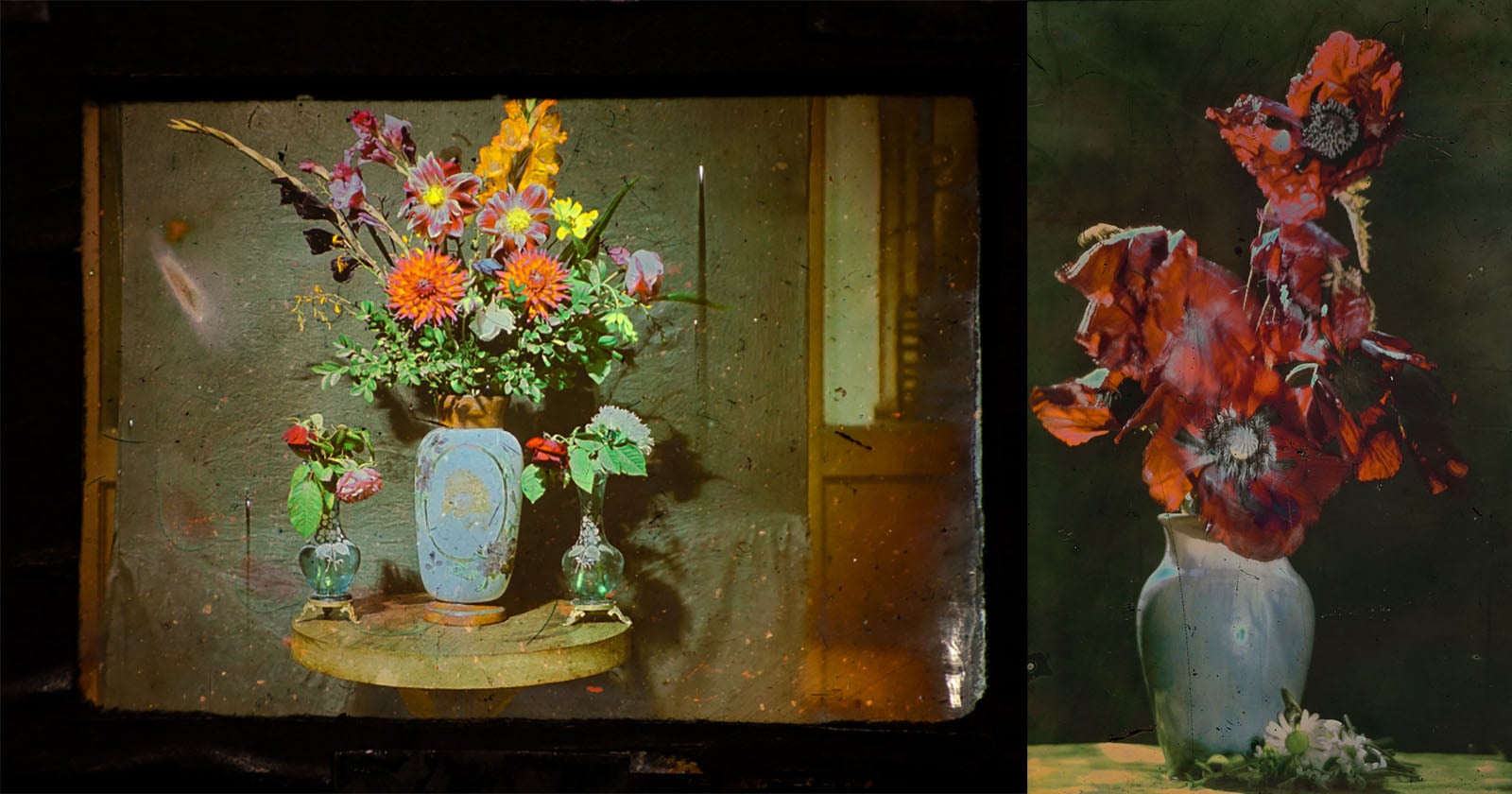
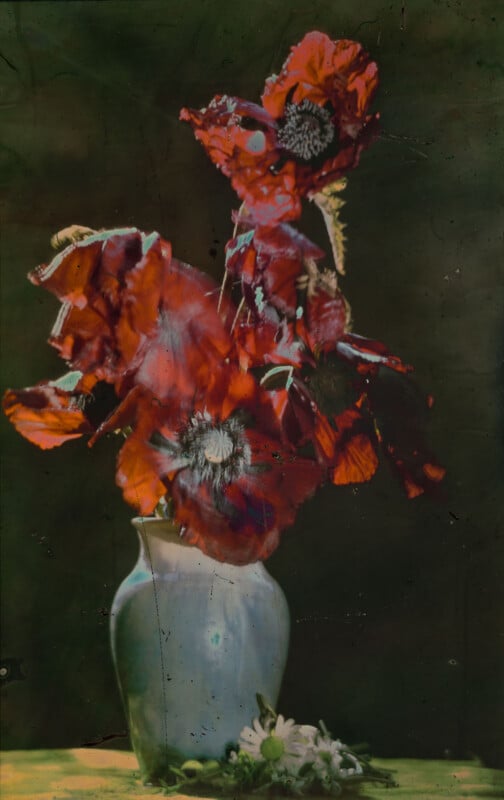
Ironically, the very photographer who is instrumental in demonstrating the Lippmann process today, Jon Hilty, is also one of the last practitioners of the Autochrome Lumière process. Invented by the Lumière brothers in 1903 and commercially released in 1907, Autochrome was a significantly more practical color photography method. It involved coating a glass plate with a layer of microscopic grains of potato starch dyed red-orange, green, and blue, acting as a mosaic color filter. While Autochrome produced beautiful, albeit somewhat impressionistic, color images, it was a subtractive process that relied on pigment mixing rather than direct spectral recording.
Hilty’s dedication to both the Lippmann and Autochrome processes highlights a fascinating intersection of photographic history. He represents a bridge between the earliest attempts at true color capture and the more accessible, yet less spectrally pure, methods that followed. His commitment to these alternative processes ensures that the knowledge and artistry behind them are not lost to time.
Empowering Exploration: DIY Lippmann and Autochrome
For those with a deep fascination for photographic history and a penchant for hands-on experimentation, the opportunity to engage with these processes is still available. Jon Hilty provides comprehensive guides for individuals interested in attempting Lippmann plate photography and Autochrome photography themselves. These guides offer detailed instructions and insights, allowing enthusiasts to replicate the magic of these early color techniques. The challenges and rewards of working with these historical processes offer a unique perspective on the evolution of photography and the science of color.
The enduring scientific interest in the Lippmann process, coupled with the efforts of individuals like Jon Hilty to preserve and demonstrate its techniques, underscores its lasting importance. Steve Mould’s video serves as a vital educational tool, bringing this complex yet extraordinary chapter of photographic history to a wider audience and prompting a re-evaluation of what constitutes a "real" photograph. The Lippmann process, in its ability to capture the very essence of light, continues to inspire awe and scientific curiosity, proving that even in the digital age, the past holds profound lessons for the future of visual representation.