IHG’s Strategic Pivot: Making Hotels Legible to AI While Defending the Direct Guest Relationship

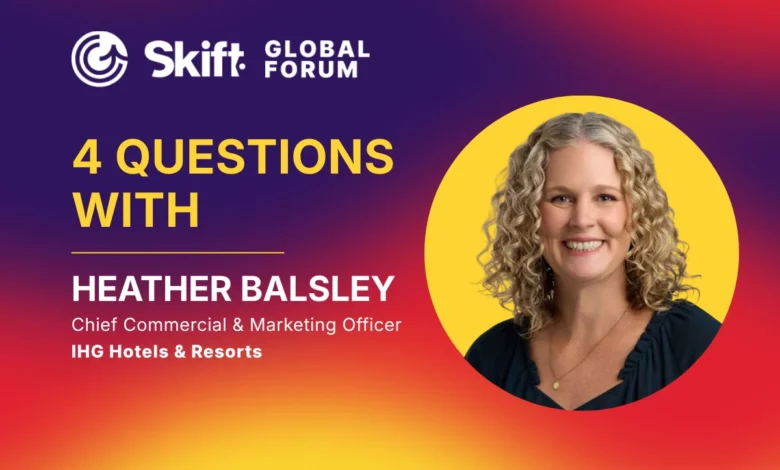
As artificial intelligence rapidly transitions from a novelty to the primary interface for travel discovery, IHG Hotels & Resorts is undergoing a fundamental transformation of its digital infrastructure. Heather Balsley, the group’s Chief Commercial & Marketing Officer, is spearheading a strategy designed to ensure that IHG’s portfolio of properties remains not only visible but compelling to the large language models (LLMs) that now function as the new “front door” for global travelers. This strategic realignment, which Balsley will discuss in depth at the upcoming Skift Global Forum in New York, reflects a broader industry recognition that in an era of automated search, content is no longer just marketing—it is the essential code that allows a hotel to exist in the digital marketplace.
The Shift Toward AI-Driven Discovery
The travel planning landscape has entered a period of unprecedented disruption. Traditionally, hotel discovery relied on search engine optimization (SEO) and the curation of online travel agencies (OTAs). Today, however, travelers are increasingly delegating their itinerary building to AI assistants that synthesize vast amounts of data to provide bespoke recommendations. This transition creates a binary reality for hoteliers: if a property’s digital footprint is not structured in a way that an AI model can parse, index, and contextualize, that property effectively does not exist for the modern traveler.
IHG’s response to this challenge is a comprehensive content overhaul slated for launch later this year. By implementing a new, proprietary platform for structured data management, the company aims to move beyond static, high-level descriptions. The goal is to provide granular, rich, and highly accurate data points that allow AI models to understand the nuanced value proposition of a specific property—whether it is a boutique Kimpton hotel suited for a creative business traveler or a Holiday Inn property offering specific family-oriented amenities.
Chronology of Digital Transformation in Hospitality
The evolution of how travelers find and book accommodation has been marked by distinct phases, each requiring a shift in corporate strategy:
- 1995–2005: The OTA Emergence: The rise of Expedia, Booking.com, and others shifted the power dynamic, forcing hotel chains to compete for visibility on third-party aggregators.
- 2005–2015: The Mobile Transition: The proliferation of smartphones necessitated a shift toward mobile-first booking interfaces and the "app-ification" of travel, leading to the rise of hotel loyalty apps.
- 2015–2023: The Data and Personalization Era: Brands focused on capturing first-party data to power loyalty programs and personalized email marketing.
- 2024–Present: The AI Synthesis Phase: We have entered an era where the “search” is replaced by the “assistant.” The primary challenge is no longer just ranking on a page, but being the primary entity cited by a generative AI agent.
The Data Imperative: Beyond Basic Amenities
For large hotel chains, the difficulty of this transition lies in the sheer scale of their portfolios. IHG operates thousands of properties across a diverse range of brands, from luxury to essential. Standardizing content across such a vast network is a logistical hurdle of immense proportions. Balsley emphasizes that the new platform is designed to provide greater flexibility, allowing individual properties to signal their unique attributes to AI algorithms more effectively.
Industry analysts note that this is a race to provide “high-fidelity” data. AI models function on the quality of their training and retrieval data; if a hotel’s digital description is vague, the AI will likely bypass it in favor of a competitor that provides clear, actionable metadata about its services, location, and guest experience. By investing in this infrastructure, IHG is effectively attempting to ensure that when a traveler asks an AI, “Where should I stay for a quiet, tech-enabled business trip in downtown London?” the AI possesses enough specific data to confidently recommend an IHG property as the optimal solution.
The Human Element: Why Channels Cannot Replace Brands
Despite the existential importance of AI, Balsley maintains a nuanced view regarding the future of the traveler-brand relationship. She argues that while AI may serve as the “discovery engine,” it does not hold the keys to the guest relationship itself. This perspective aligns with historical precedents in the travel industry. When online travel agencies first gained dominance, there were fears that hotels would lose their direct connection to customers. Instead, hotels evolved by doubling down on the value of their loyalty programs and the consistency of the in-stay experience.
Balsley’s hypothesis is that the "ownership" of the guest remains firmly within the domain of the brand. The AI may point the traveler to the door, but the brand’s loyalty ecosystem, personalized recognition, and the delivery of a superior stay are what turn a first-time guest into a repeat customer. This represents a strategic bifurcation: the company is aggressively optimizing for "discovery" (AI legibility) while simultaneously reinforcing "retention" (loyalty and brand equity).
Market Implications and Competitive Landscape
The strategy of making content “AI-ready” is expected to become the industry standard over the next 24 months. Competitors such as Marriott International and Hilton Worldwide are pursuing similar digital transformation paths, recognizing that the cost of being "unreadable" by AI is a decline in direct bookings and an increased dependence on intermediaries.
The implications for hotel owners—the entities that actually own the real estate—are significant. Owners are increasingly demanding that their brands provide the technical tools necessary to compete in this new environment. If a brand fails to secure a spot in an AI’s recommendation engine, the property’s occupancy rates, particularly among younger, tech-savvy demographics, are likely to suffer. Consequently, IHG’s investment is as much about protecting the return on investment for their property owners as it is about marketing.
Official Perspectives and Future Outlook
As the industry prepares for the Skift Global Forum in New York, the discourse among leaders like Glenn Fogel (Booking Holdings) and Ariane Gorin (Expedia Group) will likely center on this tension between platform power and brand identity. The consensus among top executives is that while the tools of discovery are changing at a velocity never before seen, the core principles of hospitality remain anchored in trust and consistency.
Balsley’s "test" for any new technology—whether it creates a better experience for guests while delivering value for owners—serves as a pragmatic filter against the noise of the current tech hype cycle. In an industry prone to chasing the "next big thing," this focus on the fundamentals of the hospitality business model is intended to provide a stable compass.
As the industry moves toward late 2026, the success of IHG’s initiative will be measured by its ability to influence the "black box" of AI recommendations. If the strategy proves successful, it will set a benchmark for how global hospitality brands balance the cold, algorithmic requirements of AI with the warm, human-centric nature of the guest experience. For now, the objective is clear: modernize the digital infrastructure, optimize the data, and ensure that when the future of travel planning arrives, IHG is the first name the AI provides.