Fujifilm X-M5 Versus Fujifilm X-E5: A Comprehensive Buyer Dilemma Between Pocketability and Premium Resolution

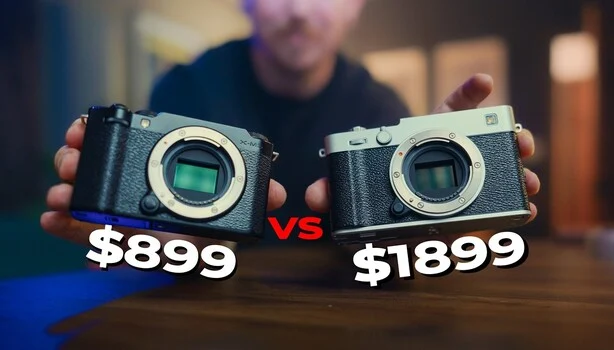
The modern digital camera market presents consumers with a fascinating paradox: two camera bodies can share a manufacturer, identical lens mounts, and overlapping feature sets while differing in price by roughly $1,000. This disparity forces prospective buyers to weigh the tangible value of premium craftsmanship, high-resolution sensors, and physical ergonomics against sheer budgetary pragmatism. In the case of the $800 Fujifilm X-M5 and the $1,800 Fujifilm X-E5, this financial chasm defines a deeper philosophical divide in mirrorless photography. Photographer Thomas J. McClure recently explored this exact dilemma, purchasing an X-M5 with personal funds while evaluating a manufacturer-loaned X-E5 over a multi-week testing period. His findings offer a nuanced look at how specifications on a manufacturer’s data sheet translate to real-world performance, shedding light on the fundamental question facing contemporary photographers: how much are premium build quality and ultra-high resolution actually worth?
Main Facts of the Comparison
To understand the debate between the Fujifilm X-M5 and the X-E5, one must first examine their shared engineering foundations. Both camera bodies utilize the popular APS-C sensor format, accept the same expansive ecosystem of Fujifilm X-mount lenses, rely on identical compact batteries, and incorporate a dedicated physical dial for accessing customizable film simulations.
Despite these internal similarities, the physical manifestations of the two cameras diverge sharply. The Fujifilm X-M5 is engineered for maximum portability. It is noticeably smaller and lighter than its sibling, allowing it to slip effortlessly into a standard jacket or coat pocket when paired with a low-profile pancake prime lens. However, this miniaturization comes with ergonomic compromises; users with larger hands frequently note that the X-M5 can feel fragile or toy-like without an aftermarket handgrip, which typically retails for around $20.
Conversely, the Fujifilm X-E5 provides a significantly more robust tactile experience. Featuring a cold-worked metal top plate, the X-E5 projects a traditional rangefinder aesthetic that feels substantial, balanced, and premium in the hand. This difference in build quality is the primary driver of the thousand-dollar price gap, targeting users who prioritize classic aesthetics and weather-resistant durability alongside optical performance.
Chronology and Testing Methodology
The evaluation process undertaken by McClure highlights the importance of extended real-world testing over initial specifications. The timeline began with the acquisition of the X-M5 as a personal tool, establishing a baseline of daily operation, menu navigation, and field performance. Subsequently, McClure integrated the borrowed Fujifilm X-E5 into his workflow for several weeks, subjecting it to street photography, architectural documentation, and casual video tests.
Following this intensive testing phase, the X-E5 was returned to the manufacturer, forcing McClure to spend a full month living exclusively with the X-M5. This separation period provided crucial perspective, allowing initial biases driven by spec-sheet envy to subside. During this time, early frustrations with the X-M5—particularly regarding its in-body image stabilization—were re-evaluated. McClure recognized that his discontent stemmed not from structural failures in the X-M5, but rather from prior conditioning by competing stabilization systems, such as those found in Panasonic’s Lumix lineup. By subsequently mounting the X-M5 to a dedicated external gimbal for video work, he was able to unlock the camera’s full potential, ultimately reframing his assessment of both devices.
Display Configurations and Video Capabilities
The interface design of a mirrorless camera heavily dictates its intended user base, and the screens on the X-M5 and X-E5 define entirely different shooting styles. The X-M5 features a fully articulating, flip-out vari-angle LCD screen—a configuration heavily favored by content creators, vloggers, and solo operators who need to monitor their framing from the front.
In contrast, the X-E5 employs a traditional tilt-only mechanism favored by street and documentary photographers who prefer a more discreet, streamlined profile. While the X-E5’s screen does tilt upward sufficiently to permit rudimentary self-framing for handheld vlogging, practical roadblocks quickly emerge; attaching an external microphone to the camera’s hot shoe entirely blocks the user’s view of the display.
Paradoxically, initial expectations regarding the video prowess of each camera were upended during field tests. The X-E5 benefits from a newer X-Trans 5 sensor and advanced processing pipelines, while the X-M5 boasts specialized video features such as 6.2K open-gate recording and anamorphic lens support. Yet, despite these advanced metrics, McClure concluded that neither camera functions ideally as a primary, dedicated video production tool. Instead, both bodies excel fundamentally as photographic instruments, with video serving as a secondary, highly capable utility rather than their core design purpose.
Sensor Performance and Image Quality
The most decisive factor in the X-M5 versus X-E5 debate lies in sensor resolution and the resulting image fidelity. The Fujifilm X-E5 houses a formidable 40-megapixel APS-C sensor, whereas the X-M5 utilizes a more traditional 24-megapixel chip.
In day-to-day shooting shared across social media platforms, the visual distinction between the 24-megapixel and 40-megapixel output is virtually imperceptible to the untrained eye. Both sensors deliver robust raw files offering extensive dynamic range and ample headroom for exposure recovery in post-processing. For photographers who shoot almost exclusively in raw format—treating Fujifilm’s acclaimed film simulations merely as live in-camera previews rather than final, immutable JPEGs—both bodies perform admirably.
However, the divergence in sensor resolution becomes starkly apparent during heavy cropping or when preparing large-format physical prints. The 40-megapixel chip in the X-E5 yields an intangible richness and edge acutance that continually draws the photographer back, despite the files requiring greater storage overhead and processing power. The X-M5’s 24-megapixel sensor remains entirely adequate for commercial web use and standard print sizes, but it cannot match the micro-contrast and resolving power of its more expensive stablemate.
Supporting Data and Market Context
To evaluate the broader economic implications of purchasing either the X-M5 or the X-E5, one must analyze the total cost of ownership within the photographic ecosystem. A camera body represents only half of the functional equation; high-performance optics often command prices equal to or exceeding the cost of the hardware housing them.
Investing $1,800 in an X-E5 body significantly strains the budget of an amateur hobbyist or enthusiast, frequently leaving insufficient capital to acquire high-grade glass—the primary determinant of optical sharpness and rendering character. Conversely, allocating roughly $800 to the X-M5 leaves substantial financial leeway, allowing a photographer to purchase multiple prime lenses or a versatile zoom within a single, unified budget. In fact, current retail pricing indicates that a consumer could theoretically purchase two X-M5 bodies for less than the cost of a single X-E5, creating interesting redundancy options for event shooters or travelers seeking a backup camera.
This pricing structure reflects a broader corporate strategy by Fujifilm over recent product cycles. The manufacturer has consistently pushed advanced processing engines, high-end film simulation dials, and sophisticated autofocus algorithms down into more compact, cost-effective bodies. This market trend directly rewards discerning buyers who carefully match their equipment purchases to their actual shooting habits rather than succumbing to the allure of high-end specifications.
Broader Impact and Industry Implications
The coexistence of the X-M5 and X-E5 highlights a maturing mirrorless camera market where manufacturers no longer lock basic performance behind exorbitant paywalls. Entry-level and mid-range bodies now possess processing capabilities that rival professional flagships from only a few years prior.
For the working professional or the affluent hobbyist with a penchant for tactile luxury and maximum resolution, the Fujifilm X-E5 represents a triumphant execution of rangefinder design—a device that provides profound aesthetic and tactile satisfaction. For the budget-conscious creator, traveler, or street photographer, the Fujifilm X-M5 punches far above its weight class, delivering professional-grade image capture while preserving capital for essential lenses.
Ultimately, McClure’s month-long trial without the X-E5 crystallized a pragmatic truth of modern photography: gear acquisition syndrome often obscures real operational needs. By accepting the X-M5’s limitations, supplementing its stabilization with external tools like gimbals, and leveraging its open-gate video modes, a lower-cost body can yield results that rival premium alternatives. Whether choosing the artisanal build quality of the X-E5 or the pocketable economy of the X-M5, buyers are ultimately forced to confront their own priorities, balancing the romance of premium engineering against the liberating utility of intelligent financial restraint.