From Sustainability to Restoration: The Global Shift Toward Regenerative Tourism Explored at the Singapore Symposium

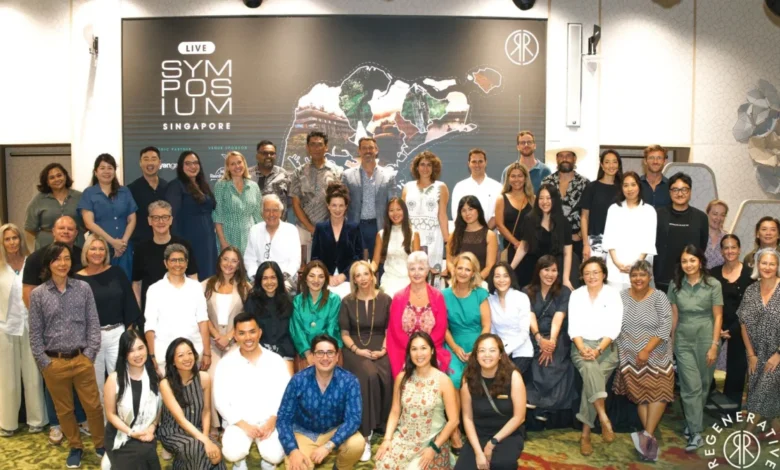
The global tourism industry is currently undergoing a fundamental paradigm shift, moving beyond the traditional framework of "sustainable travel" toward a more ambitious model known as regenerative tourism. While sustainability has historically focused on minimizing negative impacts—reducing plastic waste, lowering carbon footprints, and respecting local customs—the concept of regeneration asks a more proactive question: how can travel actively heal ecosystems, empower local communities, and restore the delicate balance between humanity and the natural world? This evolution in thought served as the central pillar of the recent Regenerative Travel Asia Symposium held in Singapore, an event that brought together industry leaders, environmental scientists, and policy advocates to redefine the future of global mobility.
For decades, the tourism sector has operated on an extractive model, where destinations are often treated as commodities to be consumed. The symposium in Singapore challenged this legacy, presenting a vision where tourism acts as a catalyst for net-positive change. Amanda Ho, the co-founder and CEO of Regenerative Travel, opened the proceedings by characterizing this shift as a transition from "head to heart." She argued that the industry must move away from a mindset of scarcity and competition toward one of abundance and collective responsibility. In this new era, tourism is not merely a commercial transaction but a complex, living relationship between people, places, and the planet.
The Philosophical Foundation: Connecting Humanity and Biodiversity
The symposium’s keynote address, delivered by renowned travel expert Juliet Kinsman, underscored the urgency of viewing humans not as observers of nature, but as intrinsic components of the Earth’s biodiversity. In a world increasingly dominated by digital interfaces and artificial intelligence, Kinsman highlighted a growing "disconnection crisis." She posited that the true goal of regenerative travel is the "regeneration of humanity" itself. By facilitating deep, meaningful connections with the natural world and diverse cultures, travel can serve as a corrective to the isolation of modern life, fostering a sense of stewardship that extends far beyond the duration of a holiday.
This philosophical shift is backed by a growing body of consumer data indicating that travelers are no longer satisfied with passive sightseeing. According to research presented by Jeremy Tran of Sustainable Travel Asia, citing data from Booking.com, approximately 85% of global travelers now express a desire for more sustainable travel options. More significantly, 69% of respondents stated they want to leave the places they visit in a better condition than when they arrived. This data suggests a massive, untapped market for regenerative experiences, yet a significant gap remains between the desire for "better travel" and the practical knowledge of how to achieve it.
The Influence of Social Media and the Intention-Action Gap
A critical point of discussion at the symposium was the role of social media in shaping modern travel behaviors. In the current digital landscape, destinations can become viral trends overnight, leading to sudden influxes of visitors that often overwhelm local infrastructure—a phenomenon frequently referred to as "overtourism." Tran noted that while social media can raise awareness, it often encourages "performative travel" rather than "intentional travel."
To bridge the gap between intention and impact, the symposium highlighted the need for travelers to move beyond following trends and instead choose experiences with deliberate purpose. This involves asking critical questions before booking: Does this business invest in its local community? Is there transparency regarding environmental claims? How does my presence here contribute to the long-term health of this ecosystem? By shifting the focus from "where" to "why," travelers can transform from consumers into active contributors to a destination’s well-being.
Wellness and the Relational Aspect of Regeneration
The intersection of wellness tourism and regeneration emerged as another dominant theme. Traditionally, wellness travel has been inward-looking, focusing on the restoration of the individual through spa treatments, yoga, or traditional healing practices. However, the regenerative model expands this definition, suggesting that individual well-being is inseparable from the well-being of the surrounding environment and community.
Symposium participants argued that it is no longer ethical to seek personal healing in a location where the local community is struggling or the ecosystem is being degraded. True wellness travel in the regenerative era must be "relational." This means that the healing practices used in resorts—often derived from Indigenous or local knowledge—should be practiced in a way that gives back to the keepers of that knowledge. It suggests a move toward an exchange-based model of tourism, where the visitor’s journey toward health simultaneously funds conservation efforts or community development projects.
Case Studies in Restoration: From Bali to Cambodia
To illustrate how these theoretical concepts are applied in the real world, the symposium featured several prominent case studies from the Asian hospitality sector. These examples provided a blueprint for how luxury and large-scale tourism can lead the way in restorative practices.
Maitri Fischer of Eco-Mantra, a leader in environmentally sustainable design, provided a sobering look at the tensions inherent in tourism growth, using Bali as a primary example. Bali has long been a global hotspot for tourism, but rapid, unchecked development has led to severe waste management crises and immense pressure on the island’s water table and infrastructure. Fischer argued that for tourism to be regenerative, communities must be more than just "hosts" or "employees"; they must be active decision-makers who have the power to shape how their land and culture are utilized.
In contrast to the challenges faced by over-developed regions, Song Saa Private Island in Cambodia was highlighted as a beacon of regenerative success. Built on what was once degraded land, the resort was founded with a specific vision to restore the local environment. Through the Song Saa Foundation, the resort was instrumental in establishing Cambodia’s first Marine Protected Area (MPA). Furthermore, the resort maintains a staff that is 75% local, ensuring that the economic benefits of tourism remain within the immediate community. By integrating guests into conservation activities—such as coral planting and community outreach—Song Saa transforms visitors into active participants in the island’s recovery.
Other industry leaders, including the Banyan Group, The Datai Langkawi, and Potato Head Bali, shared their respective journeys toward regeneration. The Datai Langkawi, for instance, has implemented comprehensive reforestation programs and zero-waste initiatives that have become central to the guest experience. These institutions demonstrate that high-end hospitality can coexist with, and even drive, large-scale environmental restoration.
Addressing the Risks: Greenwashing and Accessibility
As "regenerative travel" gains traction as a marketing term, the symposium participants issued a stern warning regarding the risk of "greenwashing." Just as "eco-friendly" was often used loosely in the past, there is a danger that "regenerative" could become a hollow label used to justify business-as-usual practices. For the movement to maintain its integrity, it must be supported by radical transparency, third-party verification, and measurable, long-term impact data.
Furthermore, a significant portion of the conversation was dedicated to the issue of accessibility. Historically, many sustainable and regenerative travel experiences have been positioned within the luxury sector, making them inaccessible to the average traveler. If regeneration is to address the global climate and social crises, it cannot remain an exclusive domain. The symposium called for a "democratization of regeneration," urging budget and mid-range operators to adopt these principles. This involves creating affordable, community-led experiences that allow every traveler, regardless of their budget, to contribute positively to the places they visit.
The Urgency of the Climate Crisis and the Healing Power of Tourism
The closing sessions of the symposium were framed by the escalating global climate crisis. Nick Hardman, a marine biologist and Head of Sustainability at the Banyan Group, reminded the audience that the window for meaningful action is closing. However, he also emphasized that tourism possesses a unique power to act as a "healing force." Because tourism is built on the human experience of beauty and connection, it has the ability to make global issues feel personal.
Hardman noted that when a traveler participates in a coral restoration dive or engages in a meaningful cultural exchange with an Indigenous community, they develop an emotional stake in the survival of that place. This emotional connection is a more powerful driver of change than any scientific report or policy document. "You have to make it personal," Hardman stated, suggesting that the ultimate goal of regenerative travel is to create a global citizenry that is deeply invested in the protection of the Earth.
A Roadmap for the Future Traveler
The transition from sustainable to regenerative tourism represents a maturation of the travel industry. It is an acknowledgment that simply "doing less harm" is no longer sufficient in an age of environmental collapse and social inequality. The symposium concluded with a call to action for both the industry and the individual traveler.
For the industry, the mandate is clear: redesign tourism products with nature and community at the center, rather than as an afterthought. This requires a shift in how success is measured—moving away from pure arrival numbers and toward metrics of community health, biodiversity gain, and cultural preservation.
For the traveler, the journey toward regeneration begins with a change in mindset. It involves seeking out transparency, supporting businesses that demonstrate a genuine commitment to local investment, and embracing the idea that travel is an opportunity to give as much as one receives. Regenerative travel is not about achieving perfection; it is about acting with intention. It is an invitation to move from a state of consumption to a state of contribution, ensuring that the act of exploring the world also helps to save it. Through this collective effort, travel can fulfill its highest potential: not just to change the traveler, but to strengthen and restore the very foundations of the world we all share.