The year is 2026, and the landscape of digital imaging is irrevocably altered. For the vast majority of consumers, the smartphone in their pocket has not merely met their photographic needs; it has surpassed them, wielding computational prowess that standalone cameras struggle to emulate for everyday snapshots. This reality presents an uncomfortable truth for the dedicated camera industry: the era of necessity has waned, replaced by the potent allure of desire. The critical question for camera executives is no longer how to engineer a sharper sensor or a faster burst rate, but rather a far more fundamental one: if the need for a dedicated camera has diminished, why would anyone still purchase one? The industry’s emergent answer, stumbled upon almost by accident, represents the most significant strategic insight of the past decade: people are no longer buying cameras out of necessity, but out of want. The path to survival now lies not in enhanced capability, but in cultivating desire.
The Illusory Promise of the Spec Race
For years, the camera industry engaged in a relentless competition, a veritable arms race fought on the battlefield of specifications. Megapixels climbed, frame rates accelerated, ISO ranges expanded, and ever-larger figures adorned product packaging. Each new generation promised leaps forward, margins that mattered immensely in marketing copy but yielded negligible improvements in the final photographic output for the average user. The consequence was a generation of technically magnificent, yet emotionally inert, black boxes. These devices performed admirably, executing every task with precision, but they failed to ignite any genuine passion or emotional connection in their users.
This "spec race" was an inherently flawed strategy, a losing battle against the smartphone. For casual photography, the smartphone had already triumphed on the fronts that mattered most to ordinary users: convenience, connectivity, computational power, and its ubiquitous presence in one’s pocket. While dedicated cameras retained undeniable advantages in optics, sensor size, lens selection, ergonomics, telephoto reach, and professional video capabilities, competing with a smartphone on the convenience and processing power for everyday snapshots was akin to challenging a calculator on its arithmetic prowess. The camera industry spent years sprinting to reclaim the very customer – the casual shooter – who had the least incentive to return.
The Resurgence of Desire: A New Paradigm
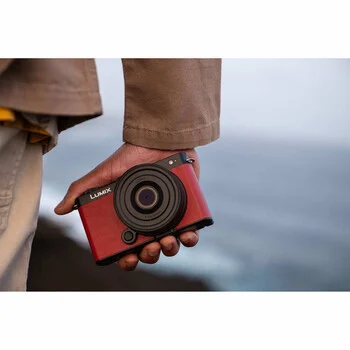
A palpable shift began to occur, marked by a select few camera models that demonstrated a compelling alternative. The Fujifilm X100VI, the Nikon Zf, and the Panasonic Lumix S9, alongside a growing cohort of other devices, embraced a seemingly radical notion: that a camera should be an object of beauty, an instrument one is eager to pick up and use.
For cameras like the Fujifilm X100VI and the Nikon Zf, this meant a return to tactile controls. Physical dials, reminiscent of a bygone era of photography, replaced complex menu systems. Their vintage-inspired designs evoked the golden age of photographic artistry, inviting users to engage with the process of image-making in a more deliberate and engaging manner. In the realm of style-conscious compacts, such as the Panasonic Lumix S9, the emphasis shifted to small, characterful bodies designed around the sheer pleasure of shooting and sharing, rather than an exhaustive spec sheet. In essence, these cameras competed on a dimension that smartphones fundamentally cannot replicate: the intrinsic experience of the act of shooting itself. The market’s enthusiastic response to these offerings served as definitive proof that the spec-race argument was indeed over.
The statistical evidence supporting this paradigm shift is compelling. The Fujifilm X100VI, launched in early 2024, rapidly became a highly sought-after item, with waiting lists stretching for six months and secondary market prices significantly exceeding its retail value. This demand persisted for an extended period. Notably, it emerged as the best-selling camera at Japan’s Map Camera in 2024, outperforming all compacts, interchangeable-lens bodies, and full-frame cameras on their extensive list, despite perpetual backorders. The Nikon Zf, a full-frame retro camera priced around $2,000, secured fourth place overall at the same retailer, demonstrating that a camera designed primarily around its tactile feel and aesthetic appeal could outsell more conventionally designed Nikon models. While Map Camera represents a single, albeit major, specialty retailer in Shinjuku, the broader market trends mirrored this phenomenon. Japanese domestic camera sales experienced growth in 2023, the first such increase in over a decade, a trend that has continued. While post-pandemic travel and leisure spending undoubtedly contributed to this rebound, the sales success of cameras like these strongly suggests that a renewed sense of desire was a critical factor. By some retail tracking estimates, sales of Japanese compact cameras more than doubled year-over-year in 2025.
Sony deserves credit for arguably igniting this trend, even if partly driven by its own strategic interests. By producing smaller, characterful camera bodies, Sony reminded consumers that cameras could be objects of aspiration. However, it was Fujifilm and Nikon that most fully grasped the implications of this evolving market. Fujifilm, with its celebrated film simulations and intuitive dial-driven controls, transformed shooting into a tactile ritual. Nikon, with its retro full-frame body, proved that a camera designed around aesthetics and feel could command a premium price and still outsell its more conventional counterparts. These manufacturers shifted their focus from asking "What does a camera need to do?" to "What should a camera make you feel?"
The Undeniable Proof of Affordable Delights
The "desire" thesis moves beyond conjecture and into undeniable fact when examining the proliferation of affordable, seemingly low-quality cameras. If premium retro bodies demonstrated that consumers would invest significantly in cameras they truly desired, then the explosion of inexpensive, "bad" cameras illustrates that desire has remarkably little to do with image quality itself.
Consider the Kodak Charmera, a thumb-sized keychain camera retailing for approximately $35. It captures 1.6-megapixel images with a resolution of roughly 1,440 pixels wide – a specification comparable to early camera phones. By every technical metric, its imaging capabilities are demonstrably poor. Reviewers have often described it as one of the worst cameras they have ever encountered, with smartphones effortlessly surpassing it in every spec-sheet measurable category. Yet, the Charmera went viral, sold out immediately upon launch, attracted scalpers, and, perhaps most tellingly, garnered both the iF Design Award and the Red Dot Design Award, two of the most prestigious honors in the global design community. A 1.6-megapixel device producing soft, noisy snapshots is being celebrated by the very industry that obsesses over corner sharpness and dynamic range.
The reason for this success lies at the core of this article’s argument. The Charmera’s imperfect images are not a flaw to be overcome; they are the product. Its lo-fi aesthetic delivers a nostalgic, imperfect, "of-the-moment" look that a generation raised on flawless digital output actively seeks. This is a reaction against images that are too clean, too corrected, and too perfect to feel authentic. The camera is sold in blind boxes, transforming the purchase into a collectible game, and it attaches to a bag as a charm as much as a functional tool. No one is buying the Charmera to produce high-quality photographs; they are purchasing it because it is fun, distinctive, and possesses a unique personal appeal, embodying the purest possible expression of want over need. This same logic fuels an entire category of cameras, extending far beyond mere "retro" styling. It encompasses Fujifilm’s dial-driven bodies, pocketable Ricoh GR IV compacts, creator-focused compacts, budget point-and-shoots, screenless, distraction-free models like the Camp Snap, the stone-paper Paper Shoot camera, and the toy and keychain cameras that exist solely to deliver an emotional experience rather than a digital file. What unites these diverse offerings is not a vintage look, but their compactness, low-friction operation, and personality-forward design. These are cameras one wants to carry because using them is an enjoyable experience, not a chore.
The fact that a $35 toy camera and a $4,000 Leica are propelled by the same underlying force speaks volumes about where the industry’s true value resides in 2026. It is not in the sensor’s technical specifications, but in the intangible quality of "wanting."
Navigating the Inherent Tensions
It is crucial to acknowledge that this pivot towards desire is not without its inherent risks. To suggest otherwise would be disingenuous. Desire, as a foundation for product strategy, is inherently more fragile than capability. A technical advantage is measurable and enduring; a compelling "vibe" can dissipate as cultural trends evolve. The boom in cheap cameras, in particular, bears the hallmarks of a fad, and some of its manifestations are undoubtedly transient. This reality should temper any manufacturer tempted to stake their entire business on novelty keychain cameras.
Furthermore, the question of substance behind the styling is paramount. A retro-styled camera with genuine engineering prowess, such as the X100VI or the Zf, represents a legitimate product. However, this trend also invites cynicism, and the industry has, at times, earned it. Canon’s recent reissuance of the PowerShot Elph 360 HS, a 2016 point-and-shoot resurrected in 2025 with largely identical specifications, fewer wireless features, and an increased price, capitalized on the compact camera trend without offering genuine innovation. Retro styling can become a thin veneer for indifference, a deception that discerning buyers will eventually recognize. Even in genuine efforts, seams appear. The Nikon Zf, while aesthetically pleasing, loses some of its vintage charm when paired with a modern Z-series lens laden with buttons and lacking an aperture ring, a juxtaposition where carefully crafted vintage appeal clashes with modern functionality.
The issue of scarcity also looms large. Fujifilm’s CEO has openly stated that producing too many cameras and lowering prices would be detrimental, citing Leica as a premium-value model to emulate. While Fujifilm denies that shortages are a deliberate strategy, asserting that they are producing and shipping the X100VI as rapidly as possible, both claims can coexist. The company may indeed face genuine supply constraints while simultaneously benefiting from the prestige that permanent waitlists confer. The danger lies in how this situation is perceived by consumers. A buyer eager to purchase a camera at its stated price, without engaging in a lottery or enduring a six-month wait, may reasonably conclude that scarcity is being tolerated rather than actively addressed, even if that is not the explicit intention. Desire is a powerful engine, but an industry that relies on frustrated demand for an air of mystique is playing a precarious game that can ultimately curdle into resentment.
The Unquestionably Correct Path Forward
Despite these acknowledged challenges, the industry’s pivot is unequivocally the correct strategic decision. The alternative – continuing to compete with smartphones on technical capability – is a path leading towards obsolescence. By rediscovering the essence of a camera as an object of desire, a tactile and characterful instrument worth wanting for its own intrinsic qualities, the industry has found a defensible niche that smartphones cannot easily penetrate. While phones will always offer superior convenience, connectivity, and computational power for casual shooting, they will never provide the visceral pleasure of using a well-crafted instrument for the deliberate act of creating an image. This distinction – the sheer pleasure derived from the object itself and the intentionality of the photographic process – is not a mere marketing gimmick; it represents the entire future of the dedicated camera. The companies that truly understand and embrace this shift are the ones that will remain relevant and prosperous in the coming decade.
The most astute move the camera industry has made in years is to cease striving to be "needed" and instead focus on being "wanted." It has become evident that this pursuit of desire was, and remains, the only winnable fight.
For those drawn to the deliberate, hands-on craft that these cameras encourage, foundational knowledge in manual controls is essential. Resources like "Photography 101" offer a solid grounding in using manual settings with intention. Furthermore, "The Well-Rounded Photographer: 8 Instructors Teach 8 Genres of Photography" provides invaluable insight into how professional photographers effectively utilize simple, characterful tools across a diverse range of creative endeavors.
Related posts: