Fujifilm Expands Instant Photography Ecosystem With Launch of instax Pal 2 Camera and Link WIDE 2 Printer

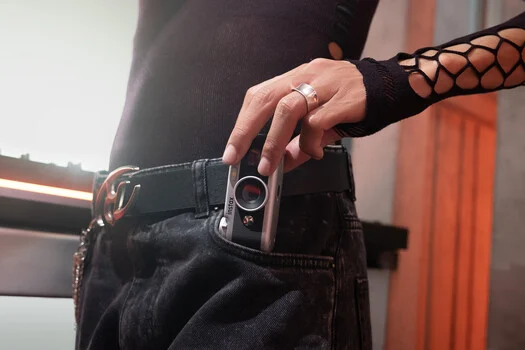
Fujifilm has officially announced the expansion of its popular instax ecosystem with the introduction of the instax Pal 2 digital camera and the instax Link WIDE 2 smartphone printer. This dual hardware release brings meaningful updates to two of the brand’s most distinctive imaging accessories. The original instax Pal, which debuted as a pocket-sized digital camera designed to feed the broader instax printing workflow, receives a substantial ergonomic and creative overhaul—most notably through the inclusion of a physical optical viewfinder and a top-mounted 1.0-inch LCD screen. Simultaneously, the instax Link WIDE 2 succeeds the original Link WIDE model introduced in 2021, upgrading the smartphone printing experience by introducing a dynamic new Photo Mixer collage feature that streamlines multi-image layouts.
Both devices are engineered to cater to the growing demographic of consumers who appreciate the tactile, analog nature of instant film while relying on digital capture methods, smartphones, and app-based customization. With an anticipated release window set for late September 2026, the instax Pal 2 will retail for $169.95 in black and white finishes, while the instax Link WIDE 2 will be available in Duo Beige and Duo Blue colorways for $179.95.
Evolution of the instax Ecosystem: Background Context and Chronology
The introduction of the instax Pal 2 and Link WIDE 2 represents the latest milestone in Fujifilm’s sustained campaign to bridge the gap between digital convenience and physical instant photography. Over the past decade, the instax brand has experienced a remarkable resurgence, driving significant revenue for Fujifilm’s imaging division even as traditional standalone digital camera sales fluctuated. The original instax Pal, launched to mixed curiosity, carved out a niche as an ultra-compact, standalone digital capture device that intentionally eschewed a built-in printer, forcing users to think differently about how digital files are transmitted and rendered onto physical film.
By separating the camera from the printer, Fujifilm encouraged a decentralized shooting style where users could snap candid moments with a device weighing a mere 41 grams, select their favorite frames via a smartphone application, and output them to a variety of compatible hybrid cameras or smartphone printers like the instax mini Link 3, SQUARE Link, mini Evo, and mini LiPlay.
The launch of the second-generation Pal and Link WIDE 2 follows years of user feedback emphasizing the desire for more tactile composition tools—such as an optical viewfinder—and faster, more intuitive collage generation. Industry analysts note that Fujifilm’s iterative updates are carefully calculated to maintain consumer engagement in a crowded market where mobile phone photography dominates, ensuring that physical prints remain relevant through novelty, personalization, and cross-platform connectivity.
Detailed Breakdown of the Fujifilm instax Pal 2
The Fujifilm instax Pal 2 maintains its core identity as a dedicated digital camera rather than an all-in-one instant camera. Measuring a compact 37.0 x 42.0 x 42.3 mm and weighing approximately 41 g, the camera is designed for maximum portability. Images are recorded onto internal memory—which holds approximately 100 frames—or expanded via microSD, microSDHC, and microSDXC memory cards supporting capacities up to 2 TB.
At the core of the imaging pipeline is a 1/3.06-inch CMOS sensor equipped with a primary color filter. The camera offers two primary resolution settings: a high-quality mode capturing 3,776 x 2,832-pixel images, and a low-quality setting capturing 1,280 x 960 images. Fujifilm notes that a standard 1 GB memory card can accommodate approximately 400 high-quality frames or up to 3,400 low-quality files.
Optically, the Pal 2 features a fixed lens with a 28mm-equivalent focal length and a bright f/2.2 aperture, supporting a versatile shooting range from 8 cm to infinity. Exposure management is handled via Program AE, utilizing an automatic ISO range from ISO 100 to 1,600 and automatic shutter speeds spanning from 1/4 second to an impressive 1/8,000 second. Photographers can fine-tune exposures using compensation ranging from -2 EV to +2 EV in 1/3 EV increments, supported by TTL 256-segment multi-metering and automatic white balance.
Hardware Additions: Viewfinder, Display, and Creative Modes
The most prominent upgrade on the instax Pal 2 is the addition of a physical optical viewfinder, allowing users to compose shots in bright sunlight where electronic displays might falter. Complementing this is a small 1.0-inch LCD screen positioned on top of the camera body, enabling users to quickly review captured frames prior to wireless transfer.
Creative versatility has also been expanded. The new instax Animation mode empowers users to capture a sequence of 10 consecutive frames, which can subsequently be combined into a digital flipbook-style animation. Furthermore, the camera incorporates five distinct filter themes, each containing six individual creative effects. Through the companion instax Pal smartphone app, users can further customize their captures by selecting mini, SQUARE, WIDE, or frameless formats, alongside adding personalized text, borders, and digital stickers.
The built-in flash system operates within an effective range of approximately 60 cm to 1.5 m, offering automatic, forced-on, or forced-off settings. For self-portraits and group compositions, the camera includes dual self-timer options set at approximately two or ten seconds.
Connectivity, Power, and Workflow Integration
Wireless communication is facilitated via Bluetooth 5.1, allowing the companion smartphone app to function as a remote shutter while managing rapid image transfers. Alternatively, a built-in USB Type-C port provides a wired connection, yielding a swift transfer time of approximately 0.75 seconds per image, compared to roughly 15 seconds over Bluetooth.
Because the Pal 2 lacks an integrated printing mechanism, its output workflow relies on exporting files to external printing hardware. Fujifilm explicitly certifies compatibility with the instax mini Link 3, instax SQUARE Link, instax mini Evo, and instax mini LiPlay. Powering the device is a non-removable internal lithium-ion battery, which recharges via USB Type-C in approximately two to three hours, contingent upon ambient temperature. Each retail package includes a USB Type-C cable, a hand strap, a camera angle adjustment accessory, and a one-year limited warranty.
Introducing the Fujifilm instax Link WIDE 2
Running parallel to the Pal 2 launch, the Fujifilm instax Link WIDE 2 is engineered specifically for users who prefer the expansive canvas of instax WIDE instant film. Retailing for $179.95, the printer connects wirelessly to smartphones via Bluetooth 5.1 and supports direct printing from the instax Pal 2 as well as select digital cameras like the Fujifilm X-T30 III.
The defining software enhancement for the Link WIDE 2 is the Photo Mixer function embedded within the updated instax Link WIDE smartphone application. When users select a series of images from their mobile camera roll, the application automatically aggregates them into collage-style layouts. Using the "Mix it" function, the software can rapidly generate up to five distinct layout variations before the user applies manual adjustments, text overlays, or filters.
The accompanying application also boasts an extensive library of creative tools, including seasonal frames, emojis, and more than 1,600 digital stickers. Users can switch between two distinct color profiles: instax-Rich Mode, which delivers deeper, more vibrant color saturation, and instax-Natural Mode, which maintains a softer, more traditional photographic aesthetic.
Advanced Features: QR Print Mode and Video Extraction
Retaining and expanding upon the utility of its predecessor, the Link WIDE 2 includes QR Print Mode. This function allows users to embed a scannable QR code directly onto the physical print, which can link seamlessly to external URLs, geographic location data, hidden text messages, or audio recordings. Fujifilm notes that data linked to audio and text messages remains securely hosted for up to two years. Additionally, the application features a video frame extraction tool, enabling users to isolate and print a single crisp frame from moving footage.
Technical Specifications and Print Quality of the Link WIDE 2
The printer accepts JPEG, PNG, HEIF, and DNG image files, processing source files scaled to 800 x 1,260 pixels. Utilizing a three-color OLED exposure system, the device outputs prints at a resolution of 12.5 dots/mm (318 dpi) with an 80 µm dot pitch and 256 gray levels per RGB color channel.
Physical dimensions for the Link WIDE 2 measure 128.3 x 139.9 x 33 mm, excluding projecting parts, with a total weight of approximately 387 g without a film pack loaded. The internal, non-removable lithium-ion battery is rated to deliver approximately 100 prints on a full charge, with a recharge cycle taking between 90 and 120 minutes depending on thermal conditions and remaining capacity. Power consumption during operation hovers around 3 W.
The printer utilizes instax WIDE film packs, which measure 86 x 108 mm overall, providing a generous image area of 62 x 99 mm. Fujifilm quotes an approximate data transmission and printing time of 12 seconds per image, after which the instax WIDE chemical development process takes roughly 90 seconds to fully materialize, depending on environmental temperature. The retail box bundles the printer with a 30 cm USB cable, a stability stand, a hand strap, a quick start guide, and a one-year limited warranty.
Broader Industry Implications and Market Analysis
Market analysts observing the simultaneous release of the instax Pal 2 and the instax Link WIDE 2 point to a sophisticated strategy by Fujifilm. By catering to two distinct consumer impulses—ultra-portable, playful digital capture on one hand, and large-format physical curation on the other—the company reinforces its dominant market share in the instant photography segment.
The instax Pal 2 appeals directly to younger demographics and casual shooters who prioritize pocket-sized convenience and social media interoperability over heavy technical control. Meanwhile, the Link WIDE 2 addresses the demands of event photographers, artists, and families who require higher-capacity storage, advanced collage automation, and the distinctive theatricality of wide-format film.
As digital fatigue continues to drive consumers toward tangible, analog hobbies, Fujifilm’s ongoing refinement of its hardware and app ecosystems suggests that instant photography is no longer viewed as a nostalgic novelty, but as a permanent, evolving pillar of modern visual culture. Both devices are scheduled to hit retail channels in late September 2026.
Related posts: