The Audacious Feat: Karl Kruger Conquers 750 Miles of Inside Passage on a Stand-Up Paddleboard

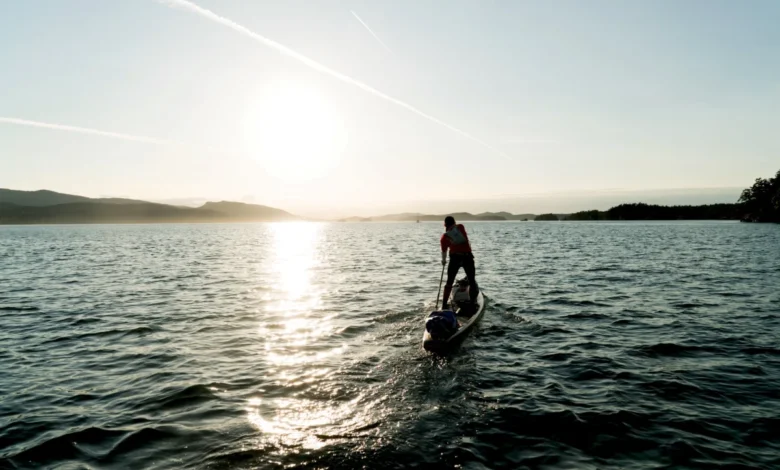
The Race to Alaska (R2AK) proudly labels itself "a stupid worth doing," a sentiment perfectly encapsulated by the extraordinary 2017 entry of Karl Kruger, who embarked on the harrowing 750-mile journey from Port Townsend, Washington, to Ketchikan, Alaska, entirely on a stand-up paddleboard (SUP). This audacious endeavor not only redefined the limits of human endurance in the realm of unsupported waterborne expeditions but also etched Kruger’s name into the annals of adventure sports history as the first person to complete the R2AK on a SUP.
The Race to Alaska: A Crucible of Endurance
The R2AK is an unparalleled maritime challenge, renowned for its brutal simplicity and unforgiving nature. Conceived by the Northwest Maritime Center, the race prohibits engines, outside assistance, and pre-arranged supply drops, forcing competitors to rely solely on human or wind power and their own self-sufficiency. The organizers famously compare it to "the Iditarod, on a boat, with a chance of drowning, being run down by a freighter, or eaten by a grizzly bear," a testament to the myriad dangers lurking within the cold, often treacherous waters of the Inside Passage.
The race is divided into two stages: an initial 40-mile "Proving Ground" from Port Townsend to Victoria, British Columbia, designed to weed out unprepared teams, followed by the main 710-mile "To Alaska" leg to Ketchikan. The first team to reach Ketchikan receives $10,000, while the second team earns a set of steak knives, a humorous nod to the race’s irreverent spirit. Beyond the prizes, the true allure lies in the monumental challenge itself—a test of skill, resilience, and mental fortitude against some of the most dynamic marine environments in North America.
Since its inception, the R2AK has attracted a diverse array of vessels, from high-performance trimarans and rowboats to bespoke pedal-powered crafts. However, even within this spectrum of unconventional entries, Karl Kruger’s decision to tackle the course on a stand-up paddleboard stood out as particularly audacious, prompting the R2AK crew’s memorable observation in their official competitor description: "…And there is a guy on a paddleboard" – a phrase that became an emblem of his unique challenge.
Karl Kruger’s Audacious Entry: A Singular Vision
Karl Kruger, hailing from Orcas Island, Washington, was not merely a participant but a pioneer. His vessel for the 2017 race was a custom-designed and reinforced 19-foot Bark Stand-up Paddle Board. Unlike most competitors who benefit from sails or enclosed hulls providing shelter and storage, Kruger would be exposed to the elements for the entirety of the journey, battling strong currents, unpredictable winds, and the constant threat of hypothermia, all while balancing on a narrow board.
His preparation for such an undertaking would have been meticulous and exhaustive. Training would have encompassed not only thousands of miles of paddling to build the necessary physical stamina but also extensive planning for navigation, nutrition, hydration, and emergency protocols. On a SUP, every inch of space is precious, and every item carried contributes to drag and weight. Kruger’s gear choices—from lightweight, waterproof bivouac equipment to energy-dense, non-perishable food—would have been critical. Self-sufficiency was paramount; without an engine, he couldn’t simply motor out of trouble, and without external support, every repair, every meal, every decision rested solely on his shoulders.
The sheer scale of paddling 750 miles, unsupported, across open water and through complex channels, is difficult to overstate. For context, typical long-distance SUP expeditions might cover a few hundred miles over several weeks, often with land support or planned stops. Kruger’s challenge was on an entirely different magnitude, closer in spirit to solo ocean crossings than conventional SUP touring.
Navigating the Perilous Inside Passage
The Inside Passage presents a formidable gauntlet of challenges for any mariner, let alone a lone paddler on a SUP. The route is characterized by:
- Powerful Tidal Currents: The narrow passages and fjords create immense tidal flows, sometimes exceeding 10 knots. Paddling against these currents is futile, requiring intricate knowledge of tidal charts and precise timing to utilize favorable flows. Kruger would have had to plan his paddling windows around slack tides and advantageous currents, often meaning early morning starts or late-night pushes.
- Unpredictable Weather: The Pacific Northwest is notorious for its rapidly changing weather patterns. Sunshine can quickly give way to squalls, torrential rain, and gale-force winds. Exposure to these elements over weeks can lead to severe hypothermia, exhaustion, and equipment failure. Kruger’s choice of attire—multiple layers, drysuits, and waterproof outerwear—would have been essential for survival.
- Rough Waters: While much of the Inside Passage is sheltered, there are significant stretches of open water, particularly crossing large inlets and straits, where waves can build quickly, making balance and forward propulsion extremely difficult and dangerous on a SUP.
- Marine Traffic: The passage is a busy commercial waterway, frequented by large container ships, tugboats with barges, fishing fleets, and ferries. These vessels create significant wakes and pose collision risks, especially for a low-profile craft like a SUP. Kruger would have had to maintain constant vigilance and adhere strictly to maritime navigation rules.
- Wildlife Encounters: While generally not aggressive, encounters with large marine mammals like whales, sea lions, and seals are common. The remote sections of the coast also harbor grizzly bears, necessitating careful campsite selection and food storage protocols to avoid dangerous interactions.
- Isolation and Mental Fortitude: Weeks of solitude, physical exertion, sleep deprivation, and the constant pressure of navigation and survival take a heavy toll on mental health. Maintaining focus and morale in the face of adversity is arguably as crucial as physical strength.
The 2017 Race: A Defining Moment
Karl Kruger commenced the 2017 Race to Alaska with a single-minded determination that captivated the R2AK community. His progress was closely watched, with many questioning the feasibility of his endeavor. Yet, against all odds and the immense physical and logistical hurdles, Kruger persevered. He demonstrated an unparalleled level of endurance, resilience, and navigational skill.
Throughout his journey, Kruger would have faced the quintessential R2AK "Type 2 or 3 fun"—experiences that are miserable at the time but become cherished memories of accomplishment later. There would have been moments of profound doubt, bone-chilling cold, muscle-searing fatigue, and the constant threat of capsizing or being swept off course. His custom Bark board, designed for stability and speed, proved its mettle, enduring countless hours of paddling through diverse conditions.
On June 27, 2017, after 14 days, 6 hours, and 29 minutes of relentless paddling, Karl Kruger arrived in Ketchikan, Alaska. He crossed the finish line to a rousing welcome, not only from race organizers and locals but also from a global audience that had followed his incredible journey. His completion of the R2AK on a SUP was not merely a finish; it was a groundbreaking achievement, shattering preconceived notions of what was possible in extreme paddle sports.
Reactions, Legacy, and Broader Implications
Kruger’s accomplishment sent ripples through the adventure racing community and the wider world of stand-up paddleboarding. For the R2AK organizers, his entry and successful completion perfectly embodied the spirit of the race—pushing boundaries, embracing the unconventional, and proving that human will can overcome seemingly insurmountable obstacles. Their initial humorous description, "And there is a guy on a paddleboard," transformed into a testament to an extraordinary human achievement.
For the sport of stand-up paddleboarding, Kruger’s feat provided an unprecedented benchmark for endurance and expedition paddling. It showcased the potential of SUPs beyond recreational use or short-distance racing, inspiring a new generation of paddlers to consider longer, more challenging journeys. His race highlighted the robust design capabilities of modern SUPs and the incredible adaptability of human athletes.
The broader implications extend to the philosophy of adventure and self-reliance. In an era where technological advancements often dominate discussions of exploration, Kruger’s manual, self-supported journey served as a powerful reminder of the enduring allure and profound satisfaction derived from pitting oneself against nature with minimal external aid. It underscored the values of preparation, resourcefulness, and mental fortitude that are central to all forms of unsupported human-powered expeditions.
Karl Kruger’s 2017 Race to Alaska stands as a monument to human determination. His "Heart of Gold" team, comprising solely himself, conquered 750 miles of one of the world’s most challenging waterways, not with advanced technology or a conventional craft, but with a paddleboard and an indomitable spirit. His journey cemented the R2AK’s reputation as a proving ground for the most audacious adventurers and solidified his place as a pioneer in extreme endurance sports, inspiring countless others to look beyond perceived limitations and embrace their own "stupid worth doing."