The Unseen Blueprint: Mastering Motorsports Photography Through Strategic Planning

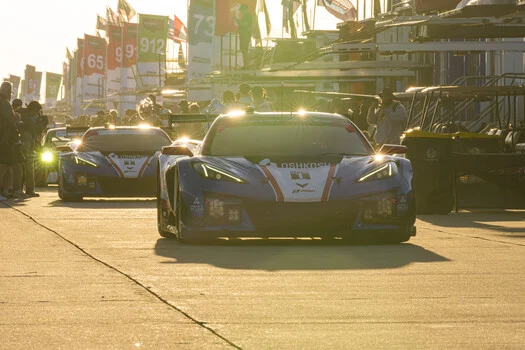
Technical prowess and a keen visual sense are undeniably crucial for any motorsports photographer striving for excellence. Yet, a fundamental element often overlooked, and sometimes even actively avoided, is the meticulous art of planning. Without foresight, a breathtaking cover shot, such as a sleek race car bathed in the ethereal glow of a sunrise, would remain an elusive dream. While the romantic notion of arriving at an event and allowing pure inspiration to dictate the photographic narrative is appealing, such an approach frequently leads to more missed opportunities than successful captures. In the high-octane world of sports car racing, where events can range from brief 45-minute sprints to grueling 24-hour endurance challenges, a photographer must possess a clear understanding of the desired imagery, the methodologies to achieve it, the optimal track locations for specific shots, and the precise timing of day to execute them.
This comprehensive pre-visualization is not a minor detail; it is a significant undertaking. Arriving at the first day of on-track activity without a well-defined plan often results in a frantic scramble, leading to the inevitable omission of key photographic moments. Even with a robust strategy in place, it is not uncommon for photographers to conclude an event recognizing that certain intended shots remain unfulfilled. Such challenges are an inherent part of the profession.
The Framework of a Successful Shoot: Deconstructing the Photographer’s Plan
A seasoned motorsports photographer’s preparation begins long before the roar of engines fills the air. The process typically involves a detailed review of the official event schedule, dissecting the timing of each crucial session requiring coverage. This usually encompasses multiple practice sessions, qualifying rounds, and one or two races for each participating series. Practice sessions can vary significantly in duration, from a concise 30 minutes to an extensive 90 minutes, depending on the racing category. Race durations are equally diverse, spanning from the aforementioned 45-minute contests to the monumental 24-hour endurance events that test the limits of both machines and photographers.
The on-track action often commences on a Thursday, with different racing series competing until the ultimate championship race concludes on Sunday. In instances where the primary race is scheduled for a Saturday, the entire event timeline typically shifts back by a day. For photographers focusing on single events, it might be easy to glance at a race schedule and perceive an abundance of time. However, without clearly defined photographic goals and a strategic roadmap to achieve them, the probability of falling short of expectations escalates dramatically.
As the photographer meticulously notes the practice times and the intervals between sessions, the intricate process of planning unfolds. A primary consideration is identifying which teams and individual cars within the various series require photographic attention. This can be a straightforward task if the photographer’s primary focus is on the headline series and a limited number of competing teams, perhaps five to eight. However, the complexity increases significantly when a photographer is tasked with capturing specific teams or drivers across multiple series. In such scenarios, the time available for organizing content or editing images between events can become virtually nonexistent, demanding an exceptional level of efficiency.
Harnessing Light and Location: The Strategic Advantage
Once the types of photographs required are established, along with the most advantageous trackside locations for their capture, and the on-track schedules are understood, the critical factor of lighting comes into play. This is where sophisticated tools and applications become indispensable. Websites and mobile applications such as Suncalc.org and Sun Surveyor offer invaluable insights into the sun’s trajectory throughout the day, enabling photographers to predict optimal lighting conditions for specific shots.
By meticulously planning these elements before arriving at the circuit, photographers equip themselves with the means to achieve their objectives. The reality of a race weekend is that unforeseen circumstances and "curveballs" are inevitable. It is highly unlikely that a plan will be executed precisely as envisioned. However, a well-developed plan provides a crucial foundation, a starting point from which to adapt and improvise. For instance, if a client has a non-negotiable requirement for a sunset photograph featuring a prominent sponsor’s banner in the background, the photographer must be strategically positioned at the correct corner of the track, with camera settings pre-dialed, well in advance of the peak sunset hour.
Case Study: The Mobil 1 Twelve Hours of Sebring – A Planner’s Perspective
The Mobil 1 Twelve Hours of Sebring, a historic endurance race held annually at Sebring International Raceway in Sebring, Florida, provides an excellent illustration of the challenges and strategic considerations faced by motorsports photographers. Consider the official schedule for Thursday, the busiest day leading up to the main race. This particular day often sees multiple racing series on track for practice or qualifying sessions. For photographers covering clients across several of these series, the demands on their time and organizational skills are exceptionally high.
To simplify the analysis, let us focus on the premier WeatherTech Championship series. On a typical Thursday at Sebring, this series might have three distinct practice sessions: the first from 10:05 AM to 11:35 AM, a second from 4:00 PM to 5:45 PM, and a final session from 7:45 PM to 9:15 PM. The official sunrise at Sebring occurs around 7:30 AM, with sunset shortly thereafter at approximately 7:40 PM. This temporal window offers a dynamic range of lighting conditions, from the harsh midday sun to the softer hues of dawn and dusk, each presenting unique photographic opportunities and challenges.
Imagine a client’s specific requests: a photograph incorporating the adjacent Sebring Regional Airport, ideally with an aircraft visible in the background, another shot featuring the iconic Mobil 1 Fan Bridge, and a quintessential sunset image captured from Turn 1.
Navigating the Schedule: Optimizing for Key Shots
Several vantage points at Sebring offer the potential to frame a race car with the airport environment and a parked airplane in the background. Fortunately, this particular shot often aligns well with midday conditions, characterized by strong, direct sunlight. Utilizing tools like Suncalc.org, a photographer can determine that the morning practice session on Thursday, or the qualifying session on Friday (scheduled from 11:25 AM to 12:40 PM), presents an ideal window for capturing the airport scene.
During these times, Suncalc data would indicate that the sun is high in the sky, resulting in relatively short shadows. This positioning allows for the alignment of the race car and the airport backdrop while effectively keeping the sun out of the frame, preventing lens flare and blown-out highlights. This foresight enables the photographer to confidently plan the execution of one of the required shots. This precise knowledge proved particularly beneficial during a recent event. While sharing a golf cart with another photographer who needed a different angle during the morning practice, the planner knew they could secure the airport shot on Friday, an opportunity that was successfully realized.
The Sunset Conundrum and Creative Solutions
The next objective, a photograph featuring the Mobil 1 Fan Bridge, presents an interesting confluence of opportunities. The Fan Bridge strategically spans the track at the conclusion of the front straight, immediately preceding the entry into Turn 1. This precise location is also a renowned "go-to" spot for capturing sunset imagery. Therefore, it is feasible to fulfill both requirements with a single photographic effort. However, the unpredictability of race events can intervene. For instance, the specific cars the photographer needs to capture might be executing a pit stop precisely during the golden hour of sunset, a scenario that indeed unfolded.
Consulting Suncalc again for the sunset trajectory reveals that the primary WeatherTech Championship series will only be on track during daylight hours for the race itself on Saturday. This means the coveted sunset shot with the Fan Bridge is an exclusive Saturday opportunity, with no practice sessions offering a similar lighting scenario.
The sun is projected to begin crossing the track around 6:55 PM, with sunset occurring at 7:37 PM. This establishes the prime window for capturing the iconic Sebring sunset, with the Mobil 1 Fan Bridge prominently in the background, between approximately 7:05 PM and 7:25 PM. However, at 7:00 PM, the photographer was engaged in shooting for another client on pit lane. This created a logistical challenge: positioning oneself at the end of Turn 1 amidst dozens of other photographers vying for the same iconic shot would be impractical.
Adaptability and Innovation: Turning Challenges into Opportunities
A stroke of luck presented itself. One of the primary teams the photographer was contracted to cover was scheduled for a pit stop shortly after 7:00 PM. This provided a unique opportunity to capture them in the pits during sunset, with the Mobil 1 bridge visible in the background. With the pit stop occurring at the end of pit lane, conveniently located near the team’s designated pit box, the photographer seized the moment. After concluding the assignment for the other client, they quickly made their way to pit lane. Fortunately, no other teams were occupying the ideal vantage point. Positioned perfectly, the photographer awaited the opportunity.
The resulting images were highly satisfactory, even though the classic Turn 1 sunset shot could not be achieved. Following the pit stop, the photographer proceeded to Turn 1 to capture additional photographs. Although the sun was high and unobstructed, leading to some overexposed images, several pleasing shots were secured.
While on-site, the Sun Surveyor application serves as a valuable tool for refreshing the photographer’s understanding of the sun’s position at various turns as they respond to the unfolding events of the day. A "Lite" version of the app is available, offering fundamental features, but the paid version, priced at $9.99, unlocks its full potential. The "Live" feature, in particular, has proven to be an invaluable asset, justifying its cost. Even with the app readily accessible on a mobile device during the race, the pre-event planning remained the cornerstone of the photographer’s success.
The Creative Dividend of Deliberate Planning
The notion that planning stifles creativity is a misconception. On the contrary, meticulous logistical work undertaken before a shoot can significantly enhance creative output. By understanding precisely where and when specific photographic opportunities can be realized, photographers are liberated. Once the essential shots are secured, they are free to experiment with more artistic compositions, explore varied shutter speeds, and push the boundaries of their creative vision.
This principle extends beyond motorsports photography. Whether the genre is commercial work, portraiture, landscape, or fine art, meticulous planning can elevate results across all outdoor photography categories. A thorough examination of project objectives, location scouting, and an understanding of celestial body positions (sun and moon) are paramount. A well-crafted plan acts as a catalyst, strengthening creativity and expanding the perceived limits of what is photographically achievable. The detailed analysis of the Mobil 1 Twelve Hours of Sebring exemplifies how foresight, combined with on-the-fly adaptation, leads to successful outcomes in a dynamic and demanding environment. The strategic application of planning is not merely a procedural step; it is the unseen blueprint that underpins photographic excellence.