The sixth level is the most spectacular… and most scary. This stark declaration, overheard by early visitors, hints at the unique spiritual and physical journey offered by Wat Phu Tok, an extraordinary temple complex carved into a towering red rock mountain in Thailand’s northeastern Bueng Kan province. Officially known as Wat Jetiyakhiri, the temple is more commonly referred to by its local Isan name, Phu Tok, meaning "lonely mountain," a moniker that becomes acutely apparent as one approaches the solitary, imposing rock formation rising from the surrounding plains. This off-the-beaten-path attraction, nestled in a region less frequented by international tourists, presents an unparalleled blend of natural beauty, architectural ingenuity, and spiritual depth, drawing visitors seeking peace, expansive landscapes, and distinctly adventurous experiences.
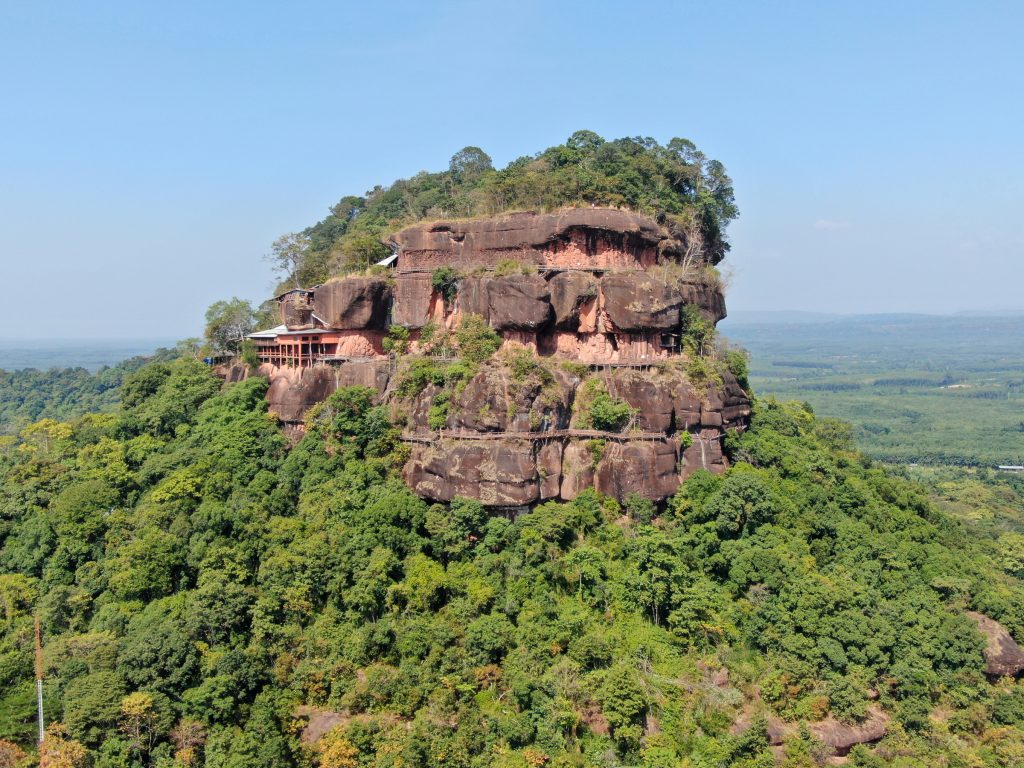
Wat Phu Tok stands as a testament to the profound dedication of its founder, Monk Luang Pu Juan. The mountain, a geological marvel rising 359 meters, was historically a remote and rugged area, known for its abundant wildlife, including venomous snakes, which paradoxically made it an attractive sanctuary for meditation. It was within this challenging environment that Luang Pu Juan envisioned and began constructing a spiritual haven. His ambitious project involved an intricate network of wooden staircases, ladders, and walkways, meticulously designed to connect various shrines and meditation spots across seven distinct levels. These seven levels were deliberately established to symbolize the seven stages of Buddhist meditation, offering pilgrims a physical and spiritual ascent. Tragically, Luang Pu Juan’s life was cut short in an airplane accident, but his vision perseveres through the ongoing maintenance and reverence of Wat Phu Tok, which continues to awe visitors with its majestic presence.
The journey to Wat Phu Tok, located approximately 30 minutes by road from Bueng Kan city, begins at the mountain’s base, where a substantial temple complex, a serene lake, and a sprawling park area provide ample parking and initial points of engagement. The entrance to the ascent is unmistakable, marked by a clear pathway leading directly towards the imposing red rock face. What immediately strikes visitors is the sheer isolation of the mountain, an isolated monolith that bears a striking resemblance to the famed Sigiriya rock fortress in Sri Lanka, albeit on a smaller scale.

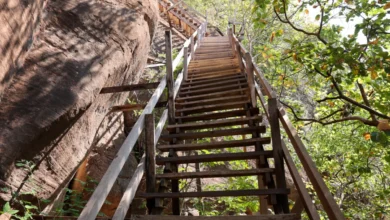
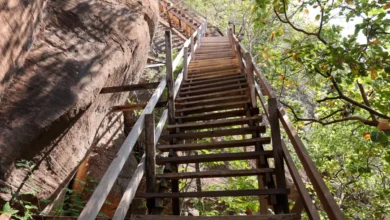
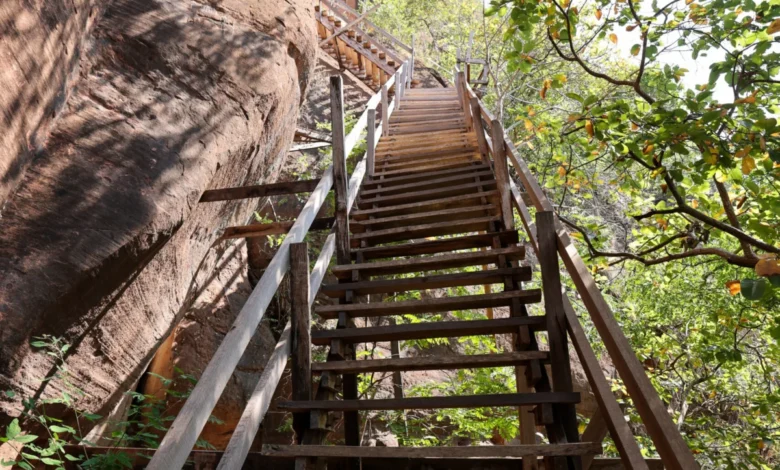
The initial climb up Wat Phu Tok is characterized by relatively gentle wooden staircases, gradually increasing in steepness and complexity. While the wooden planks, some of which are angled and can creak underfoot, might initially inspire trepidation, the construction is generally perceived as stable and secure. The lower levels offer glimpses of shrines and smaller religious structures, but the primary objective for most is to continue upward, progressively immersing oneself in the temple’s unique architecture and the unfolding natural vistas.
Ascending the Spiritual Levels

As visitors progress to the fifth level, the landscape of the temple complex transforms significantly. This level marks a notable increase in the number of temples, shrines, and halls, with much of the trail traversing the natural terrain rather than precariously clinging to cliff faces. It is here that one encounters what is believed to be the mountain’s largest ordination hall, a significant structure within the spiritual heart of Wat Phu Tok.
A particularly captivating feature, often cited as a highlight alongside the famed sixth level, is a small rock temple situated on the side of the main mountain. This hidden sanctuary is accessed via a short detour from the main circumference trail. Following a path that leads to an elevated rock walkway, visitors will find themselves crossing a delicate wooden bridge to reach this unique temple perched at the mountain’s edge. This slight deviation from the main path offers a sense of discovery and rewards explorers with breathtaking views and an intimate connection with the mountain’s natural contours.

The Iconic Sixth Level: A Test of Courage and Awe
The ascent to the sixth level introduces visitors to the most exhilarating and visually dramatic section of Wat Phu Tok. Approximately half of this level’s circumference is composed of an intricate network of wooden plank walkways, ingeniously anchored directly into the sheer rock cliff face. The remaining portion of the sixth level is accessible via solid ground. It is, however, the cliff-hanging wooden walkways that constitute the pinnacle of the Wat Phu Tok experience, offering a thrilling and undeniably unnerving perspective.

Despite the dizzying heights and the apparent precariousness of the construction, the wooden walkways are generally considered to be well-maintained and remarkably stable. Even for individuals with a fear of heights, the perceived safety of the structure allows for a profound appreciation of the engineering and the spectacular panoramic views. The sheer drop below, combined with the unique construction, creates an unforgettable sensory experience. Visitors are strongly advised to remain attentive to their footing, as even a minor misstep on these elevated pathways could have severe consequences.
From the sixth level, visitors are treated to awe-inspiring vistas of the Mekong River basin stretching out below, framed by the lush green expanse of Bueng Kan province. The 360-degree views are breathtaking in every direction, enhanced by the refreshing mountain breeze. The opportunity to circumnavigate the entire sixth level allows for a comprehensive appreciation of the surrounding landscape and the remarkable achievement of the temple’s construction.

The Summit: The Seventh Level and its Legends
The final ascent leads to the seventh and uppermost level of Wat Phu Tok. This level is steeped in local lore, with reports suggesting it is home to venomous snakes, leading to a cautionary approach for visitors who venture to the summit. Access to the seventh level is often undertaken with a degree of caution, and while there are no elaborate walkways or shrines at the very top, it offers the summit’s commanding views. For many, the primary draw remains the unique architectural marvels of the sixth level, with the seventh serving as a brief, albeit potentially adventurous, conclusion to the climb. The true essence of Wat Phu Tok, for most, lies in the experience of navigating its cliff-hugging pathways and the spiritual ambiance cultivated across its accessible levels.

Broader Context and Implications
Wat Phu Tok’s unique design and challenging ascent contribute significantly to its status as one of Thailand’s most distinctive religious sites. The temple’s remote location in Bueng Kan province, a region often overlooked in favor of more established tourist destinations, highlights the diverse cultural and natural heritage of Thailand’s Isan region. The temple’s architectural ingenuity, particularly the wooden walkways, represents a remarkable feat of engineering and a profound commitment to creating a spiritual space that integrates seamlessly with its natural environment.

The temple’s enduring appeal lies in its dual capacity to offer both profound spiritual contemplation and an adrenaline-pumping adventure. This combination attracts a wide range of visitors, from devout Buddhists seeking a sacred pilgrimage site to adventurous travelers eager to explore Thailand’s less conventional attractions. The ongoing maintenance of the wooden structures and pathways is crucial for ensuring the safety of visitors and the preservation of this iconic landmark.
The existence of Wat Phu Tok also underscores the importance of preserving and promoting lesser-known tourist destinations within Thailand. By drawing attention to places like Bueng Kan and its unique attractions, such as Wat Phu Tok, the Thai tourism industry can foster more balanced development and offer travelers a more authentic and diverse experience of the country’s rich cultural tapestry. The temple serves as a powerful reminder of human ingenuity, spiritual devotion, and the breathtaking beauty that can be found in the most unexpected of places.

Visitor Information and Tips
For those planning a visit to Wat Phu Tok, several practical considerations can enhance the experience. The temple is accessible year-round, though visiting during the cooler months, from November to February, is generally recommended for more comfortable climbing conditions. Appropriate attire, respecting the religious nature of the site, is essential, with modest clothing covering shoulders and knees being advisable. Comfortable walking shoes with good grip are paramount for navigating the stairs and walkways. Carrying water is also recommended, especially during warmer periods. For those who wish to capture the experience, a camera is a must, though visitors are reminded to prioritize safety while taking photographs. The approximate time required to explore the temple fully, including the ascent and descent, can range from two to three hours, depending on the visitor’s pace and how much time is spent at each level.

The journey to Wat Phu Tok is more than just a physical climb; it is an immersion into a unique spiritual landscape, a testament to human perseverance, and an unforgettable encounter with Thailand’s adventurous spirit. The temple’s iconic cliff-hugging walkways, particularly on the sixth level, offer a perspective that is both terrifying and exhilarating, solidifying its reputation as a must-visit destination for those seeking an experience beyond the ordinary.