Navigating the Red Centre: Why the Australian Outback Remains the Ultimate Frontier for 4WD Exploration and Adventure


The Australian Outback represents one of the most expansive and formidable wilderness regions on the planet, covering approximately 5.6 million square kilometers, or nearly 70 percent of the Australian landmass. While the majority of Australia’s 26 million residents are concentrated within 50 kilometers of the coastline, the interior remains a vast, sparsely populated expanse characterized by ancient geological formations, extreme climatic conditions, and a total absence of modern infrastructure in many sectors. For domestic and international travelers alike, the Outback is not merely a destination but a logistical challenge that demands specialized equipment, specifically four-wheel-drive (4WD) vehicles, to navigate the rugged terrain that defines the heart of the continent.
The Geographical and Statistical Reality of the Australian Interior
To comprehend the necessity of a 4WD vehicle in the Outback, one must first understand the sheer scale of the region. Australia is geographically comparable in size to the contiguous United States, yet its interior population density is among the lowest in the world. In the Northern Territory, for instance, the population density is approximately 0.2 people per square kilometer. This isolation means that once a traveler moves inland from the coastal fringes of Western Australia, Queensland, or South Australia, the safety net of urban civilization disappears.

The distance between essential services is a primary factor in Outback travel planning. A standard transit between Alice Springs and Uluru involves a 450-kilometer journey through arid desert. More remote routes, such as the Canning Stock Route or the Gibb River Road, can require travelers to carry enough fuel and water for stretches exceeding 600 kilometers without a single service station. Statistical data from regional tourism bodies suggests that over 60 percent of the roads in the deep Outback remain unsealed, consisting of gravel, sand, or dirt, which are susceptible to rapid deterioration based on weather patterns.
Topographical Challenges: Corrugations, Sand, and River Crossings
The transition from sealed bitumen to unsealed tracks is often abrupt. The "Outback track" is characterized by three primary topographical obstacles: corrugations, deep sand, and seasonal water crossings.
Corrugations are perhaps the most pervasive challenge for vehicles. These are rhythmic, ripple-like ridges that form on the surface of dirt roads due to the movement of heavy vehicles and the action of wind. Driving over corrugations at incorrect speeds can lead to mechanical failure, including the shearing of bolts, the destruction of suspension systems, and the cracking of chassis frames. A 4WD vehicle, equipped with heavy-duty shock absorbers and high-clearance suspension, is designed to mitigate these vibrations, whereas a standard all-wheel-drive (AWD) or two-wheel-drive (2WD) vehicle lacks the structural integrity to survive prolonged exposure to such surfaces.

Sand presents a different set of risks. In regions like the Simpson Desert or the coastal reaches of the Kimberley, tracks often consist of deep, soft sand. Navigating these areas requires the ability to lower tire pressure to increase the vehicle’s footprint—a maneuver that necessitates a 4WD system to maintain momentum. According to recovery experts in the Northern Territory, "bogging"—where a vehicle becomes stuck in sand—is the leading cause of non-mechanical travel delays in the Outback.
Furthermore, the northern regions of Australia experience a distinct "Wet Season" from November to April. During this time, river crossings, such as the infamous Pentecost River crossing on the Gibb River Road, can swell rapidly. High-clearance 4WDs equipped with "snorkels" (raised air intakes) are essential for traversing these waterways. Without such equipment, engines are at risk of "hydrolocking," a terminal mechanical failure caused by water entering the combustion chamber.
Logistical Preparedness and the Role of Technology
The Australian Outback is an environment where logistical errors can escalate into life-threatening emergencies. The Royal Flying Doctor Service (RFDS) frequently responds to incidents involving unprepared travelers who have succumbed to heat exhaustion or dehydration following a vehicle breakdown.
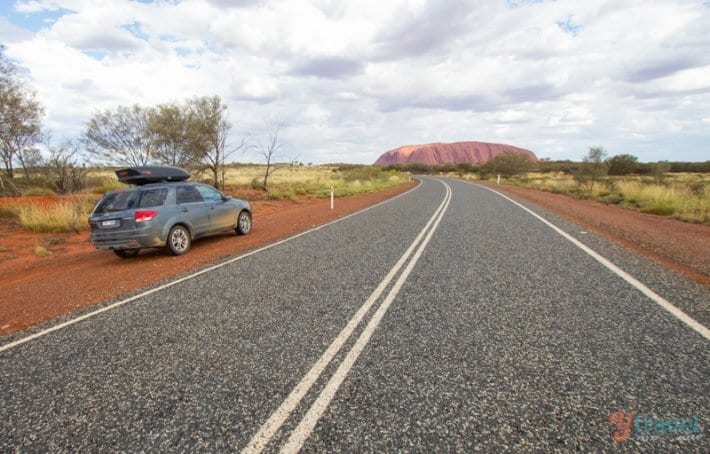
Modern Outback exploration relies on a "redundancy" model of safety. This includes:
- Fuel Management: Carrying auxiliary fuel tanks or jerry cans, as fuel consumption can double when driving through heavy sand or mud.
- Communication: Relying on satellite phones or Personal Locator Beacons (PLBs), as mobile phone reception is non-existent across roughly 90 percent of the Outback.
- Water Reserves: A standard recommendation of 5 to 7 liters of water per person, per day, with a three-day emergency reserve.
The emergence of GPS and satellite mapping has improved navigation, yet traditional paper topographic maps remain a staple for serious explorers, as digital systems can fail in extreme heat, which frequently exceeds 40 degrees Celsius (104 degrees Fahrenheit) in the summer months.
Wildlife Hazards and Environmental Variables
Driving conditions in the Outback are further complicated by the presence of large wildlife and feral animals. Kangaroos, emus, wild camels, and roaming cattle are common on remote roads. These animals are most active during "crepuscular" periods—dawn and dusk—leading to a general rule among experienced Outback drivers to avoid travel after dark.

Impacts with large animals like cattle or camels can be fatal and almost certainly result in the total loss of a vehicle. Consequently, most 4WDs used for Outback travel are fitted with "bull bars" (reinforced metal frames) to protect the radiator and engine components from animal strikes. Environmental factors such as dust storms and "willy-willies" (dust devils) can also reduce visibility to near-zero levels instantaneously, requiring drivers to be adept at handling low-visibility conditions.
The Rise of Guided 4WD Tours vs. Independent Exploration
Given the high barrier to entry regarding equipment and expertise, the tourism industry has seen a significant shift toward organized 4WD tours. These operations, managed by companies such as APT or local Indigenous-led outfits, provide a "derisked" version of the Outback experience.
Guided tours offer several advantages:
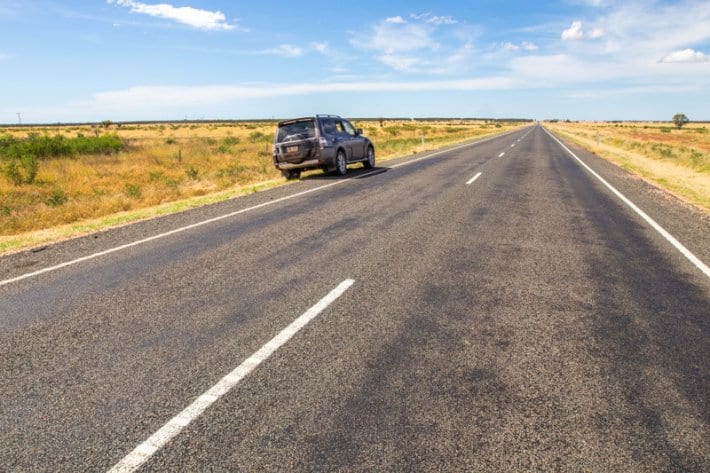
- Expert Navigation: Drivers are trained in advanced 4WD recovery and mechanical repair.
- Cultural Context: Many tours operate through Indigenous protected areas, providing travelers with access to ancient rock art sites and cultural knowledge that is often inaccessible to the general public.
- Infrastructure: Tour operators often maintain private campsites or have agreements with remote cattle stations for accommodation, solving the "where to sleep" dilemma in areas where national park campsites may be booked months in advance.
However, the "Grey Nomad" culture—retired Australians who spend months or years circumnavigating the continent—continues to drive the demand for high-end, self-contained 4WD caravans and campers. This demographic contributes significantly to the economies of remote towns like Birdsville, Oodnadatta, and Halls Creek, which rely on seasonal tourism for their survival.
Conservation and the Role of Parks Australia
The management of the Outback’s most iconic sites, including Kakadu National Park, Uluru-Kata Tjuta, and the Bungle Bungles (Purnululu National Park), falls under the jurisdiction of Parks Australia and state-based agencies. These organizations balance the dual mandates of tourism and conservation.
Many of these parks contain fragile ecosystems that have existed for millions of years. The use of 4WD vehicles is strictly regulated to designated tracks to prevent soil erosion and the destruction of native flora. In recent years, there has been an increased focus on "Caring for Country," an Indigenous land management philosophy that integrates traditional knowledge with modern conservation science. This has led to the temporary closure of certain 4WD tracks during the wet season or for cultural ceremonies, a move generally supported by the scientific community to allow landscapes to regenerate.

Broader Impact and Future Outlook
The future of Outback travel is currently at a crossroads between tradition and modernization. State governments are increasingly investing in "sealing" iconic dirt routes to encourage more tourism. For example, the project to bitumen-pave the Tanami Road—a 1,015-kilometer stretch connecting Central Australia to the Kimberley—is expected to increase freight efficiency and tourist access.
While infrastructure improvements make the region more accessible, critics argue that "taming" the Outback removes the sense of adventure and self-reliance that defines the Australian identity. Furthermore, the transition to electric vehicles (EVs) poses a significant challenge for remote travel. The current lack of charging infrastructure in the Outback means that the traditional internal combustion engine 4WD remains the only viable option for long-range desert exploration for the foreseeable future.
In conclusion, the Australian Outback remains one of the world’s last true frontiers. Its appeal lies in its refusal to be easily conquered. For those equipped with a 4WD and the requisite knowledge, it offers a profound experience of silence, scale, and ancient beauty. For the unprepared, it remains a harsh and unforgiving landscape. As tourism continues to evolve, the 4WD will remain the essential tool for those seeking to touch the "Red Heart" of the continent, ensuring that the spirit of exploration continues in one of the most remote corners of the globe.