Tasmania’s Culinary Renaissance: A Comprehensive Guide to the Island State’s 14 Essential Dining Destinations

The island state of Tasmania has rapidly evolved from a remote southern Australian outpost into one of the Southern Hemisphere’s premier culinary tourism destinations. Renowned globally for possessing some of the cleanest air, pristine wilderness, and freshest coastal waters on the planet, the region has leveraged its unique geography and climate to build a thriving farm-to-table economy. Driven by a surge in artisanal producers, sustainable agriculture, and world-class cool-climate viticulture, Tasmania’s gastronomy centers heavily on premium seafood, artisanal cheeses, heirloom produce, and ethically raised livestock.
Culinary tourism has become a primary economic driver for the island, attracting international and domestic travelers eager to experience its distinctive regional flavors. A comprehensive review of the island’s premier dining establishments highlights fourteen standout locations that define modern Tasmanian cuisine, spanning from Elizabeth Town and Launceston in the north to Hobart, the Derwent Valley, and New Norfolk in the south.
North and Midlands: Farm-Gate Innovation and Cool-Climate Viticulture
The northern half of the island offers a landscape defined by rolling agricultural plains, historic townships, and established vineyards. This region’s culinary identity is deeply rooted in heritage farming and artisanal craftsmanship.
Christmas Hills Raspberry Farm Cafe, Elizabeth Town
Situated in the agricultural heartland of Elizabeth Town, the Christmas Hills Raspberry Farm Cafe represents a textbook example of agritourism integration. Established decades ago to cultivate cane fruit in Tasmania’s temperate northern climate, the farm operates an on-site dining venue that utilizes immediate harvest pathways. The menu incorporates fresh berries across breakfast, lunch, and specialty snack services, anchored by signature house-made items such as raspberry-infused mud cake, scones with house-made jam, and artisanal sorbets. The property capitalizes on its rural setting, offering patrons views of the working berry fields and adjacent freshwater lakes.

Saturday Harvest Market, Launceston
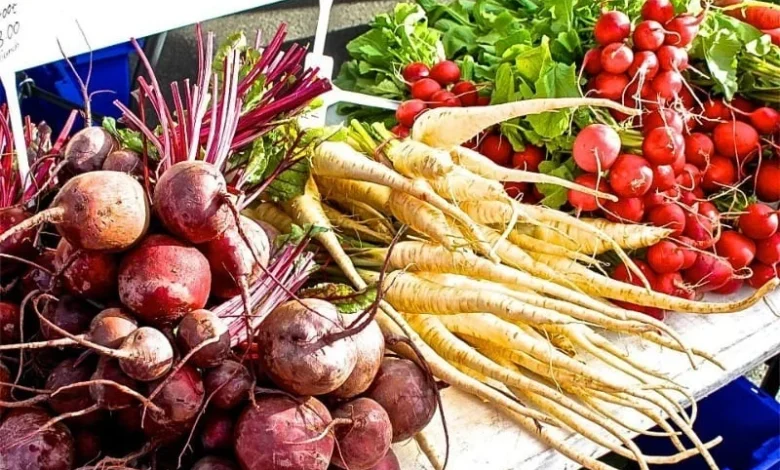
Operating weekly in the Cimitiere Street Car Park, the Launceston Harvest Market serves as a vital infrastructure hub for small-scale regional vendors. The market strictly regulates its vendor base to include only food and beverage enterprises operating within Tasmania, with a substantial concentration of stalls managed by certified organic producers. Featuring approximately 135 participating small businesses, the marketplace provides access to seasonal vegetables, artisanal cheeses, and specialty proteins, including sustainably sourced regional meats such as wallaby. The market functions primarily as a direct-to-consumer distribution model, supporting regional food security and sustainable agricultural practices.
Josef Chromy Vineyard Restaurant, Relbia
Located just south of Launceston on a 61-hectare historic estate, Josef Chromy Wines has operated a prominent cool-climate winemaking enterprise since 1990. The estate’s on-site restaurant translates this viticultural expertise into a modern Australian dining program. Overlooking manicured gardens, vineyards, and a central lake, the kitchen focuses on regional proteins, including Tasmanian Atlantic salmon and locally sourced beef. Culinary offerings regularly feature contemporary interpretations of classic dishes, such as squid ink risotto and salmon cakes, paired with an extensive cellar list highlighting the estate’s sparkling and table wines.
Levee Food Co. Seaport, Launceston
Positioned along the Tamar River in the Launceston Seaport precinct, Levee Food Co. provides a waterfront casual dining environment that emphasizes regional seafood and accessible modern cuisine. The establishment utilizes local maritime supply chains to feature regional catches, paired with seasonal regional produce such as Tasmanian-grown butternut pumpkin, bocconcini, and house-made aioli.
Hobart and Environs: Contemporary Urban Gastronomy and Historic Revitalization
As the state capital, Hobart combines maritime history with an increasingly sophisticated urban dining scene. The city’s culinary offerings reflect a synthesis of immigrant culinary traditions, contemporary fine dining techniques, and a rigorous commitment to hyper-local sourcing.
Templo, Hobart
Nestled within the historic backstreets of Hobart’s urban grid, Templo operates as an intimate neighborhood restaurant with a strict 20-seat capacity. The venue focuses on modern Australian cuisine infused with traditional Italian techniques, prioritizing shared plates, handmade pastas, and minimal-intervention wines. Templo’s communal dining format and restricted spatial footprint foster a distinct neighborhood atmosphere, highlighting the micro-restaurant trend that has characterized Hobart’s recent urban renewal.

Urban Greek, Hobart
Urban Greek addresses the city’s appetite for traditional Mediterranean cuisine, offering an authentic Hellenic menu within a family-style hospitality framework. The restaurant’s culinary catalog features staple dishes such as souvlaki, gyros, moussaka, and spanakopita, alongside traditional pastry desserts like baklava. The establishment contributes to Hobart’s multicultural dining landscape by emphasizing authentic preparation methods and imported Mediterranean ingredients combined with regional Tasmanian proteins.
Landscape Restaurant & Grill, Hobart
Situated within Hobart’s historic waterfront precinct, Landscape Restaurant & Grill merges high-end culinary arts with the city’s colonial heritage. Housed in a revitalized historical building, the interior design features dark, sophisticated architectural elements that pay homage to the island’s early maritime and artistic history. The kitchen specializes in premium grill items and locally sourced seafood, utilizing open-flame cooking techniques to showcase regional ingredients against the backdrop of the port of Hobart.
Dier Makr, Hobart
Located in the heart of Hobart’s Central Business District, Dier Makr operates as a fine dining venue known for its avant-garde approach to gastronomy. Under the direction of Head Chef Kobi Ruzicka, the restaurant utilizes a constantly evolving degustation format. Rather than relying on a static menu, the kitchen adapts daily to seasonal availability, employing contemporary culinary techniques to manipulate local textures and flavor profiles within an intimate, low-lit setting.
Franklin Wharf, Hobart
Positioned on the Murray Street Pier, Franklin Wharf leverages its harbor-front real estate to offer a diverse menu centered on classic comfort food and premium seafood. Catering to both walk-in diners and tourists navigating Sullivan’s Cove, the establishment provides accessible options ranging from gourmet burgers and pasta to grilled octopus and fresh local fish, maintaining a strong connection to the maritime traffic of the Derwent River.
North Hobart: Neighborhood Cafes and Historic Pub Culture
North Hobart represents a dynamic cultural corridor characterized by heritage architecture, independent retail, and a vibrant cafe and nightlife culture.

Born in Brunswick, North Hobart
Born in Brunswick functions as a contemporary brunch destination committed to sustainable, locally sourced, and seasonal supply chains. The cafe caters to evolving dietary preferences by offering extensive dairy alternatives alongside specialty beverages like iced chai. Its industrial-chic aesthetic and focus on ethical sourcing reflect broader demographic shifts within North Hobart’s urban renewal initiatives.
The Winston Bar, North Hobart
Operating as a staple of the North Hobart pub scene, The Winston Bar preserves the traditional neighborhood tavern format while adapting to modern craft beverage trends. The venue offers a traditional pub menu featuring burgers and fish and chips alongside an extensive rotation of independent Australian craft beers and cocktails. The establishment serves as an important social hub, frequently hosting live music and community events.
Greater Hobart and Derwent Valley: Art, Architecture, and Paddock-to-Plate Philosophy
The broader Derwent Valley and suburban Hobart enclose cultural institutions and pioneering agricultural properties that define the vanguard of modern Australian dining.
The Source Restaurant at MONA, Berriedale
Perched atop the Museum of Old and New Art (MONA), The Source Restaurant operates within one of Australia’s most visited cultural institutions. The restaurant mirrors the avant-garde ethos of the museum, offering sweeping views of the Derwent River alongside an art-forward culinary program. The menu prioritizes seasonal, locally sourced Tasmanian produce, pairing complex plating techniques with an extensive wine cellar that supports the state’s emerging viticultural sector.
Brooke Street Pier, Hobart
Moored at Sullivan’s Cove, Brooke Street Pier is a floating pontoon structure that functions both as a multi-modal marine transport hub and a culinary destination. Housing a variety of eateries, the floating pavilion offers visitors immediate access to regional specialties—ranging from fresh oysters and grilled octopus to artisan baked goods—while capitalizing on its unique structural engineering and waterfront panorama.

The Agrarian Kitchen Eatery, New Norfolk
Located in the historic Derwent Valley town of New Norfolk, The Agrarian Kitchen began in 2008 as a heritage cooking school housed within a converted nineteenth-century schoolhouse. It has since expanded into a renowned eatery that epitomizes the paddock-to-plate philosophy. The establishment operates in tandem with an on-site farm, ensuring that the preparation of regional meats, garden vegetables, and cool-climate produce maintains a direct, zero-kilometer supply chain. This agricultural integration has established the venue as a benchmark for sustainable rural gastronomy in Australia.
Implications and Future Outlook
The maturation of Tasmania’s dining sector has significant economic implications for the island state. By fostering a symbiotic relationship between tourism, conservation, and primary production, establishments across Launceston, Hobart, and the Derwent Valley have helped insulate the regional economy against seasonal fluctuations. Industry analysts note that the emphasis on hyper-local provenance not only enhances the visitor experience but also provides essential market access for small-scale organic farmers, fishers, and winemakers. As global demand for transparent, sustainable food systems continues to rise, Tasmania’s integrated culinary infrastructure positions the state as a leading model for regional agritourism development.
Related posts: