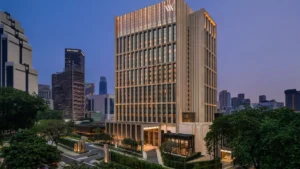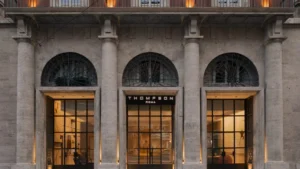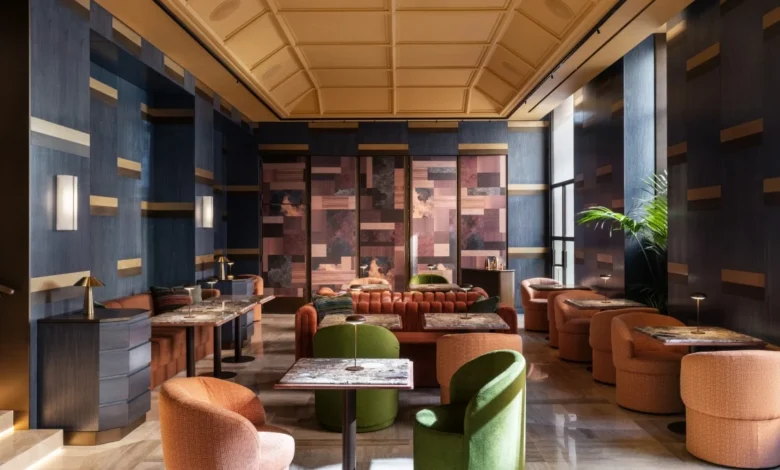
The arrival of the Thompson Rome signals a significant evolution in the hospitality landscape of Italy’s capital, marking the debut of the Hyatt-affiliated lifestyle brand in one of the world’s most competitive luxury markets. Located on the Via delle Botteghe Oscure, just a ten-minute walk from the Pantheon, the hotel breathes new life into a landmark 1940s building. This opening is not merely a new property launch; it represents a broader trend of international hospitality groups repurposing historic, post-war architecture to cater to a modern demographic that demands both aesthetic prestige and cultural immersion.
The 69-room hotel serves as a bridge between Rome’s storied past and its vibrant, cosmopolitan future. By balancing the preservation of mid-century Italian design elements with contemporary interior comforts, the Thompson Rome positions itself as a destination for travelers who value architectural authenticity.
A Masterclass in Architectural Restoration
The development process for the Thompson Rome involved an extensive effort to reclaim the building’s historical identity. During the renovation, crews unearthed significant mid-century artistic features that had been obscured or neglected over the decades. Among these are a grand marble staircase and a series of sculptural walls and inlaid floors designed by the renowned Italian creative Gio Pomodoro.

Restoring these features required a delicate hand, ensuring that the integrity of the original structure remained intact while integrating modern amenities necessary for luxury hospitality. The interior design strategy employs a "neutral-hued" palette, allowing the bold, geometric lines of Pomodoro’s work to serve as the aesthetic centerpiece. This deliberate contrast between the heavy, permanent marble installations and the lightweight, bespoke contemporary furniture creates a tactile experience that feels both grounded in Roman history and relevant to the modern traveler.
Artistic Context and the Roman Legacy
The hotel’s identity is deeply rooted in its proximity to the Crypta Balbi, a site of immense archaeological and historical importance. The surrounding neighborhood—a nexus of academic and artistic history—provided the inspiration for the hotel’s curation. The property features a permanent collection of works from the Scuola Romana and the Scuola di Piazza del Popolo art movements, both of which were pivotal in 20th-century Italian creative expression.
By integrating these specific art movements into the guest experience, the hotel functions almost as an extension of the local gallery scene. This curation serves a dual purpose: it offers guests an immediate educational window into Rome’s recent artistic history and distinguishes the property from generic luxury hotels that rely on mass-produced art. For travelers, this creates a sense of place that is increasingly rare in global city-center hotels.
Accommodations and Spatial Design
With a total of 69 rooms, including 20 suites, the hotel maintains an intimate, boutique scale despite its central location. The design philosophy for the guest rooms leans heavily into warmth, utilizing natural woods and soft lighting to create a "private sanctuary" effect. This is a critical design choice in a city like Rome, where the density and noise of the urban center can be overwhelming.

The suite configurations cater to a diverse range of high-end travelers. The entry-level rooms provide a sophisticated base for short-term visitors, while the more expansive options—such as the 1,000-square-foot Thompson Suite and the various terrace-equipped rooms—offer a more residential feel. The inclusion of private terraces, which overlook the historic streetscape, allows guests to engage with the city’s atmosphere from the comfort of their own quarters, a premium feature in the Roman hospitality market.
Gastronomic Strategy: A Three-Tiered Approach
The food and beverage program at the Thompson Rome is designed to serve both the hotel guests and the local Roman population, a strategy increasingly used to ensure long-term viability in a saturated market. The property features three distinct dining concepts, each tailored to different times of day and guest needs.
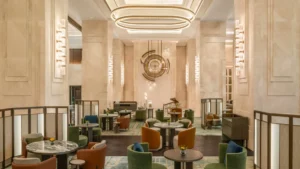
- The Lobby Lounge: Designed to be the social heartbeat of the hotel, this space transitions from a quiet morning coffee environment to an active hub for the traditional Roman aperitivo and evening cocktails.
- Lyve Restaurant: The primary culinary destination, led by Executive Chef Fabio Fioravanti. Having honed his craft under the tutelage of Alain Ducasse at the three-Michelin-starred Le Louis XV in Paris, Fioravanti brings a high level of technical rigor to the kitchen. The menu focuses on refined Mediterranean cuisine, with a specific emphasis on coastal Italian flavors, including high-end seafood and sophisticated reinterpretations of regional classics like bouillabaisse.
- Lyve Rooftop: This space is intended to serve as a high-visibility venue. By leveraging the expansive, panoramic views of the Roman skyline, the rooftop bar aims to capture the "sunset market," drawing in locals and tourists alike for evening drinks in a premium environment.
The Strategic Vision Behind the Launch
Amar Lalvani, Chief Creative Officer of Hyatt Hotels Corporation and president and creative director of Hyatt’s Lifestyle Group, emphasized in a recent statement that the brand’s entry into Rome was dictated by the city’s unique, immutable identity. "Rome has such a strong identity, so we wanted Thompson Rome to start with the city itself," Lalvani stated.
This philosophy—often referred to as "hyper-localism" in the hospitality industry—is a key driver for Hyatt’s broader growth strategy. By ensuring the hotel feels like a natural part of the neighborhood rather than a foreign intrusion, Hyatt aims to build brand loyalty among a demographic that is increasingly skeptical of "cookie-cutter" luxury. The goal, according to company leadership, is to create a space that "Romans want to come back to," which is the gold standard for success in a city where local culture is the primary draw for international visitors.

Market Context and Future Implications
The entry of Thompson into Rome occurs at a time when the city is experiencing a surge in high-end hospitality investment. Following the pandemic, Rome has seen a record influx of foreign capital, leading to the restoration of several historic palaces and public buildings into luxury properties.
Data from the hospitality sector indicates that the demand for "lifestyle" luxury—which prioritizes curated experiences, design, and social spaces over traditional white-glove service—is outpacing the growth of legacy luxury brands. By situating the Thompson in a location as prime as Via delle Botteghe Oscure, Hyatt is positioning itself to capture a significant share of the luxury boutique market.
The implications of this opening are two-fold. First, it demonstrates the continued viability of "adaptive reuse" projects in European cities with strict heritage preservation laws. By converting an existing 1940s building, the Thompson Rome avoids the complications of new construction while benefiting from a location that would be impossible to secure today. Second, it highlights the importance of partnerships between global hospitality chains and established culinary figures. By bringing in talent like Fabio Fioravanti, the hotel ensures that its F&B revenue streams are competitive with the city’s most prestigious independent restaurants.
Looking Ahead
As the Thompson Rome begins its operations, the industry will be watching to see how effectively it integrates into the social fabric of the city. The success of the rooftop and lounge concepts will be the primary indicator of whether the brand has successfully navigated the transition from an international entity to a local staple.

For travelers, the Thompson Rome offers a compelling alternative to the traditional "grand dame" hotels of the Via Veneto or the Spanish Steps. It provides a contemporary, art-focused, and highly designed experience that acknowledges the historical weight of its location without being stifled by it. With reservations now open, the property is poised to become a significant new player in the Roman luxury market, setting a high benchmark for future developments within the Hyatt lifestyle portfolio.
The launch of this property serves as a case study for how international brands can navigate the delicate balance of global consistency and local authenticity. As the travel sector continues to evolve, the ability to offer a "sense of place" will remain the ultimate differentiator for luxury properties worldwide. The Thompson Rome appears to have recognized this early, betting its future on the idea that in Rome, the most effective way to be global is to be profoundly, intentionally local.