The Legal Battle Behind Photographic Film: How Hannibal Goodwin Lost a Decade and Won a Legacy

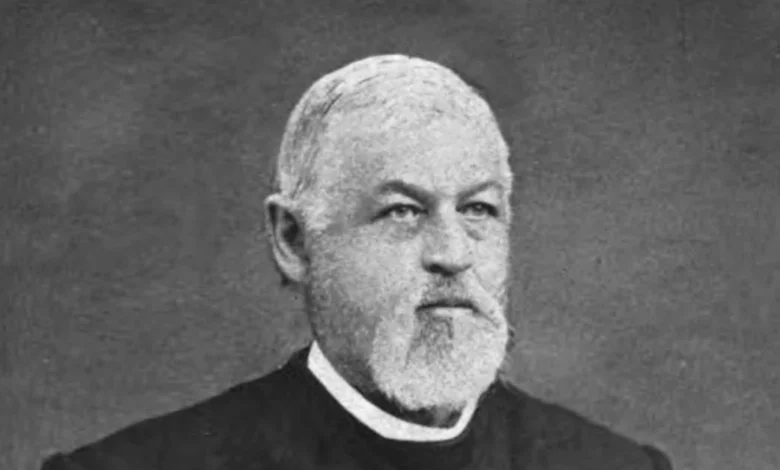
The history of modern photography is written in clear, transparent strips of nitrocellulose, yet the origins of this revolutionary medium remain mired in bureaucratic inertia, corporate maneuvering, and one of the most protracted patent disputes in American industrial history. When Hannibal Goodwin, an Episcopal rector from Newark, New Jersey, filed his initial patent application for a photographic pellicle on May 2, 1887, he ignited a slow-burning fuse that would take more than two decades to detonate. While Goodwin’s paperwork languished in the United States Patent Office through the tenures of five different examiners, the George Eastman juggernaut in Rochester, New York, seized the momentum of the American industrial landscape. By the time US Patent 610,861 finally issued on September 13, 1898, the Eastman Kodak Company had spent nine years selling roll film to a burgeoning public of amateur photographers, fundamentally reshaping visual culture while operating outside the protective umbrella of Goodwin’s original claims.
The Chemistry of a Breakthrough and the Problem with Glass
To understand the magnitude of Goodwin’s invention, one must look to the physical limitations that choked nineteenth-century photography. Prior to the late 1880s, serious photography relied almost exclusively on coated glass plates. These heavy, fragile rectangles required field photographers to carry cumbersome wooden plate holders and portable darkrooms, making outdoor excursion photography an arduous logistical feat. While Eastman had introduced a paper-backed roll holder system in 1885, it offered an imperfect compromise; the photographic emulsion had to be chemically stripped from its paper backing before printing, causing professional studios to reject the format and cling stubbornly to glass.
Goodwin, who spent twenty years serving as the rector of the House of Prayer in Newark, approached this physical limitation not as an engineer, but as an experimental chemist working in his rectory’s attic. His objective was singular: to create a flexible, transparent, and sensitive pellicle capable of withstanding the punishing chemical baths of developing, fixing, and intensifying without dissolving, curling, or fogging.
Rather than relying on mechanical innovations, Goodwin engineered a chemical solution. He dissolved nitrocellulose in a slow-evaporating solvent that repelled water—such as nitrobenzole—and subsequently thinned the mixture with rapidly evaporating alcohol. By flowing this dual-solvent concoction over a sheet of clean glass, allowing it to set, and stripping away the resulting dried skin, he produced a robust, flexible support that could be spooled effortlessly inside a roller camera. The core of his patent—and the heart of modern photographic film—relied on this precise pairing of a hygroscopic element with a slower-evaporating, non-hygroscopic nitrocellulose solvent.
Bureaucratic Labyrinth: Eleven Years in the Patent Office
Goodwin’s path through the United States Patent Office stands as a textbook study in administrative failure. For eleven years and four months, his application remained stalled as a succession of five distinct patent examiners repeatedly rejected his claims. Records from the era indicate that Goodwin was a remarkably well-preserved man of imposing stature—standing six feet three inches tall—yet his fortitude was tested by an institution seemingly paralyzed by procedural backlogs.
While Goodwin’s paperwork stagnated, commercial enterprise marched forward in Rochester. In late 1888, Eastman’s chemical team began exploring nitrocellulose as a substitute for paper roll supports. Chemist Henry Reichenbach refined this line of inquiry, filed his own patent application on April 9, 1889, and secured US Patent 417,202 just eight months later on December 10, 1889. Although Reichenbach utilized a distinct formula involving camphor, fusel oil, and wood alcohol, subsequent federal courts would determine that his iteration constituted an improvement upon Goodwin’s foundational concept rather than an entirely independent invention.
Capitalizing on this swift patent acquisition, Eastman moved aggressively into manufacturing. On July 30, 1889, sales representatives demonstrated the new transparent roll film to the New York Society of Amateur Photographers. By the end of August—months before Reichenbach’s patent formally issued—Kodak’s factory was turning out commercial transparent film at a rate of several hundred linear feet per day, measuring forty-one inches wide.
The Litigation Outlives Its Creator
The inevitable collision between Goodwin’s pending patent and Kodak’s commercial dominance triggered a protracted interference proceeding within the Patent Office. Goodwin amended his specifications over the years, occasionally incorporating late-stage adjustments informed by Kodak’s public market presence. Yet, when the patent finally issued in September 1898, contemporary press reports predicted imminent millionaire status for the elderly clergyman, noting that the domestic market already boasted roughly 1.6 million cameras and immense weekly film consumption.
Goodwin incorporated the Goodwin Film & Camera Company in 1900 to manufacture his product independently, but he never saw production commence. On December 31, 1900, at the age of seventy-eight, Goodwin died from pneumonia following a severe street accident near a Newark construction site where he suffered a broken leg.
His widow subsequently sold the company in July 1901 to photographic manufacturers E. & H. T. Anthony and Scovill & Adams. The resulting corporate entity—renamed Ansco in 1907—filed a comprehensive patent infringement suit against Kodak in December 1902, targeting eleven of the twelve claims outlined in US Patent 610,861.
The litigation dragged on for over a decade. On August 14, 1913, District Judge John R. Hazel delivered a landmark ruling upholding the validity of Goodwin’s patent and declaring him a pioneer inventor, entering an injunction and accounting order on five core claims. Kodak immediately appealed to the US Circuit Court of Appeals for the Second Circuit. On March 10, 1914, the appellate court affirmed Judge Hazel’s ruling, issuing a sharp rebuke of the Patent Office’s historic mishandling of the original application. Circuit Judge Alfred Coxe famously condemned the eleven-year delay as an extraordinary and deplorable condition, asking pointedly whether the blame lay with the inventor or the five examiners who had improperly deprived him of his rights.
Settlement, Scale, and the Value of the Clock
Faced with an impending injunction and the prospect of a devastating financial accounting covering fifteen years of film sales, Kodak executives negotiated a rapid exit from the courtroom. On March 27, 1914, representatives from both Ansco and Kodak confirmed to the Associated Press that a comprehensive financial settlement had been reached.
While the exact figures were initially kept strictly confidential, subsequent corporate tax disputes and legal fee disputes—such as a high-profile lien filed by Ansco counsel Edmund Wetmore—revealed the true financial scale of the resolution. The total sum collected across related patent suits reached $5,180,000, with $1,530,000 ultimately distributed to pre-existing Goodwin company stockholders. To put this into perspective, government antitrust records from the same period recorded Kodak’s 1912 annual sales at $24,763,407; the settlement represented slightly more than twenty percent of a single year of the corporate giant’s gross revenue.
The broader implications of the Goodwin-Kodak conflict extend far beyond the courtroom victory claimed by Ansco. Legal analysts and historians have long recognized that the true asset in this dispute was not necessarily the final judicial verdict, but the calendar itself. By stretching the patent application process across eleven years and forcing an additional twelve years of litigation, Kodak secured a vital twenty-four-and-a-half-year window of uninterrupted commercial operation.
During this extended timeframe, Eastman Kodak established the infrastructure of modern snapshot photography, introducing the Brownie camera, popularizing drugstore film developing counters, and cementing public consumer habits that endured for generations. When Goodwin’s patent officially expired on September 13, 1915—exactly seventeen years after its long-delayed issuance—the exclusive rights secured by his heirs and corporate backers were enforceable for a mere eighteen months. Hannibal Goodwin had unquestionably invented the modern photographic pellicle, but the architecture of the American industrial patent system ensured that the marketplace belonged entirely to his corporate rivals.