Navigating the Modern Travel Rewards Landscape: How Intelligent Triage Tools Are Reshaping Consumer Financial Decisions

The contemporary travel rewards credit card ecosystem has evolved into a high-stakes arena characterized by aggressive competition among major financial institutions. As banks continuously roll out lucrative welcome offers, elevated annual fees, and complex matrices of statement credits and lifestyle perks, consumers face an unprecedented paradox of choice. Finding the optimal financial product to match individual spending habits, existing wallet compositions, and long-term travel aspirations has shifted from a casual hobby into a complex optimization problem. To address this friction in the consumer finance market, digital triage systems—such as Thrifty Traveler’s CardPilot—have emerged to provide algorithmic personalization, helping applicants navigate restrictive issuer rules and maximize their return on investment without compromising their personal data privacy.
The Evolution of the Premium Travel Card Arms Race

To understand the current complexity of the credit card market, one must examine the rapid transformation of the industry over the past decade. What began as basic cash-back offerings and simple airline-affiliated plastic has morphed into a sophisticated market segment dominated by premium metal cards boasting annual fees ranging from $250 to upwards of $695. Financial institutions including JPMorgan Chase, American Express, Capital One, and Citi have engaged in a relentless arms race, consistently upgrading lounge access networks, travel insurance protections, and targeted lifestyle credits for ridesharing, dining, and streaming services.
Industry analysts note that this aggressive posturing is designed to capture high-net-worth consumers and frequent flyers who carry heavy monthly balances or reliably utilize high-margin travel portals. However, for the average consumer, evaluating whether a $695 annual fee is justified by Uber credits, airline incidental reimbursements, and global lounge access requires deep mathematical analysis. Furthermore, because credit card issuers frequently update their reward structures, point transfer partners, and welcome bonuses on a quarterly basis, maintaining up-to-date market awareness has become a daunting task for even the most dedicated points-and-miles enthusiasts.
The Mechanics of Algorithmic Card Selection

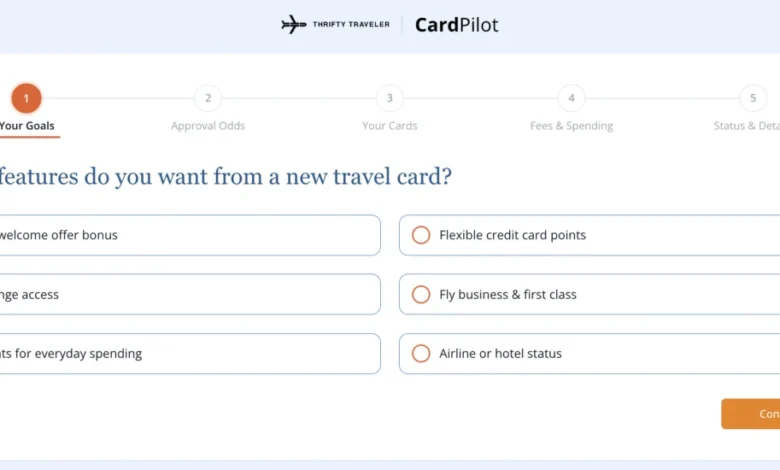
In response to market saturation and consumer fatigue, financial technology developers have introduced rule-based recommendation engines designed to filter out the noise. Tools like CardPilot utilize multi-variable decision trees to evaluate an applicant’s financial profile against hundreds of active card products. By processing inputs related to a user’s current wallet composition, monthly expenditure categories—such as dining, groceries, travel, and gas—and ultimate vacation objectives, these platforms generate curated shortlists of three to five viable options.
Crucially, modern recommendation engines incorporate strict issuer-specific governance rules that dictate approval odds. Among the most critical parameters factored into these algorithms is Chase’s notorious 5/24 rule, which automatically denies credit card applications to individuals who have opened five or more personal credit cards across any bank within the preceding 24 months. Other proprietary guidelines, such as American Express’s once-in-a-lifetime welcome bonus restriction and Capital One’s inquiry sensitivity, are systematically cross-referenced to ensure that users do not waste a hard credit inquiry on a card for which they are technically ineligible.
Data Privacy and the Consumer Trust Paradigm
As digital platforms increasingly rely on granular personal and financial data to deliver hyper-targeted services, user privacy has become a paramount concern. The integration of personal financial tools often triggers valid anxieties regarding data harvesting, third-party monetization, and security vulnerabilities. In the context of credit card referral ecosystems, transparency regarding business models is essential for maintaining consumer trust.
Industry standards dictate a clear separation between algorithmic objectivity and monetization strategies. Most advisory tools operate under an affiliate disclosure framework: while the underlying software evaluates user inputs impartially based on merit and financial alignment, the platform may secure a referral commission if a user ultimately approves an application through a provided tracking link. To preserve integrity, developers of these tools emphasize that recommendations must remain divorced from commission tiers, prioritizing user utility over institutional payout structures. Additionally, privacy-first architectures—which avoid the collection of personally identifiable information (PII) such as Social Security numbers, exact income figures, or formal credit scores—mitigate data breach risks while still capturing sufficient behavioral parameters to render accurate suggestions.
Step-by-Step Methodology of Profile Evaluation

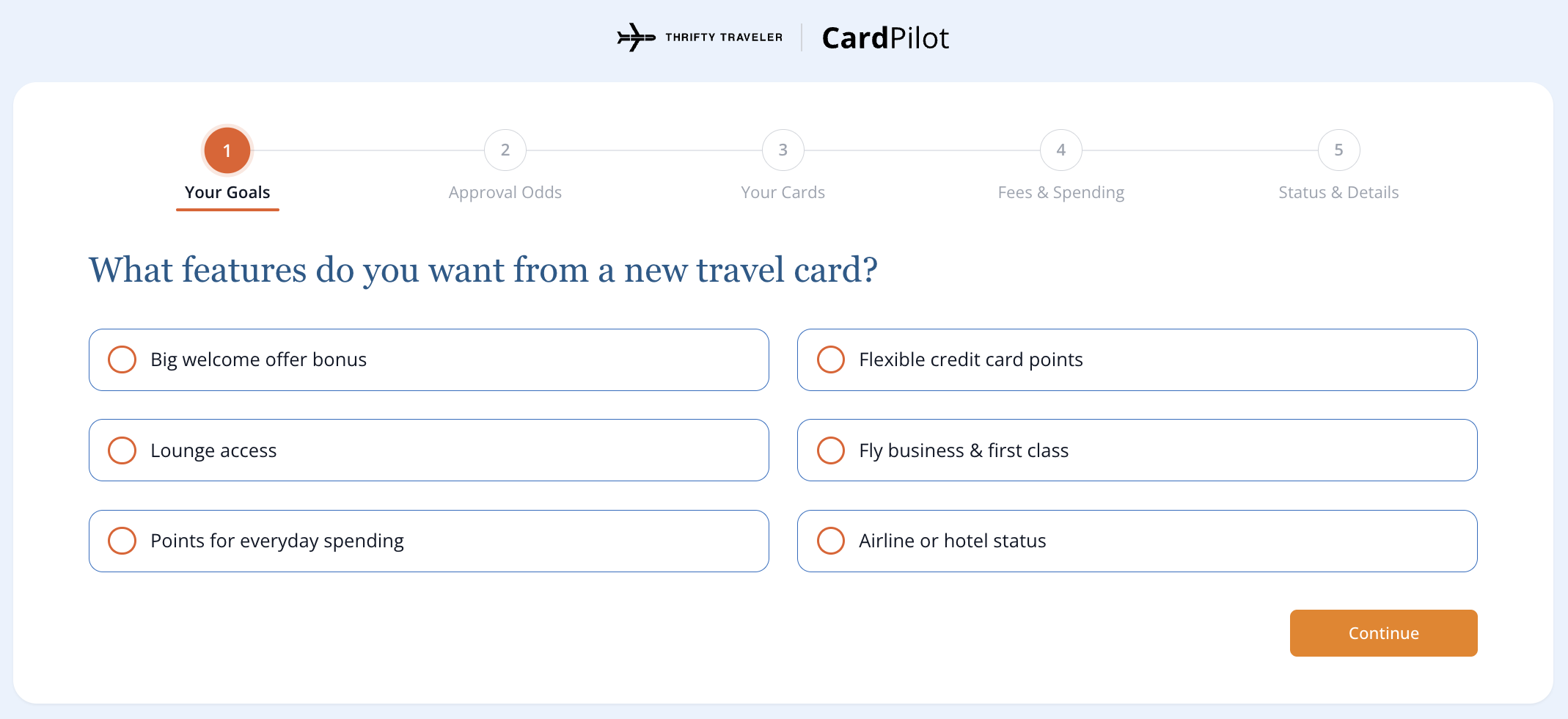
The user journey within a modern credit card advisory tool is engineered for speed and precision, balancing depth of analysis with low friction. Typically, the process can be broken down into distinct sequential phases:
- Initial Data Intake: Users provide qualitative and quantitative metrics regarding their travel preferences, including preferred airline alliances, hotel loyalty programs, and baseline spending volumes.
- Portfolio Audit: Applicants input their current card holdings to prevent redundancy, ensuring that a recommended card actually supplements rather than duplicates existing reward multipliers.
- Flexibility and Optionality: To reduce user drop-off, granular fields—such as precise point balances or elite status tiers—are designated as optional, allowing casual users to bypass complex data entry while still receiving generalized guidance.
- Algorithmic Synthesis: The backend engine processes the sanitized dataset against an up-to-date database of sign-up bonuses, fee schedules, and credit bureau requirements.
- Delivery and Archiving: Results are rendered instantly on-screen and dispatched via email, establishing a permanent reference ledger for the consumer.
Market Implications and the Future of Consumer Finance
The proliferation of automated card selection tools underscores a broader trend in consumer finance: the democratization of institutional-grade financial strategies. Historically, mastering the art of award travel required navigating dense internet forums, maintaining elaborate spreadsheets, and dedicating dozens of hours to independent research. By packaging this institutional knowledge into streamlined, user-friendly digital interfaces, platforms are lowering the barrier to entry for lucrative travel hacking practices.

However, financial advisors and consumer protection advocates emphasize that algorithmic tools should serve as consultative guides rather than absolute mandates. Users must ultimately cross-reference recommendations with their own budgetary constraints, risk tolerances, and credit health. As banks continue to refine their application restrictions and introduce dynamic reward adjustments, the symbiotic relationship between consumers, independent travel blogs, and intelligent triage software will remain a vital component of personal finance management in the digital age.